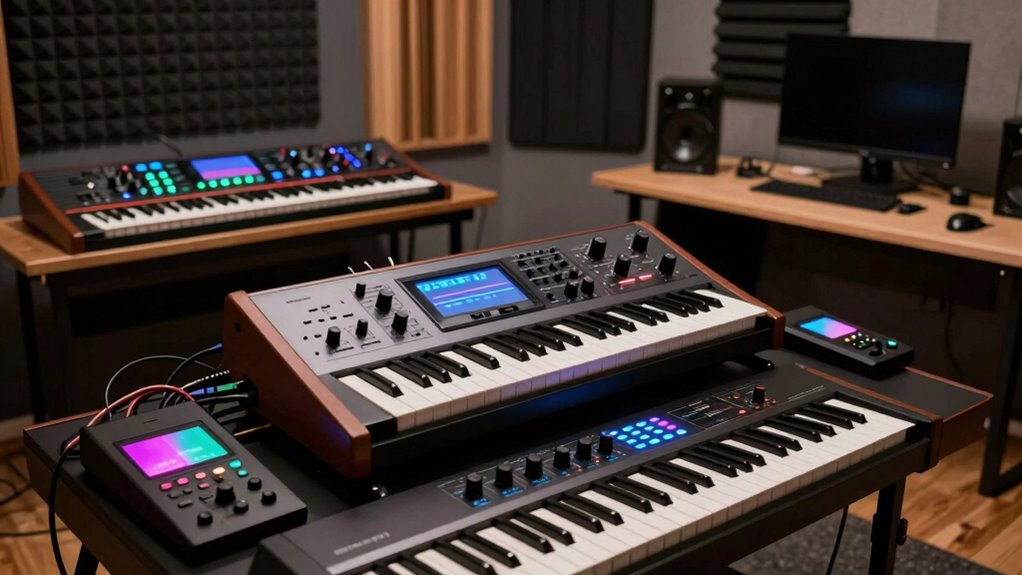

Finding the right synthesizer for a home studio involves balancing features, size, and budget. The Akai MPC Key 37 G2 stands out as the best overall for its versatility and standalone capabilities. For those prioritizing portability, the Akai MPK Mini Plus offers a compact yet powerful option, while the M-VAVE 25-Key MIDI Controller makes a great choice for budget-conscious producers. In this roundup, I’ll explore how each of these options compares, along with their tradeoffs, to help you choose the best fit for your creative setup.

Get movie nights delivered free with Prime
- Fast, free delivery on millions of items
- Prime Video, Amazon Music and more included
- Member-only deals all year
Key Takeaways
- The top-ranked option, Akai MPC Key 37 G2, excels in versatility with its standalone features, making it ideal for producers who want all-in-one functionality.
- Size and portability are primary tradeoffs; smaller controllers like the MPK Mini Plus are more portable but offer fewer controls, impacting workflow.
- Build quality and key action vary significantly; premium models often feature better keybeds but come at a higher price point.
- Connectivity options such as Bluetooth and multiple outputs enhance flexibility, especially for setups with limited space or multiple devices.
- Budget options like the M-VAVE controller deliver solid features but may lack advanced controls or durability found in higher-end models.
| Adjustable Desktop Stand for Samplers, Synthesizers, Drum Machines, and Effects Units |  | Best for Space-Saving Organization and Accessibility | Material: 2mm cold-rolled steel with matte black powder-coated finish | Width Adjustment Range: 10.6 to 18.5 inches | Number of Tiers: 2 | VIEW ON AMAZON | See Our Full Breakdown |
| Akai Professional MPK Mini Plus 37-Key USB MIDI Keyboard Controller |  | Best for Portable Versatility and Advanced Connectivity | Number of Keys: 37 mini keys | Octaves: 3 full octaves | Connectivity: USB, CV/Gate, MIDI I/O | VIEW ON AMAZON | See Our Full Breakdown |
| Akai Professional MPK Mini Play MK3 25-Key USB MIDI Keyboard Controller |  | Best for Compact, Standalone Production on the Move | Number of Keys: 25 | Built-in Speaker: Yes | Connectivity: USB | VIEW ON AMAZON | See Our Full Breakdown |
| Akai Professional MPC Key 37 G2 Next-Gen Standalone Production Keyboard |  | Best for All-in-One Studio Production and Sampling | Number of Keys: 37 | Touchscreen: 7 inches | Connectivity: USB-C | VIEW ON AMAZON | See Our Full Breakdown |
| M-VAVE 25-Key USB MIDI Keyboard Controller with Backlit Drum Pads, Bluetooth, and Software Included |  | Best for Wireless Control and Portability | Number of Keys: 25 | Backlit Pads: 8 | Connectivity: USB and Bluetooth | VIEW ON AMAZON | See Our Full Breakdown |
| Konohan Synth Stand for Desktop Synthesizer & MIDI Controller, Adjustable Length 10.6-18.6″ |  | Best Compact and Adjustable Desktop Stand for Home Studios | Main material: metal | Color: black | Size: adjustable length 10.6″-18.6″ | VIEW ON AMAZON | See Our Full Breakdown |
| synthesizers for home studio | Number of Keys | Connectivity |
|---|---|---|
| Adjustable Desktop Stand for S | — | — |
| Akai Professional MPK Mini Plu | 37 mini keys | USB, CV/Gate, MIDI I/O |
| Akai Professional MPK Mini Pla | 25 | USB |
| Akai Professional MPC Key 37 G | 37 | USB-C |
| M-VAVE 25-Key USB MIDI Keyboar | 25 | USB and Bluetooth |
| Konohan Synth Stand for Deskto | — | — |
More Details on Our Top Picks
Adjustable Desktop Stand for Samplers, Synthesizers, Drum Machines, and Effects Units
This adjustable 2-tier stand excels at decluttering your workspace by vertically organizing gear like samplers and synths. Compared with the more portable Akai MPK Mini Plus, this stand focuses on physical arrangement rather than control features, making it ideal for home studios needing a clean, accessible setup. Its adjustable width from 10.6 to 18.5 inches accommodates various device sizes, but measuring your gear beforehand is essential to avoid fit issues. While sturdy and easy to assemble, it lacks cable management or extra features, which might matter for those seeking a neater setup or integrated wiring solutions.
Pros:- Adjustable width fits various device sizes
- Sturdy steel construction for durability
- Vertical layout maximizes desk space
Cons:- Requires precise measurement of device dimensions
- Limited to compatible device sizes within adjustable range
- No cable management features
Best for: Home studio owners who want a sturdy, space-efficient way to organize multiple devices
Not ideal for: Musicians who need integrated control surfaces or cable management solutions
- Material:2mm cold-rolled steel with matte black powder-coated finish
- Width Adjustment Range:10.6 to 18.5 inches
- Number of Tiers:2
- Design:Dual-rod assembly with front support lips
- Color:Black
Our verdict“This stand is perfect for those prioritizing organized, space-efficient device placement over added features.”
Akai Professional MPK Mini Plus 37-Key USB MIDI Keyboard Controller
The Akai MPK Mini Plus stands out for its portability and extensive control options, including CV/Gate and MIDI I/O, which are rare among compact controllers. Compared to the Akai MPK Mini Play MK3, which includes a built-in speaker, the Plus version emphasizes connectivity for studio control, making it ideal for producers who want a flexible MIDI interface on the go. The 37 mini keys might be limiting for pianists or those needing full-range keys, and its complex controls require some learning curve, especially for beginners. Nonetheless, its software bundle and NKS support make it a versatile choice for integrating hardware and software seamlessly.
Pros:- Compact and portable design
- Includes advanced connectivity options like CV/Gate
- NKS support for seamless software integration
- Built-in sequencer with 64 steps
Cons:- Limited to 37 keys, which may constrain expressive playing
- Complex controls may challenge new users
Best for: Producers needing a portable, feature-rich MIDI controller for studio and live use
Not ideal for: Beginners or pianists seeking a full-size keyboard for extensive playing
- Number of Keys:37 mini keys
- Octaves:3 full octaves
- Connectivity:USB, CV/Gate, MIDI I/O
- Built-in Sequencer:64-step
- Pads:8 RGB MPC pads
- Software Included:MPC Beats
Our verdict“This controller is best suited for producers who need a versatile, portable MIDI interface with advanced connectivity options.”
Akai Professional MPK Mini Play MK3 25-Key USB MIDI Keyboard Controller
The MPK Mini Play MK3 combines portability with standalone features, including a built-in speaker and 25 keys, making it a strong choice for musicians who produce outside the traditional studio. Unlike the MPK Mini Plus, which relies on external devices, this model can operate independently, supporting quick ideas and practice sessions. Its limited 25 keys may restrict complex piano play or extensive arrangements, and the battery power requires extra purchase, which adds to the overall cost. Still, its versatility with drum pads, arpeggiator, and included software makes it suitable for songwriters and beat makers needing mobility.
Pros:- Portable with built-in speaker
- Supports battery power for on-the-go use
- Includes software and sound library
- Versatile controls including arpeggiator
Cons:- Battery not included, requiring additional purchase
- Limited to 25 keys, restricting complex playing
Best for: Musicians and songwriters seeking a portable, all-in-one MIDI keyboard with standalone capability
Not ideal for: Advanced pianists or studio producers requiring full-range keyboards and extensive control
- Number of Keys:25
- Built-in Speaker:Yes
- Connectivity:USB
- Power Source:Batteries or USB
- Includes Software:MPC Beats, software instruments
Our verdict“Ideal for mobile musicians who want a compact, standalone MIDI controller with basic sound capabilities.”
Akai Professional MPC Key 37 G2 Next-Gen Standalone Production Keyboard
The MPC Key 37 G2 excels as a standalone production powerhouse, combining a 37-key synth-action keyboard with a 7-inch touchscreen, MPC pads, and extensive sampling and sequencing features. It rivals the MPC Live series but offers a more compact form factor for studio use. Its ability to operate without a computer, supported by MPC3 OS, makes it perfect for producers seeking a portable, yet comprehensive, music creation hub. However, the advanced features may overwhelm beginners, and the limited number of keys might restrict piano-style playing. Its powerful processor and large sound library ensure immediate access to creative tools, though a steeper learning curve is involved.
Pros:- Standalone operation with full sampling and sequencing
- Large 7-inch touchscreen for intuitive control
- Powerful 8-core processor supports complex projects
- Includes extensive sound library and plugin support
Cons:- Complex interface may challenge new users
- Limited 37 keys for piano-style playing
Best for: Intermediate to professional producers wanting a standalone, versatile studio instrument
Not ideal for: Beginners or pianists needing a full-sized keyboard for classical playing
- Number of Keys:37
- Touchscreen:7 inches
- Connectivity:USB-C
- Processor:8-core
- Audio Tracks Support:up to 16 stereo
- Factory Content:over 20GB
Our verdict“This all-in-one production keyboard suits producers who prefer a portable, standalone device with advanced features.”
M-VAVE 25-Key USB MIDI Keyboard Controller with Backlit Drum Pads, Bluetooth, and Software Included
The M-VAVE 25-Key MIDI controller shines in wireless connectivity with Bluetooth, making it highly portable for studio or mobile setups. Its backlit drum pads and included software support quick production, especially for those who prefer minimal cabling. Compared with the Akai MPK Mini models, it offers more flexibility in wireless operation, but the 25-key layout limits expressive playing and the touch strips may lack responsiveness for some users. Its lightweight design makes it easy to carry, but the smaller number of keys may restrict complex compositions, making it better suited for sketching ideas or live performance rather than full arrangements.
Pros:- Wireless Bluetooth connectivity
- Backlit drum pads for expressive control
- Lightweight and portable design
- Includes software for quick start
Cons:- Limited to 25 keys, restricting complex playing
- Touch strips may be less responsive for some users
Best for: Producers and musicians needing a portable, wireless MIDI controller for quick ideas and live use
Not ideal for: Pianists or studio users requiring full-range keyboards for detailed compositions
- Number of Keys:25
- Backlit Pads:8
- Connectivity:USB and Bluetooth
- Battery Capacity:2000 mAh
- Battery Life:Approximately 16 hours
Our verdict“This controller is ideal for mobile musicians seeking wireless convenience and quick control, trading off extensive keyboard range.”
Konohan Synth Stand for Desktop Synthesizer & MIDI Controller, Adjustable Length 10.6-18.6″
The Konohan Synth Stand stands out for its adjustable length, accommodating a wide variety of synthesizers, MIDI controllers, and drum machines. Compared with larger, bulkier stands, this model offers a space-saving solution that fits neatly on a desktop without sacrificing stability. Its anti-slip pads and 30° tilt improve ergonomics, making it easier to view controls and reduce wrist strain during long sessions. However, the manual assembly can be somewhat time-consuming, and the color may vary slightly from images, which could matter for aesthetic consistency in a studio. This pick makes the most sense for home producers who need a versatile, portable stand that can adapt to different devices without adding clutter.
Pros:- Adjustable length supports a wide range of device sizes
- Secure anti-slip pads for stability during use
- Ergonomic 30° tilt enhances visibility and comfort
- Lightweight yet durable for portability
Cons:- Manual assembly may be time-consuming for some users
- Color may vary slightly, affecting aesthetic matching
Best for: Home studio owners seeking a lightweight, adjustable stand that fits multiple devices and saves space.
Not ideal for: Users who prefer a pre-assembled, plug-and-play solution or require a stand with additional height or multi-tier functionality.
- Main material:metal
- Color:black
- Size:adjustable length 10.6″-18.6″
- Height:about 6 inches
- Design:anti-slip pads, ergonomic tilt
- Weight:lightweight for portability
Our verdict“This stand is ideal for home producers needing a flexible, space-efficient solution that adapts to various equipment sizes.”

How We Picked
These products were selected based on a combination of performance, usability, build quality, and value for home studio users. Priority was given to models that offer a good balance of features for both beginners and experienced producers, including MIDI connectivity, key action, and additional controls like drum pads or knobs. We also considered portability, expandability, and user reviews to identify options that truly serve the needs of home studio setups. The ranking reflects how well each product balances these factors, with a focus on real-world versatility and long-term value.| synthesizers for home studio | Connectivity |
|---|---|
| Adjustable Desktop Stand for S | — |
| Akai Professional MPK Mini Plu | USB, CV/Gate, MIDI I/O |
| Akai Professional MPK Mini Pla | USB |
| Akai Professional MPC Key 37 G | USB-C |
| M-VAVE 25-Key USB MIDI Keyboar | USB and Bluetooth |
| Konohan Synth Stand for Deskto | — |
Factors to Consider When Choosing Synthesizers For Home Studios
Choosing the right synthesizer for a home studio depends on several key factors. Understanding these can help prevent common pitfalls, such as overpaying for unnecessary features or selecting a controller that doesn’t fit your workflow. Here are some considerations that can guide your decision beyond just features and price.Size and Portability
Size matters when it comes to fitting a synthesizer into your workspace. Larger models may offer more controls but can take up valuable desk space, while compact controllers are easier to move and store. Consider your available space and whether portability is a priority for you, especially if you plan to perform or travel with your gear.
Key Action and Playability
The feel of the keys greatly influences your playing experience. Weighted keys mimic real pianos, suited for expressive playing, but often come at a higher cost. Semi-weighted or synth-action keys are lighter and more common in compact controllers, which can be better suited for quick tweaks and programming. Test or research the key action to match your playing style.
Connectivity and Integration
Look for models with flexible connectivity options like MIDI, USB, Bluetooth, and multiple outputs. These features enable seamless integration with your existing gear, DAWs, and other devices. Be mindful of whether you need standalone operation or if a controller that relies on a computer suits your workflow better, as this impacts setup complexity and flexibility.
Expandability and Controls
More controls such as knobs, faders, and drum pads provide greater hands-on control over your sound design and mixing. However, more controls often mean higher prices and more complex setups. Assess whether you need extensive tactile control or if basic keys suffice for your production style.
Budget and Future Needs
While it’s tempting to opt for the cheapest model, investing a bit more can yield longer-term satisfaction, especially if you plan to grow your studio. Consider future expansion, such as adding additional gear or software, and how your choice will adapt over time. Balance your immediate budget with anticipated needs to avoid frequent upgrades.
Frequently Asked Questions
Should I choose a synthesizer with weighted keys or synth-action keys?
Weighted keys provide a more realistic piano feel, which can be beneficial if you play piano or want expressive control. However, they tend to be more expensive and bulkier. Synth-action keys are lighter and more responsive for rapid playing and programming, making them ideal for electronic music production. Your choice should align with your playing style and budget.
Is it better to get a standalone synthesizer or a MIDI controller?
Standalone synthesizers offer built-in sounds and can operate independently, reducing setup complexity. MIDI controllers rely on your computer or sound module for sound generation but are often more affordable and portable. If you want simplicity and immediate sound access, a standalone might be better. For flexibility and expandability, a MIDI controller paired with software can be more versatile.
How important are additional controls like drum pads and knobs?
Additional controls can significantly enhance your workflow by providing tactile manipulation of sounds, effects, and mixing. If you produce electronic or sample-based music, features like drum pads and assignable knobs can streamline your process. However, they add to the cost and complexity, so consider whether they match your production style and skill level.
Should I prioritize size or features for my home studio?
If space is limited, compact models may be more practical, even if they have fewer controls. Conversely, if your workspace allows, larger controllers with more features can improve workflow and sound design flexibility. Weigh your available space against how much control you need for your creative process.
Are Bluetooth-enabled synthesizers worth considering?
Bluetooth connectivity adds convenience for wireless control and pairing with devices like tablets or smartphones. However, it can introduce latency and stability issues, which might impact your workflow. For studio use, wired connections generally offer more reliable and lower-latency performance, but Bluetooth can be a useful feature for mobile or casual setups.
Conclusion
For most home studio users, the Akai MPC Key 37 G2 strikes a strong balance of versatility, build quality, and features, making it the best overall choice. Beginners or those with limited space will benefit from the Akai MPK Mini Plus for its compact size and ease of use. Producers seeking a premium, fully integrated experience should consider higher-end options, though they come at a higher price. Budget-conscious creators will find the M-VAVE 25-Key MIDI Controller offers solid value without sacrificing essential features. Your ideal choice depends on your specific needs, space, skill level, and budget—use these insights to find your perfect synthesizer for a home studio setup.
Halloween Picks

8.5 Foot Halloween Inflatable Haunted House Castle with Skeleton, Ghost & Skulls

Spirit Halloween Scary Sitting Scarecrow Animatronic, 4 ft 6 in

10ft Halloween Inflatable Archway – Pumpkin Skeleton Yard Décor
As an affiliate, we earn on qualifying purchases.