Pop culture board games range from quick music quizzes to longer licensed board-game editions, and my best overall pick is Hitster Music Party Quiz Card Game for groups that want an easy, lively music challenge. Ravensburger That’s Not a Hat is a strong choice for fast bluffing and memory, while Brass Monkey Poorly Explained Movies suits movie fans who enjoy guessing from deliberately vague clues. The main tradeoff is between accessible party play and deeper, franchise-specific trivia; age range, music knowledge, and familiarity with a featured fandom can shape who joins in. Read on for the full breakdown, comparison criteria, and advice for matching a game to your group.

Get movie nights delivered free with Prime
- Fast, free delivery on millions of items
- Prime Video, Amazon Music and more included
- Member-only deals all year
Key Takeaways
- Hitster is my best overall choice for a music-centered group because its party-quiz format offers an easy way to get everyone involved; groups seeking trivia across several pop culture topics may prefer a general quiz game.
- That’s Not a Hat stands apart from the knowledge-based picks: bluffing and memory matter more than knowing a particular decade, artist, or TV show.
- SongFest offers broad music coverage across five decades, while Lyrically Correct and Hella 90s Hip Hop focus on narrower musical eras and styles.
- The three themed Clue games—Home Alone, Bob’s Burgers, and The Office—are best for fans who want a familiar deduction format with a specific fandom, not for groups seeking a fresh core mechanic.
- Monopoly: KPop Demon Hunters Edition is the most franchise-specific choice in this lineup, so it makes sense when the group already likes the property; broader trivia games are safer for mixed-interest gatherings.
| Hasbro Gaming Clue: Home Alone Edition |  | Best for Movie-Themed Mystery Nights | Brand: Hasbro Gaming | Recommended age: 8 years and up | Included components: Gameboard, 6 character tokens with plastic bases, 6 booby trap tokens, 43 cards, solution envelope, evidence notepad, die, 6 privacy screens, and game guide | VIEW LATEST PRICE | See Our Full Breakdown |
| Ravensburger That’s Not a Hat: Pop Culture Bluffing and Memory Card Game |  | Best Quick Party Game | Brand: Ravensburger | Players: 3–8 | Recommended age: 8 years and up | VIEW LATEST PRICE | See Our Full Breakdown |
| Brass Monkey Poorly Explained Movies Party Trivia Game |  | Best for Movie Buffs and Laughs | Brand: Brass Monkey | Game type: Movie trivia card game | Number of cards: 125 | VIEW LATEST PRICE | See Our Full Breakdown |
| Buffalo Games Hella 90s Hip Hop Trivia Card Game for Adults |  | Best for 1990s Hip-Hop Fans | Brand: Buffalo Games | Game type: Trivia card game | Theme: 1990s hip hop, rap, R&B, and pop culture | VIEW LATEST PRICE | See Our Full Breakdown |
| GENSMAK Multi-Generational Trivia Party Game |  | Best for Mixed-Generation Groups | Brand: GENSMAK | Game type: Trivia card game | Players: 2–8+ | VIEW LATEST PRICE | See Our Full Breakdown |
| Hitster Music Party Quiz Card Game | 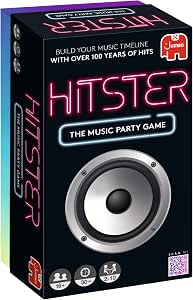 | Best for Mixed-Age Music Groups | Players: 2–10 | Recommended age: 16 years and up | Music cards: More than 300 | VIEW LATEST PRICE | See Our Full Breakdown |
| Lyrically Correct ’90s & 2000s Hip-Hop and R&B Music Trivia Card Game |  | Best for ’90s and 2000s Hip-Hop Fans | Players: 2 or more | Recommended age: 20 years and up | Game type: Music trivia card game | VIEW LATEST PRICE | See Our Full Breakdown |
| Bob’s Burgers Clue Board Game |  | Best for Bob’s Burgers Fans | Players: 2–6 | Recommended age: 8 years and up | Estimated playing time: 60 minutes | VIEW LATEST PRICE | See Our Full Breakdown |
| CLUE: The Office Edition Board Game |  | Best for The Office Fans | Players: 2–6 | Recommended age: 8 years and up | Play time: 60+ minutes | VIEW LATEST PRICE | See Our Full Breakdown |
| Monopoly: KPop Demon Hunters Edition Board Game |  | Best for KPop Demon Hunters Fans | Players: 2–6 | Recommended age: 8 years and up | Edition: KPop Demon Hunters Edition | VIEW LATEST PRICE | See Our Full Breakdown |
| SongFest Music Trivia Party Game, 5 Decades, 1,000 Questions with Song Hints |  | Best for Music-Led Parties | Players: 2–12 | Questions: 1,000 | Challenge categories: 4 | VIEW LATEST PRICE | See Our Full Breakdown |
| Outset Media Pop Culture Trivia Game |  | Best for Portable, Broad-Era Trivia | Players: 2 or more | Recommended age: 12 years and up | Trivia questions: 1,200 | VIEW LATEST PRICE | See Our Full Breakdown |
| Clue: The Muppets Board Game |  | Best Licensed Mystery Board Game | Players: 2–6 | Recommended age: 8 years and up | Edition: Collector’s Edition | VIEW LATEST PRICE | See Our Full Breakdown |
| pop culture board game | Recommended age | Players | Included components | Material |
|---|---|---|---|---|
| Hasbro Gaming Clue: Home Alone | 8 years and up | — | Gameboard, 6 character tokens with plastic bases, 6 booby trap tokens, 43 cards, solution envelope, evidence notepad, die, 6 privacy screens, and game guide | Plastic |
| Ravensburger That’s Not a Hat: | 8 years and up | 3–8 | 110 cards and 1 game manual | Cardboard |
| Brass Monkey Poorly Explained | 13 years and up | 2–8 | — | Paper |
| Buffalo Games Hella 90s Hip Ho | 14 years and up | — | 200 question cards, 30-second timer, and instructions | Paper |
| GENSMAK Multi-Generational Tri | 10 years and up | 2–8+ | Trivia questions, bonus points cards, SMAK! cards, and instructions | Cardstock |
| Hitster Music Party Quiz Card | 16 years and up | 2–10 | Music cards, 37 chips, and instructions | Cardboard |
| Lyrically Correct ’90s & 2000s | 20 years and up | 2 or more | — | Cardstock |
| Bob’s Burgers Clue Board Game | 8 years and up | 2–6 | Custom illustrated game board, 6 metal tokens, rumor cards, scoring pad, and instructions | — |
| CLUE: The Office Edition Board | 8 years and up | 2–6 | Game board, character movers, weapon tokens, character cards, clue cards, intrigue cards, envelope, dice, and rules | — |
| Monopoly: KPop Demon Hunters E | 8 years and up | 2–6 | Gameboard, 6 tokens, 6 power cards, 16 venue cards, 16 HUNTR/X cards, 16 Saja Boys cards, 9 song cards, 2 dice, 90 cardboard fan chips, and game guide | — |
| SongFest Music Trivia Party Ga | 10 years and up | 2–12 | — | — |
| Outset Media Pop Culture Trivi | 12 years and up | 2 or more | Trivia cards and instruction sheet | Cardstock |
| Clue: The Muppets Board Game | 8 years and up | 2–6 | 6 character movers and bases, 6 character role/ability cards, 6 Peril tokens, 6 suspect clue cards, and game board | — |
More Details on Our Top Picks
Hasbro Gaming Clue: Home Alone Edition
Home Alone Clue is the strongest fit here for players who want a familiar film world woven into a proper deduction game. Instead of standard Clue suspects and weapons, players investigate which McCallister discovered the break-in, which booby trap was found, and where it happened. The house-themed board, movie-inspired cards, and six trap tokens give the mystery a specific identity that separates it from the quick bluffing of That’s Not a Hat: Pop Culture or the movie-recognition prompts in Poorly Explained Movies.
That themed focus is also the main limitation: the jokes and references land best with people who know the film, and this is a longer-form board game rather than a portable party-card option. Its investigation cards add twists to familiar Clue deduction, but buyers looking for broad pop culture coverage should choose GENSMAK instead.
Pros:- Recasts Clue’s deduction with a recognizable Home Alone mystery.
- Six movie-inspired booby trap tokens give the theme a tangible role in play.
- Investigation cards can change what players reveal or where they move.
- Designed for family play with a recommended age of 8 and up.
Cons:- The humor and references depend on players knowing the film.
- The supplied information does not specify the player count.
- Its board-game format is less convenient to carry than the small card games in this roundup.
Best for: Families and Home Alone fans who want a familiar, deduction-based board game for players ages 8 and up.
Not ideal for: Groups unfamiliar with Home Alone, or hosts seeking a compact game that works across many pop culture interests.
- Brand:Hasbro Gaming
- Recommended age:8 years and up
- Included components:Gameboard, 6 character tokens with plastic bases, 6 booby trap tokens, 43 cards, solution envelope, evidence notepad, die, 6 privacy screens, and game guide
- Booby trap tokens:Iron, fan, doorknob, toy vehicles, paint cans, and blowtorch
- Game format:Clue deduction board game
- Material:Plastic
- Model number:G3143
Our verdict“Choose this for a family that enjoys Home Alone and wants themed deduction, not broad trivia or a portable party game.”
Ravensburger That’s Not a Hat: Pop Culture Bluffing and Memory Card Game
That’s Not a Hat: Pop Culture is the quickest, most portable choice in this group: its rounds take about 15 minutes, and the core challenge is remembering what you received while deciding whether to bluff as cards move around. That makes it a different kind of pop culture game from Buffalo Games Hella 90s Hip Hop Trivia, which rewards knowledge of a specific era, and GENSMAK, which uses question-and-answer trivia across generations. Here, the fun comes from memory lapses and confident claims, not from proving who knows the most.
The 110 illustrated cards and 30 special interaction cards add variety without a large setup. The tradeoff is that memory pressure is the central mechanic, so players who dislike bluffing or struggle to track changing cards may find it frustrating. It also needs at least three players, while Poorly Explained Movies can accommodate two.
Pros:- About 15-minute play suits short party rounds.
- Bluffing and memory make it distinct from conventional pop culture trivia.
- Portable card format is convenient for travel and gatherings.
- Includes 110 illustrated cards and 30 special interaction cards.
Cons:- Requires at least three players.
- Remembering passed cards can be difficult for some players.
- Pop culture illustrations may be less satisfying for groups seeking deep subject-specific trivia.
Best for: Hosts who want a short, easy-to-carry pop culture game for groups of three to eight, including mixed-age players.
Not ideal for: Two-player households or groups that prefer answering factual trivia over memory challenges and bluffing.
- Brand:Ravensburger
- Players:3–8
- Recommended age:8 years and up
- Game duration:About 15 minutes
- Included components:110 cards and 1 game manual
- Special interaction cards:30
- Material:Cardboard
- Edition:Pop Culture
- Certification:FSC-certified
Our verdict“Pick this for lively, brief bluffing rounds with at least three people; choose GENSMAK instead for question-led trivia.”
Brass Monkey Poorly Explained Movies Party Trivia Game
Poorly Explained Movies turns movie recognition into the joke: players work out which popular film is hiding behind an intentionally convoluted summary. That makes it more performative and comedic than GENSMAK Multi-Generational Trivia, whose hints support a wider range of subjects, and less dependent on a single music era than Hella 90s Hip Hop. With 125 cards and both competitive and casual play instructions, it can suit a focused party round or a looser group game.
The defining tradeoff is familiarity. Players need to recognize the films being described, so a group with different viewing habits may find some prompts inaccessible. Its movie-only scope also gives it less subject variety than GENSMAK. At ages 13 and up, it is less suited to younger family tables than Home Alone Clue, but its two-player minimum gives it more flexibility than That’s Not a Hat.
Pros:- Absurdly phrased summaries make movie guessing a comedic group activity.
- Instructions provide competitive and casual ways to play.
- Works for two to eight players.
- Focused movie theme gives film fans a clear shared subject.
Cons:- Players need enough movie knowledge to recognize the films.
- Movie-only subject matter offers less variety than GENSMAK’s cross-generation topics.
- Recommended for ages 13 and up, limiting younger family play.
Best for: Movie-loving teens and adults who enjoy wordplay, familiar film references, and party prompts that invite funny guesses.
Not ideal for: Groups with widely different movie knowledge, or players looking for trivia across music, television, and other pop culture topics.
- Brand:Brass Monkey
- Game type:Movie trivia card game
- Number of cards:125
- Players:2–8
- Recommended age:13 years and up
- Material:Paper
- Ways to play:Competitive and casual
- Batteries required:No
Our verdict“Choose it for a movie-savvy group that wants funny guessing prompts rather than broad pop culture trivia.”
Buffalo Games Hella 90s Hip Hop Trivia Card Game for Adults
Hella 90s Hip Hop is the most era-specific pick in this set, concentrating on 1990s hip hop, rap, R&B, and related pop culture. Its 400 questions give fans of that period a more focused test than GENSMAK, which spans generations and topics, while the included 30-second timer adds a brisk, competitive pace. The compact package is also easier to bring to an adult game night than a themed board game such as Home Alone Clue.
This narrow scope is a feature only when the group shares the relevant knowledge. Players unfamiliar with the decade may have little to contribute, and the age recommendation is 14 and up. Unlike Poorly Explained Movies, which turns recognition into comedy, this game centers on answering direct trivia questions; that makes it a better fit for knowledgeable fans than for groups after a low-pressure guessing game.
Pros:- 400 questions offer substantial variety within its chosen era.
- Covers 1990s hip hop, rap, R&B, and pop culture.
- A 30-second timer gives rounds a clear pace.
- Compact dimensions make it easy to carry to gatherings.
Cons:- The decade-specific subject can leave unfamiliar players out.
- Recommended for ages 14 and up.
- Its direct trivia format may feel less playful than the bluffing in That’s Not a Hat or the comic summaries in Poorly Explained Movies.
Best for: Adults who know 1990s hip hop, rap, and R&B and want a compact, timed trivia game for a focused group.
Not ideal for: Mixed-age or mixed-interest groups, especially players who do not know 1990s music and culture.
- Brand:Buffalo Games
- Game type:Trivia card game
- Theme:1990s hip hop, rap, R&B, and pop culture
- Number of questions:400
- Included components:200 question cards, 30-second timer, and instructions
- Recommended age:14 years and up
- Dimensions:4 x 2.75 x 7.5 inches
- Material:Paper
- Country of manufacture:USA
Our verdict“Buy this for a group with shared 1990s hip-hop knowledge; choose GENSMAK for broader generational coverage.”
GENSMAK Multi-Generational Trivia Party Game
GENSMAK earns its place as the broadest trivia option here: its 750 questions span pop culture, music, films, shows, people, and events across generations. That range makes it a more natural fit for a family or mixed-age gathering than Hella 90s Hip Hop, whose appeal depends on knowledge of one era. Comedic hints can help keep questions moving, while SMAK cards add choices such as challenging, teaming up, or doubling down; compared with Poorly Explained Movies, it offers more subject variety and a more strategic scoring layer.
The breadth can also expose gaps between generations, so this is not a guarantee that every player will know every category. Its goal of 20 points gives the game a defined finish, but larger groups may need teams, as the listed range extends beyond eight players without specifying a separate large-group format. Choose it for variety and interaction, not a narrowly focused movie or music quiz.
Pros:- 750 questions cover multiple topics and generations.
- Comedic hints can make questions more approachable.
- SMAK cards add strategic choices such as teaming up and doubling down.
- Listed for 2–8+ players and ages 10 and up.
Cons:- Generational and category breadth means some questions may fall outside individual players’ knowledge.
- Groups above eight may need to form teams.
- Players looking for a single-theme game may prefer Hella 90s Hip Hop or Poorly Explained Movies.
Best for: Families and friend groups with different ages and interests who want trivia spanning music, film, television, and wider pop culture.
Not ideal for: Players seeking a tightly focused subject, or large groups that want a clearly specified individual-player format.
- Brand:GENSMAK
- Game type:Trivia card game
- Players:2–8+
- Recommended age:10 years and up
- Number of questions:750
- Included components:Trivia questions, bonus points cards, SMAK! cards, and instructions
- Material:Cardstock
- Winning objective:Score 20 points
- Model:GTOG5001
Our verdict“Choose GENSMAK for a varied, interactive trivia night with mixed-age players; select a themed alternative for a narrower expertise test.”
Hitster Music Party Quiz Card Game
Hitster is the most flexible music pick in this group: its 300-plus song cards span a century, and the app-based QR scans turn song recognition into a timeline challenge. With competitive, cooperative, and solo modes, it can suit different group moods better than Lyrically Correct, which focuses on lyric completion and trivia from a narrower era and genre. The 2–10 player range also makes Hitster a strong fit for a larger party, while its solo option gives it a use beyond gatherings. The tradeoff is that play depends on a free app, so it is less appealing to anyone who wants a fully screen-free tabletop game. Its age recommendation of 16+ may also limit family play with younger kids.
Pros:- More than 300 songs cover a broad stretch of music history.
- Competitive, cooperative, and solo modes offer more ways to play than a single-format trivia game.
- Supports groups of 2–10 players.
- QR scanning makes song recognition central to play rather than relying only on written trivia.
Cons:- Requires the free app to scan the song cards.
- The 16+ age recommendation makes it a less natural choice for younger family groups.
- Players who prefer lyric-based questions may favor Lyrically Correct’s more direct trivia format.
Best for: Groups with varied music tastes who want a party game that can scale from a couple of players to a large gathering.
Not ideal for: Players who want a screen-free game or families looking for music play suitable for children under 16.
- Players:2–10
- Recommended age:16 years and up
- Music cards:More than 300
- Game modes:Competitive, cooperative, and solo
- App:Free app used to scan card QR codes
- Included components:Music cards, 37 chips, and instructions
- Dimensions:8.5 x 4.5 x 3 inches
- Material:Cardboard
Our verdict“Choose Hitster for a flexible, app-supported music party game that accommodates a wide range of group sizes and music tastes.”
Lyrically Correct ’90s & 2000s Hip-Hop and R&B Music Trivia Card Game
Lyrically Correct is the most focused music choice here: players complete familiar lyrics and answer questions rooted in ’90s and 2000s Hip-Hop and R&B. Its 140 trivia cards and 10 challenge cards give the game more than one way to test what players know, without requiring a phone to scan songs as Hitster does. That focused era can make it a better fit for a group with shared musical touchstones, but a weaker pick for guests whose tastes fall outside the featured genres or decades. Compared with Buffalo Games Hella 90s Hip Hop Trivia, this set adds lyric-completion challenges alongside trivia, though its stated card count is smaller than a 400-question format. The 20+ age recommendation also narrows its use for family gatherings.
Pros:- Combines lyric completion, trivia questions, and challenge cards.
- Centers on a clearly defined ’90s and 2000s Hip-Hop and R&B theme.
- Works for two or more players.
- Card-based play avoids Hitster’s requirement to scan QR codes with an app.
Cons:- Enjoyment depends heavily on knowing the featured songs and lyrics.
- The 20+ age recommendation limits suitability for many family groups.
- Its focused music range is less accommodating to mixed-taste parties than Hitster’s century-spanning selection.
Best for: Adult groups who know ’90s and 2000s Hip-Hop and R&B and enjoy finishing lyrics as well as answering trivia.
Not ideal for: Mixed-generation groups, players unfamiliar with the featured music, or families seeking a game for younger teens.
- Players:2 or more
- Recommended age:20 years and up
- Game type:Music trivia card game
- Included cards:140 trivia cards and 10 challenge cards
- Edition:90’s and 00’s Hip Hop and R&B
- Material:Cardstock
- Language:English
- Model:LC20201A
Our verdict“Pick Lyrically Correct for an adult group that shares a love of ’90s and 2000s Hip-Hop and R&B and wants lyric challenges as well as trivia.”
Bob’s Burgers Clue Board Game
Bob’s Burgers Clue gives the familiar deduction formula a clear sitcom setting: players investigate a dinner-party murder by identifying the culprit, weapon, and location. Its custom illustrated board, themed rumor cards, and six metal tokens make the fandom part of the table experience, rather than a surface-level title change. Compared with CLUE: The Office Edition, this is the stronger choice for Bob’s Burgers fans, while both retain a similar group-focused mystery structure and a roughly hour-long commitment. That familiarity makes it approachable for players who already know Clue, but the theme will do less for anyone who does not follow the show. It also needs a group of players and has small parts that pose a choking hazard, so it is not a fit for unsupervised play with very young children.
Pros:- Custom illustrated board brings the Bob’s Burgers setting into the deduction play.
- Six metal tokens give the character pieces a distinct material and feel.
- Rumor cards add a theme-specific element to the mystery.
- A familiar Clue structure can be easier to pick up than a new style of party game.
Cons:- Requires 2–6 players and has no solo mode.
- The approximately 60-minute play time may be a long commitment for a casual party slot.
- Small parts present a choking hazard for young children.
Best for: Bob’s Burgers fans who want a recognizable deduction game for a family or friend group of up to six.
Not ideal for: People unfamiliar with the show, solo players, or households with young children who may handle small game pieces.
- Players:2–6
- Recommended age:8 years and up
- Estimated playing time:60 minutes
- Edition:Bob’s Burgers Special Edition
- Included components:Custom illustrated game board, 6 metal tokens, rumor cards, scoring pad, and instructions
- Game mechanics:Card game, deduction, and movement
- Dimensions:15.75 x 10.5 x 2 inches
- Weight:2 pounds
Our verdict“Choose Bob’s Burgers Clue if the show’s characters and setting matter as much as the familiar group deduction gameplay.”
CLUE: The Office Edition Board Game
CLUE: The Office Edition puts a workplace mystery at Dunder Mifflin, asking players to identify who killed Toby Flenderson, the weapon, and the location. Like Bob’s Burgers Clue, it pairs a familiar deduction framework with a sitcom setting; the deciding factor is which show’s characters and locations will spark more table talk. Its custom character movers and themed weapon tokens give fans recognizable details to handle during play, while the board, clue cards, and intrigue cards keep the experience rooted in classic Clue rather than inventing a wholly new system. That makes it accessible to people who already know the game, but less distinctive for buyers seeking a new style of pop culture gameplay. At 60 minutes or more, it also asks for a longer group session.
Pros:- Uses Dunder Mifflin characters and locations in the mystery setting.
- Custom movers and themed weapon tokens make the edition’s fandom visible during play.
- The familiar Clue format may be approachable for players who already know deduction games.
- Supports groups of 2–6 players.
Cons:- Requires multiple players and does not offer a solo mode.
- Play time is 60 minutes or longer, which may outlast a quick party-game slot.
- Its appeal depends on interest in The Office, much like Bob’s Burgers Clue depends on its own sitcom theme.
Best for: The Office fans who want a familiar mystery board game for a group of 2–6 and enjoy spotting show references.
Not ideal for: Players who do not know The Office, want a short party activity, or need a solo game.
- Players:2–6
- Recommended age:8 years and up
- Play time:60+ minutes
- Edition:The Office Edition
- Included components:Game board, character movers, weapon tokens, character cards, clue cards, intrigue cards, envelope, dice, and rules
- Materials:Cardboard, paper, plastic, and zinc
- Language:English
- Model year:2020
Our verdict“Pick this edition over Bob’s Burgers Clue when your group would rather investigate a Dunder Mifflin mystery than a Belcher family dinner party.”
Monopoly: KPop Demon Hunters Edition Board Game
Monopoly: KPop Demon Hunters Edition is the clearest choice here for fans who want a pop-culture theme woven into the familiar property-trading format. Instead of the standard property goal, players collect fan chips, use character perks, and perform songs; the player with the most fans at the end wins. That shift gives the edition a more direct connection to the film than the themed Clue games, which keep their classic mystery objective. Its cards, tokens, and dice also give the fandom several ways to show up in play. The tradeoff is that it still relies on a Monopoly-style board-game session, so it may not suit groups looking for the quick, flexible rounds of Hitster. It requires at least two players, and the 8+ age recommendation rules out very young children.
Pros:- Uses characters, venues, and songs from KPop Demon Hunters throughout play.
- Character perks give tokens a gameplay role beyond their theme.
- Collecting fan chips ties the winning objective to the film’s pop-star setting.
- Includes several types of themed cards, tokens, dice, and fan chips.
Cons:- Requires at least two players and has no solo option.
- The familiar Monopoly-style board format may not suit groups wanting a short, fast party activity.
- The 8+ age recommendation makes it unsuitable for very young children.
Best for: KPop Demon Hunters fans who want a family game with recognizable characters, film references, and a Monopoly-style board format.
Not ideal for: Players seeking a short music party game, solo play, or a screen-free activity built around song recognition rather than board-game strategy.
- Players:2–6
- Recommended age:8 years and up
- Edition:KPop Demon Hunters Edition
- Language:English
- Included components:Gameboard, 6 tokens, 6 power cards, 16 venue cards, 16 HUNTR/X cards, 16 Saja Boys cards, 9 song cards, 2 dice, 90 cardboard fan chips, and game guide
- Winning objective:The player with the most fans at the end wins
- Brand:Hasbro Gaming
- Model number:G4601UU0
Our verdict“Choose this edition for KPop Demon Hunters fans who want its characters and music integrated into a full board-game session rather than a quick trivia round.”
SongFest Music Trivia Party Game, 5 Decades, 1,000 Questions with Song Hints
SongFest makes music the whole point: its 1,000 questions span more than five decades, with four challenge categories and optional QR-code audio hints. Choosing which decades to include gives a mixed-age group a way to steer play toward familiar eras, while support for 2–12 players suits gatherings larger than a typical board-game table. Compared with Hitster Music Party Quiz Card Game, SongFest centers on trivia questions and answers rather than making its music-based format the main comparison; it is a stronger fit for players who enjoy recalling facts as well as recognizing songs. The tradeoff is a narrower subject: players uninterested in music may have little to contribute. Audio hints also depend on having a device that can scan the QR codes, so the game is less convenient for a device-free session.
Pros:- Covers more than five decades of music with 1,000 questions.
- Four challenge categories add variety to question play.
- Decade-based customization lets groups focus on familiar eras.
- Supports groups of 2–12 players.
Cons:- Using the song hints requires a QR-scanning device.
- The music-focused subject may leave non-music fans with fewer ways to participate.
Best for: Music fans hosting a mixed-age group who want decade-selectable trivia for up to 12 players.
Not ideal for: Groups with little interest in music or hosts who want a fully device-free game, since the audio hints require QR scanning.
- Players:2–12
- Questions:1,000
- Challenge categories:4
- Music coverage:More than 5 decades
- Audio hints:Song QR codes
- Recommended age:10 years and up
- Dimensions:9.75 in L × 4.8 in W
Our verdict“Choose SongFest for a large group of music fans who want customizable era-spanning trivia and do not mind using a phone for audio hints.”
Outset Media Pop Culture Trivia Game
Outset Media Pop Culture Trivia Game keeps the format straightforward: players draw from 1,200 questions about people, products, and trends across decades, with no elaborate board or character system to learn. Five questions per card give each draw a small run of prompts, and the portable box makes it easier to bring to a family gathering or trip than a board-heavy option like Clue: The Muppets Board Game. Its broad subject matter also makes it less narrowly focused than SongFest, which is devoted to music. That breadth is useful when tastes vary, but the card format offers less of a themed, evolving game experience than a licensed mystery. It also needs at least two players, and the age recommendation of 12 and up limits its fit for younger family members.
Pros:- Provides 1,200 questions covering pop culture across decades.
- Questions address people, products, and trends rather than one entertainment niche.
- Simple card-based play avoids complicated game pieces or setup.
- Portable format suits travel and gatherings away from home.
Cons:- Requires at least two players.
- The 12-and-up age recommendation may exclude younger family members.
- Card trivia offers less character-driven play than a themed board game such as Clue: The Muppets Board Game.
Best for: Families and travel groups with players aged 12 or older who want quick-start pop culture questions in a portable format.
Not ideal for: Solo players or families seeking a licensed story-driven game that younger children can join.
- Players:2 or more
- Recommended age:12 years and up
- Trivia questions:1,200
- Questions per card:5
- Included components:Trivia cards and instruction sheet
- Material:Cardstock
- Portable:Yes
Our verdict“Pick Outset Media for an easy-to-carry, broad-topic trivia game for groups with players aged 12 and up.”
Clue: The Muppets Board Game
Clue: The Muppets Board Game turns its pop culture connection into the setting and cast of a deduction game: players investigate a Muppet Theater mystery by identifying who, where, and which prop, moving through nine locations with character role cards and Peril tokens. That makes it a better match for fans who want to inhabit a familiar fictional world than Outset Media Pop Culture Trivia Game, which tests knowledge across decades but has no character-led mystery. Its 2–6 player range and eight-and-up recommendation can work for family game night, while the roughly 60-minute playing time calls for more commitment than a quick trivia round. The licensed theme is a clear draw, but players looking for music or broad pop culture questions should choose SongFest or Outset Media instead; this is deduction first, trivia second.
Pros:- Builds the mystery around Muppet characters, props, and theater locations.
- Nine locations give players a themed space to investigate.
- Character movers, role cards, and Peril tokens connect the cast to play.
- Supports 2–6 players and deductive reasoning.
Cons:- Approximately 60 minutes is a longer commitment than a quick trivia game.
- Deduction and investigation may not suit players who prefer direct pop culture questions.
- Designed for indoor play.
Best for: Muppets fans and families with players aged eight or older who want a character-themed deduction game.
Not ideal for: Players seeking quick pop culture trivia, a short session, or a game that works outside the home.
- Players:2–6
- Recommended age:8 years and up
- Edition:Collector’s Edition
- Playing time:Approximately 60 minutes
- Locations:9
- Included components:6 character movers and bases, 6 character role/ability cards, 6 Peril tokens, 6 suspect clue cards, and game board
- Game mechanics:Deductive reasoning, investigation, and movement
- Dimensions:15.75 × 10.5 inches
Our verdict“Choose Clue: The Muppets for fans who want a longer, character-driven mystery rather than a general pop culture quiz.”
How We Picked
I compared these games by how directly their play supports the pop culture theme, how easily a new player can join, and whether the format gives a group a reason to keep playing beyond recognizing a license. I also weighed the audience each game can serve: music knowledge, movie familiarity, decade-specific trivia, family play, bluffing, or deduction. Those differences matter because a game built around a narrow fandom can delight its fans but leave other players out.
My ranking favors options with a clear use case, approachable play, and appeal that can extend beyond one particular franchise or knowledge niche. That puts Hitster first as a flexible party pick, with quick-play options such as That’s Not a Hat and focused movie trivia close behind for their distinct group dynamics. Themed editions and specialist trivia rank lower when their appeal depends more heavily on knowing a particular show, artist, era, or franchise. No one game is right for every table, so the roles and tradeoffs below are part of the ranking.
| pop culture board game | Material |
|---|---|
| Hasbro Gaming Clue: Home Alone | Plastic |
| Ravensburger That’s Not a Hat: | Cardboard |
| Brass Monkey Poorly Explained | Paper |
| Buffalo Games Hella 90s Hip Ho | Paper |
| GENSMAK Multi-Generational Tri | Cardstock |
| Hitster Music Party Quiz Card | Cardboard |
| Lyrically Correct ’90s & 2000s | Cardstock |
| Bob’s Burgers Clue Board Game | — |
| CLUE: The Office Edition Board | — |
| Monopoly: KPop Demon Hunters E | — |
| SongFest Music Trivia Party Ga | — |
| Outset Media Pop Culture Trivi | Cardstock |
| Clue: The Muppets Board Game | — |
Factors to Consider When Choosing Pop Culture Board Games
Before choosing among these pop culture board games, think about the people who will actually play, not just the fan most excited to buy one. These checks can help you avoid a game that is fun for one person but hard for the rest of the group to enjoy.
Match the game’s knowledge demands to your group
Trivia games can feel welcoming or exclusive depending on what players are expected to know. A music game built around several decades may spread its questions across different generations, while an artist- or genre-specific quiz rewards a much narrower set of memories. Before buying, ask whether most players share that knowledge or whether only one or two people will dominate. A niche subject is not a drawback when the group is made up of fans; it can be the point. For mixed groups, choose a format that can still be fun when someone does not know the answer, such as bluffing or clue interpretation.
Decide whether you want trivia or a themed game
A pop culture license and a pop culture quiz are not the same kind of purchase. Trivia tests recognition and recall, while a themed edition of a familiar board game brings a franchise into an established structure. The second option may be easier to explain if your group already knows the underlying game, but the theme may not change the main decisions very much. A quiz can offer more conversation and surprise, though it may reward knowledgeable players. Choose based on whether your group wants to talk about what it knows or play a familiar board-game format with fandom details layered in.
Check how many players need to stay engaged
Some party games work best when everyone can contribute often; others may leave players waiting while one person answers or takes a turn. For a large gathering, look for short rounds and shared prompts that invite side conversations rather than lengthy individual turns. For a small group, a more focused trivia or deduction game can give each player room to make meaningful choices. Do not assume that a big box or recognizable property automatically suits a crowd. Think about the size of your usual group and how much downtime your least patient player will tolerate.
Weigh quick setup against a longer game night
Card-based party games are often easier to bring out for a short visit, while board-game editions can ask for more space, setup, and uninterrupted time. That difference affects how often a game gets played, even when both options sound appealing. If you want something for casual gatherings, favor clear rules and a fast start over elaborate theme details. For a planned game night, a longer familiar format may be welcome. A common mistake is buying for an ideal evening rather than the shorter windows when your group is most likely to play.
Treat franchise fit as a real limitation
A licensed game can make a memorable gift when the recipient is a dedicated fan, but a familiar logo does not guarantee a good group fit. Ask whether the game still offers an enjoyable activity to someone who has not seen the show, film, or series. If the answer is no, it is best suited to a fandom-centered gathering rather than a general party. For shared household use, broader music or pop culture subjects may reach more players. The narrower the franchise, the more confidently you should know the recipient’s interest before choosing it.
Look for the kind of participation your group enjoys
Not everyone likes being put on the spot with a trivia question. Some players prefer guessing from clues, making a bluff, or debating an answer together; others enjoy proving what they know. Consider whether your group favors competitive scoring, casual banter, or a mix of both. A game that lets people contribute through different strengths can work better for a mixed-age or mixed-interest table than a quiz based on one kind of recall. If your group includes reluctant players, pick the format that makes taking part feel natural rather than like a test.
Frequently Asked Questions
Which game is a safer choice for a group with mixed pop culture knowledge?
I would favor a format where players can participate without needing the same trivia background. That’s Not a Hat leans on bluffing and memory, while a broad party quiz may offer more varied entry points than a game centered on one artist, decade, or franchise. Think about whether your group enjoys guessing and banter or prefers questions with definite answers. If the gathering includes casual players, avoid making a specialist music quiz the only activity. A shared interest in the game’s format can matter more than shared expertise in its subject.
Should I choose a music trivia game or a music party game?
Choose a trivia game if your group enjoys recalling artists, lyrics, eras, or music facts and likes scoring knowledge. A music party game may be a better fit if the goal is to get people talking, guessing, and joining in without making every turn feel like a test. The lineup spans broad coverage with SongFest and more focused hip-hop and R&B options, so the group’s listening habits should guide the choice. A narrower topic can be more satisfying for fans but less accessible to other players. Consider whether you want a quiz night or a music-led social activity.
Are themed editions of familiar board games a good gift for someone who loves a show or movie?
They can be a good gift when the recipient enjoys both the franchise and the underlying game style. The themed Clue editions and Monopoly: KPop Demon Hunters Edition connect recognizable properties to familiar board-game formats, which can make them easier to understand than a wholly new system. The tradeoff is that the theme may appeal much more to the recipient than to other players. If the gift will be used with a regular group, check whether those players share the fandom or already enjoy the base game. For a fan-only gathering, the license can be the main attraction.
What should I buy for players from different generations?
Look for a game whose subject spans ages or whose turns do not depend on knowing one era especially well. GENSMAK Multi-Generational Trivia Party Game is directly framed around generational play, while a five-decade music quiz can also cover a wider listening history. Still, broad coverage does not guarantee that every question feels familiar to every player. A mix of generations can be more fun when players can help one another or contribute through different kinds of knowledge. If the group has a clear shared era, a focused game may be a better fit than trying to cover everything.
How do I choose between a quick card game and a full board game?
Start with the time and attention your group usually has, rather than the size of the occasion you hope to plan. A card game is often the more practical choice for a short visit or a party where people may come and go; a board game suits a group ready to stay with one activity. Also consider how familiar everyone is with the rules, since a known game structure can reduce the explanation needed. If you want to replay the game often, ease of setup may matter more than a detailed theme. Pick the format your group is likely to bring to the table repeatedly.
Conclusion
My best overall pick is Hitster for a music-focused group that wants an accessible party format. For best value in versatility, I’d look to That’s Not a Hat: its bluffing-and-memory approach asks less of players’ pop culture knowledge than specialist trivia does. SongFest is my best choice for a broad music-history quiz, while Brass Monkey Poorly Explained Movies suits movie fans who like interpreting clues. For beginners, choose the game with the clearest fit for your group’s interests and comfort with trivia; the quick, social formats are safer than a narrow fandom quiz. For a specific fan need, pick the themed Clue or Monopoly edition only when the recipient’s franchise interest is strong. The right choice is the one your group will want to play together, not merely the one with the most familiar name.