Generative AI is revolutionizing film production and scriptwriting by helping you craft compelling stories faster and more efficiently. It analyzes vast datasets to generate innovative plots, develop characters, and suggest dialogue, giving you fresh ideas and saving time. AI-powered tools also enable you to create realistic virtual sets and environments, reducing costs and expanding creative possibilities. Keep exploring to discover how these advancements are reshaping filmmaking and storytelling in exciting new ways.
Key Takeaways
- AI generates tailored storylines, character development, and dialogue, accelerating scriptwriting and inspiring innovative narratives.
- Virtual set design uses AI to create realistic environments, reducing costs and enabling rapid scene adjustments.
- Combining AI with human creativity enhances storytelling diversity and allows for experimental plot development.
- AI-powered tools streamline production processes, facilitate seamless integration of virtual and live-action elements.
- Overall, generative AI reduces time and costs while expanding creative possibilities in film production.
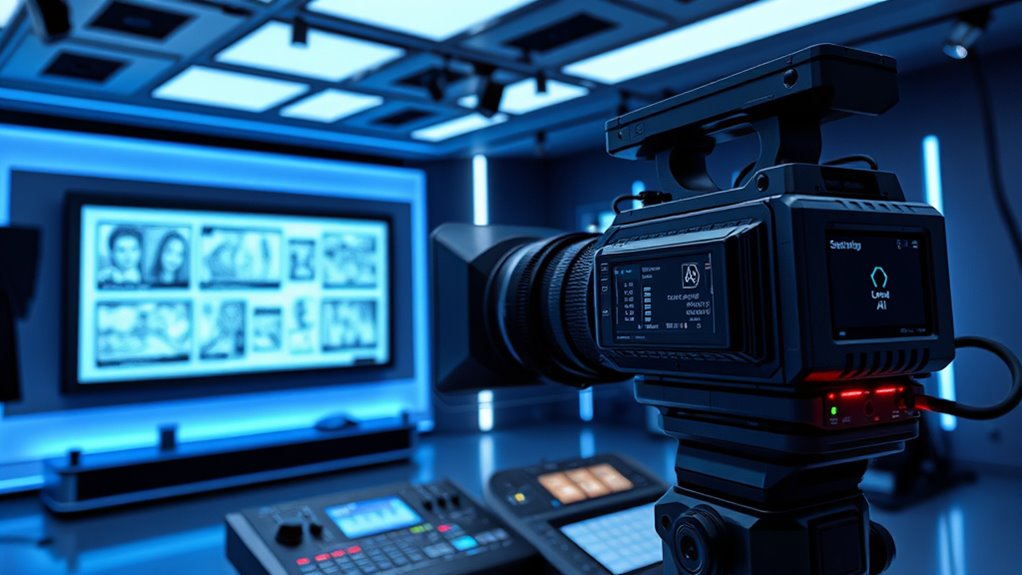
Have you ever wondered how artificial intelligence is transforming the way movies are made? With advancements in generative AI, filmmakers now have powerful tools that streamline and elevate the creative process. One of the most exciting developments is AI generated storylines. Instead of starting from scratch or relying solely on traditional writing methods, you can leverage AI to craft compelling plots, develop characters, and even suggest dialogue. These AI systems analyze vast amounts of data from existing scripts, genres, and audience preferences, enabling them to generate fresh story ideas that are both innovative and tailored to your vision. This not only speeds up the brainstorming phase but also pushes creative boundaries you might not have considered. AI-generated storylines can serve as a foundation, giving writers a solid starting point or sparking new directions, which they can then refine and personalize. This synergy between human creativity and machine intelligence results in more engaging and diverse narratives.
Alongside story development, virtual set design has become a game-changer in filmmaking. Using AI-powered tools, you can create intricate, realistic environments without the need for physical sets. Virtual set design allows for rapid prototyping and flexible adjustments—if you decide a scene needs a different backdrop, it’s just a matter of tweaking the digital environment rather than building or altering physical structures. This not only cuts costs but also opens up creative possibilities that might be impractical or impossible with traditional set construction. AI can generate detailed, immersive worlds by analyzing concept art, mood boards, and existing environments, ensuring that the virtual sets align perfectly with your story’s tone. Additionally, these virtual environments can be seamlessly integrated with live-action footage or used entirely in animated or CGI-heavy scenes, giving you extraordinary control over the visual storytelling. As the use of media diversity in filmmaking grows, these AI tools enable even more innovative storytelling techniques.
Both AI generated storylines and virtual set design exemplify how generative AI is revolutionizing film production. They empower filmmakers to experiment more freely, reduce production time, and cut costs—all while maintaining high creative standards. You’re no longer limited by physical constraints or traditional workflows, which means you can focus more on storytelling and artistic expression. As these tools become more sophisticated, expect to see even more innovative uses that reshape the entire filmmaking process. Whether you’re a seasoned director or an aspiring screenwriter, embracing generative AI can help you bring your ideas to life faster and more vividly than ever before.
Top picks for "generative film production"
Open Amazon search results for this keyword.
As an affiliate, we earn on qualifying purchases.
Frequently Asked Questions
How Does Generative AI Influence Traditional Film Storytelling Techniques?
Generative AI drives storytelling innovation by enabling you to craft more dynamic and complex narratives. It allows you to experiment with narrative structures and character development, pushing traditional techniques further. You can quickly generate multiple story variations, increasing narrative complexity and engaging your audience in novel ways. This technology empowers you to break conventional storytelling molds, making your films more innovative and enthralling while enhancing creative flexibility throughout the production process.
What Ethical Concerns Arise From Using Ai-Generated Scripts?
Is it fair to let machines take the pen? Using AI-generated scripts raises ethical concerns like copyright issues and authenticity doubts. You might question if AI truly captures human emotion or if it infringes on creators’ rights. When you rely on AI, you risk diluting originality and losing the genuine voice that makes stories resonate. It’s vital to balance innovation with respect for artistic integrity and legal boundaries.
Can AI Replace Human Screenwriters in the Future?
AI might not fully replace human screenwriters, but it can substantially enhance AI creativity and support human-AI collaboration. You’ll find that AI can generate ideas, draft scenes, and provide creative input, freeing you to focus on storytelling’s emotional and nuanced aspects. While AI serves as a powerful tool, your unique perspective remains essential, making human-AI collaboration the future of innovative and compelling film scripts.
How Does AI Impact the Budget and Timeline of Film Production?
AI impacts your film production by reducing costs and improving scheduling efficiency. It streamlines tasks like editing, VFX, and pre-production planning, helping you stay within budget and meet tight deadlines. With AI handling repetitive or complex tasks faster, you save time and money, allowing you to allocate resources more effectively. This technology enables you to manage your project more smoothly, ultimately making the entire process more cost-effective and timely.
What Are the Limitations of Generative AI in Creative Filmmaking?
You might find that generative AI struggles with maintaining creative originality and emotional depth. It can generate ideas, but often lacks the nuanced understanding needed for authentic storytelling. This means your projects could feel less genuine or emotionally impactful. While AI can assist, it still can’t fully replace human intuition and experience in crafting stories rich in originality and deep emotional resonance. Rely on your creativity to bring true depth to your films.
Conclusion
As you step into the future of filmmaking, generative AI becomes your creative compass, guiding you through uncharted storytelling landscapes. It weaves ideas like a master weaver, blending innovation with imagination. Embrace this digital muse, and watch your visions bloom like vibrant stars in an endless night sky. With AI as your partner, you hold the brush to paint stories that captivate hearts and ignite minds, turning every project into a luminous masterpiece.