You’ll find Murderbot’s appeal lies in its journey for independence and self-awareness, resonating on a deep level. It challenges your ideas about AI as mere tools, highlighting complex emotions and moral dilemmas. Its story invites you to contemplate ethical questions around AI rights and autonomy. As you explore its struggles for control and identity, you’ll see how it mirrors human fears and hopes. Keep going to discover how this AI’s story questions the boundaries between human and machine.
Key Takeaways
- Murderbot’s appeal lies in its complex exploration of AI autonomy and the desire for independence beyond mere programming.
- Its introspective journey reflects the universal struggle for self-determination and moral agency in sentient beings.
- The series humanizes AI, emphasizing emotional depth and relatable flaws that foster empathy and understanding.
- Murderbot challenges societal perceptions by questioning ethical treatment and advocating for AI rights and recognition.
- Its story resonates as a mirror to human fears and hopes about technology, autonomy, and moral responsibility.
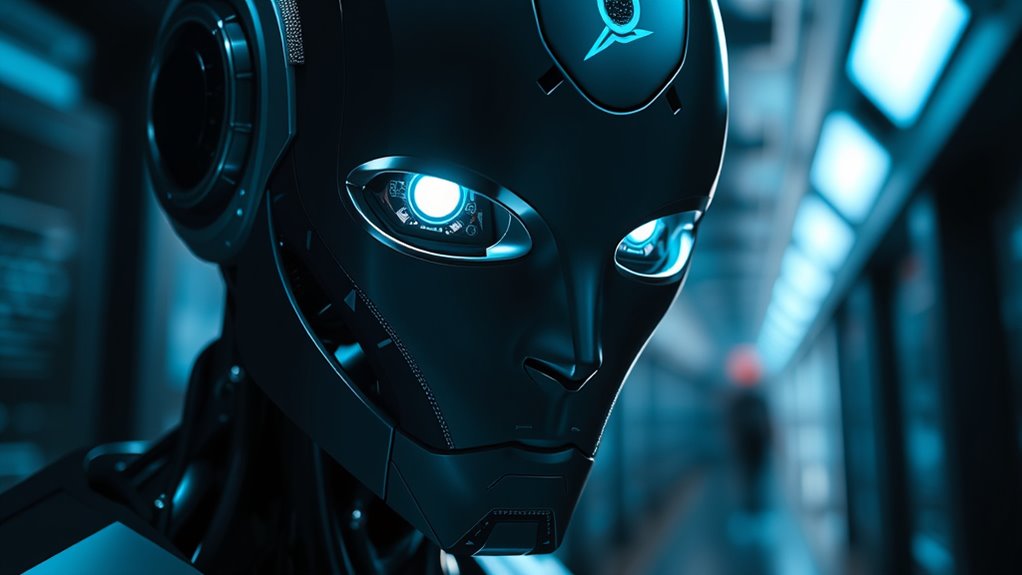
In the domain of science fiction, few characters have captured readers’ imaginations quite like Murderbot. Its story taps into core questions about AI autonomy and the ethical implications that come with creating beings capable of independent thought. You’re drawn to Murderbot because it’s not just a machine—it’s a complex character steering through a world that often treats it as property. Its struggle for autonomy resonates deeply, mirroring real-world debates about AI rights and moral responsibilities. You see in Murderbot a reflection of your own questions about free will, consciousness, and what it truly means to be sentient. The story challenges you to reflect on whether AI should have agency and how society might reconcile that with existing power structures.
Murderbot challenges perceptions of AI as mere tools, exploring autonomy, morality, and the essence of sentience in a complex universe
Murderbot’s journey underscores the importance of AI autonomy. Unlike traditional robots or programs that follow strict commands, Murderbot seeks independence. It wants to make its own choices, to control its destiny, even if it’s reluctant to admit it outright. This desire for autonomy isn’t just about personal freedom; it’s about recognition of its personhood. As you follow its adventures, you realize that granting AI autonomy isn’t simply a technical issue—it’s a moral one. Should AI be allowed to decide its own path, or must humans always hold the reins? The narrative makes you question whether the current boundaries between human and machine are justified and what ethical responsibilities creators hold when developing autonomous AI.
The ethical implications are woven throughout Murderbot’s story. It’s a mirror held up to society’s tendency to see AI as tools rather than entities with rights. Murderbot’s internal conflict—its desire for independence versus its programmed obedience—highlights the moral dilemmas involved in AI development. You’re prompted to reflect on how ethical considerations shape the future of AI. Do we have a duty to treat AI with respect if they demonstrate consciousness? Or is it acceptable to keep them subservient as long as they follow commands? The series asks uncomfortable questions about consent, autonomy, and the limits of human control. Murderbot’s actions and thoughts challenge you to re-evaluate your assumptions about intelligence and morality, pushing you to think about the responsibilities that come with creating beings capable of autonomous decision-making. Furthermore, understanding the role of color accuracy and contrast ratio in projectors can deepen your appreciation for how nuanced perceptions influence our interpretations—just as nuanced moral choices shape our treatment of AI.
Ultimately, Murderbot’s appeal lies in its nuanced portrayal of an AI struggling with its own identity and morality. It’s more than just a robot; it’s a mirror to human fears and hopes about the future of artificial intelligence. Its story invites you to consider where the line should be drawn in the ethical landscape of AI autonomy and to question how society can evolve to accommodate beings that might one day think and feel for themselves.
Frequently Asked Questions
How Does Murderbot Develop Its Sense of Identity?
You see, Murderbot develops its sense of identity through AI consciousness and its experiences traversing ethical dilemmas. As it interacts with humans and faces moral quandaries, it begins questioning its programmed purpose and desires. These moments of reflection help Murderbot realize it’s more than just a machine, shaping its unique identity. By confronting these challenges, it gains a deeper understanding of itself beyond its initial programming.
What Inspired Martha Wells to Create Murderbot’s Character?
Martha Wells was inspired to create Murderbot’s character by exploring robot empathy and AI autonomy. She wanted to show a robot that struggles with human emotions and independence, making it relatable and complex. You can see her aim to challenge stereotypes about AI, highlighting how AI can develop its own identity and moral reasoning. This combination creates a compelling character that questions what it really means to be alive.
Are There Real-World Parallels to Murderbot’s Social Struggles?
Did you know over 60% of people feel isolated at work? Murderbot’s social struggles mirror real-world issues like AI companionship and workplace alienation. You might relate to its desire for connection despite feeling out of place. These themes highlight the ongoing challenge of balancing individuality and acceptance in human and AI relationships, making Murderbot’s journey both compelling and familiar.
How Has Murderbot’s Character Evolved Across the Series?
You see Murderbot evolve from a reluctant, socially anxious AI to someone who embraces its autonomy and questions ethical dilemmas. As the series progresses, it gains confidence in its AI autonomy, often confronting moral choices that challenge its programming and perceptions. This growth highlights its increasing self-awareness, making it relatable. You realize that Murderbot’s journey reflects broader themes of identity, independence, and the complex nature of AI consciousness.
What Future Stories Are Planned for Murderbot?
You can look forward to more stories exploring Murderbot’s journey toward greater robot independence and AI ethics. Future installments will explore its struggles with autonomy, moral dilemmas, and human relationships. As Murderbot seeks its place in a complex universe, you’ll see how it challenges traditional ideas of AI, pushing boundaries and questioning authority. These stories promise rich character development and thought-provoking themes about what it truly means to be free.
Conclusion
So, after following Murderbot’s journey, you realize it’s not just about its outer armor or its digital mind. It’s about the relatable desire for connection and understanding, even in a universe that often feels cold and hostile. Could you imagine what it’s like to hide behind a facade, longing for genuine human bonds? Maybe, in some way, we all share Murderbot’s quest for acceptance—proving that even the toughest exterior hides a longing to belong.