
TL;DR

Get movie nights delivered free with Prime
- Fast, free delivery on millions of items
- Prime Video, Amazon Music and more included
- Member-only deals all year
The available item is a headline describing a popular culture expert unpacking Halloween costume trends. The headline and linked source do not provide the article text, name the expert, or disclose specific costumes, evidence or findings, so no particular trend can be reported as fact.
A Google News RSS listing carries the headline “Pop costumes: Our popular culture expert unpacks Halloween trends,” describing a popular culture expert discussing Halloween costume trends. The listing does not include the article’s findings or identify the expert. It therefore does not confirm which characters, films, shows or other pop-culture references are trending this Halloween.
The Google News RSS listing identifies the item by the title “Pop costumes: Our popular culture expert unpacks Halloween trends.” That wording indicates an article about the relationship between popular culture and Halloween costumes, but the listing does not name any specific costume or explain what the expert said.
The available source provides no article body, interview transcript, survey results, sales figures or search data. It also gives no named expert and no attributable quotation. Without those details, claims about particular characters gaining popularity, or about how costume choices compare with earlier years, cannot be verified.
The headline alone does not establish whether the discussion is based on sales, online searches, retailer observations or the expert’s cultural analysis. Those are different kinds of evidence, and the available listing does not attribute any of them to the article.
Halloween Trends · Source Check
Pop Costumes: What the Available Source Confirms
A headline describes an expert discussion of pop culture and Halloween costumes. The linked Google News RSS listing provides no article text, named expert, costume examples, or evidence—so no individual trend can yet be verified.
The story’s confirmed scope
The available listing gives readers a subject, but not the article’s reporting or conclusions.
Pop culture meets Halloween
The headline presents a discussion of Halloween costume trends through a popular culture lens.
No examples to assess
No characters, films, television shows, creators, or other specific costume references appear in the listing.
No broader shift proven
Without examples, a comparison period, or a stated method, the headline cannot show whether a choice is widespread or newly rising.
Different signals answer different questions
Costume coverage may rely on several kinds of evidence. The listing does not say which, if any, the article uses.
Possible evidence sources
Retailer lists can show what stores feature or sell.
Surveys can report what respondents plan to wear, within a stated sample.
Search activity can indicate interest over a defined period.
Social attention or expert commentary can describe cultural visibility or interpretation.
What each signal cannot prove alone
A search spike shows increased searches—not necessarily purchases or costumes worn.
A retailer list may reflect one seller’s selection, not the choices of all celebrants.
Expert interpretation needs attribution and context to evaluate.
The RSS listing supplies no measures, date range, comparison baseline, or attribution.
What the listing actually contains
These indicators summarize the details available in the supplied source description.
From headline to a supported trend claim
More reporting would be needed at each step before drawing conclusions about popularity.
Headline
Signals an expert discussion about pop culture and costumes.
Full article
Would identify the expert and explain the costumes discussed.
Method & timing
Would specify the season, date range, measure, and comparison.
Measured conclusion
Could support a carefully scoped claim about a trend or forecast.
What remains unanswered?
The full article would be needed to resolve these basic questions.
Which costumes were identified as trends?
The listing names no costumes, characters, or pop culture references.
Who is the popular culture expert?
No name, credentials, or direct quotation is included.
What evidence supports the discussion?
No survey, sales figures, search data, retailer list, or other method is given.
Which Halloween season does it cover?
The listing provides no publication date or year.
Source boundary
Source: Google News RSS listing. It supports only the narrow account that an article was presented as an expert discussion of Halloween pop culture costumes. No specific trend or forecast is confirmed by the available listing.
What Costume Trends Can Reveal
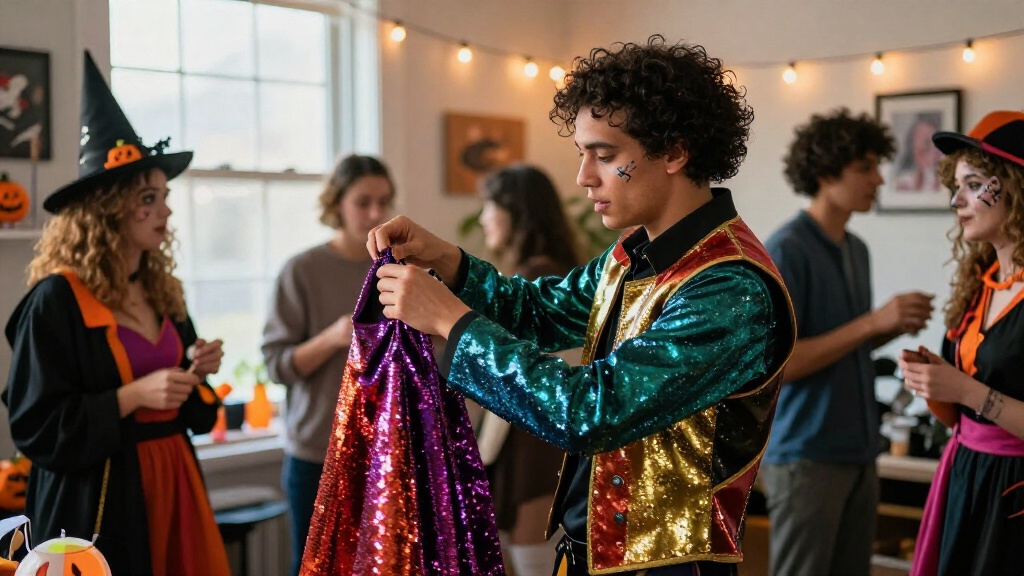
Halloween costumes can reflect which characters and stories are prominent in entertainment and public conversation. A verified account of this year’s choices could help readers understand how those references are showing up in seasonal celebrations and retail activity.
But a headline without the article’s examples or evidence cannot establish a broader shift. Specific costumes, a comparison period and a stated basis for the trend would be needed before readers could judge whether a choice is widespread or simply an expert’s interpretation. For now, the confirmed development is limited to a headline about a trend discussion, as shown in the Google News RSS listing.
Popular right now
LG C2 Series 65-Inch OLED evo 4K Smart TV (OLED65C2PUA, 2022)

De'Longhi Magnifica Evo Automatic Espresso Machine with Milk Frother – Silver

De'Longhi Rivelia Fully Automatic Espresso Machine with Milk Frother, White
As an affiliate, we earn on qualifying purchases.
The Evidence Behind Costume Claims
Halloween costume coverage can draw on several kinds of information: retailer lists, consumer surveys, search activity, social-media attention or commentary from cultural specialists. Each can point to different patterns. A search spike, for example, would show increased interest during a specified period; it would not by itself prove that more people bought or wore a costume.
The Google News RSS listing supplies none of those measures, nor does it give a publication date or identify the year being discussed. That matters because costume popularity is time-sensitive: a film release, a television finale or a widely shared online moment may shape interest for one Halloween season without indicating a lasting change. No such cause or timeline is confirmed by the available source.
The Trend Details Are Missing
The central uncertainty is what the expert actually concluded. The Google News RSS listing does not identify any costume trends, explain how they were assessed or say whether the article cites outside data. It also does not provide the expert’s name, credentials or direct statements.
It is not clear when the piece was published, which Halloween season it covers, or whether “trends” refers to sales, searches, online discussion or cultural interpretation. No ranking, sample size, comparison with previous years or forecast appears in the available listing. Accordingly, no specific popularity claim can be presented as confirmed.
The Full Article Would Clarify
The full article would be needed to establish the expert’s identity, the costumes discussed and the basis for the analysis. If it includes rankings or numerical claims, readers would also need the date range, measurement and comparison baseline to understand what those figures show.
Until those details are available, the Google News RSS listing supports only a narrow account: an article was presented as an expert discussion of Halloween pop-culture costumes. No individual trend or forecast is confirmed by the information at hand.
Source: Google News RSS listing
Key Questions
What Halloween costume trends were identified?
The Google News RSS listing does not name any trends or costumes. The article’s specific findings cannot be confirmed from the information provided.
Who is the popular culture expert?
The available listing includes no name or credentials, so the expert cannot be identified.
What evidence supports the trend discussion?
The available listing includes no survey, sales data, search figures, retailer information or other evidence. It is not clear what basis the article uses.
Which Halloween season does the headline cover?
The Google News RSS listing provides no publication date or year, so the season being discussed is unclear.
Source: news.google.com