
By 2025, you’ll notice a balance between the communal charm of event TV and the personalized flexibility of binge releases. While live, shared viewing still attracts audiences who value collective experiences, streaming platforms increasingly prioritize binge-friendly content suited for flexible schedules and tailored viewing. Advertisers adapt their strategies to target both groups, blending traditional and digital approaches. To discover how this evolving landscape impacts your viewing habits and content choices, keep exploring these trends.
Key Takeaways
- By 2025, event TV continues to attract live, communal audiences, especially among older demographics, while binge releases target younger, digital-savvy viewers.
- Advertising strategies are evolving, with live-event TV relying on real-time ads, and binge platforms focusing on targeted, data-driven campaigns.
- Content delivery trends favor flexible, personalized viewing experiences, blending traditional event programming with on-demand binge consumption.
- Technological advances and data analytics are shaping content customization, impacting how both event TV and binge releases engage audiences.
- The TV ecosystem is increasingly fragmented, with networks tailoring strategies to maximize engagement across diverse viewer preferences.
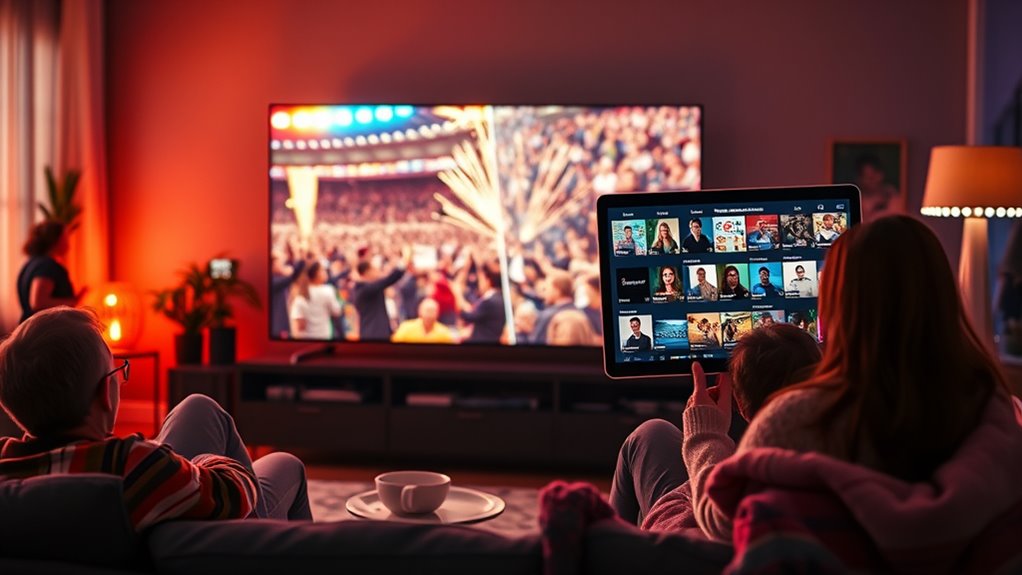
In recent years, the way we consume television has shifted dramatically, sparking debate over which approach offers a better viewing experience—traditional event TV or binge releases. This shift profoundly impacts viewership demographics, influencing how networks and streaming platforms craft their content and target audiences. With event TV, you notice a surge of viewers tuning in at specific times, often drawn by anticipation, creating a communal experience. These viewers tend to be older or more traditional, valuing the shared moment and appointment viewing. Meanwhile, binge releases attract a different demographic—typically younger, more tech-savvy audiences who prefer the flexibility to watch when they want, often in one sitting. This divergence in viewership demographics shapes advertising strategies, too. For event TV, advertisers tend to favor prime time slots, leveraging the large, live audiences for high-impact ads that capitalize on real-time engagement. The sense of immediacy and shared experience allows brands to craft campaigns that resonate during the event, knowing viewers are concentrated and attentive. Conversely, binge releases challenge advertisers to adapt. Since viewers spread out their watching over days or weeks, traditional advertising models are less effective. Instead, platforms often use product placements, targeted digital ads, and data-driven campaigns to reach viewers on their own schedules. This allows for more personalized advertising but makes it harder to create the same sense of communal excitement that event TV fosters. Additionally, the rise of content customization enables viewers to select what, when, and how they watch, further influencing these trends. This shift encourages creators to develop flexible storytelling techniques that cater to diverse viewing habits, making content more adaptable to individual preferences. As a viewer, you benefit from both approaches—sometimes tuning in live for that shared, collective experience, and at other times, indulging in a binge at your convenience. Both methods have their strengths and appeal to different viewing habits, but they also influence how content is made, marketed, and monetized. In 2025, the competition between event TV and binge releases continues to evolve, driven by changing viewer preferences and technological advances. Ultimately, your viewing experience is shaped by these trends, with networks and platforms adapting their strategies to capture your attention in an increasingly fragmented landscape.
Frequently Asked Questions
How Do Viewer Engagement Levels Compare Between Event TV and Binge Releases?
You’ll find that viewer engagement levels tend to be higher with event TV because it encourages viewer interaction and creates a sense of anticipation. Audience loyalty also grows as viewers look forward to weekly episodes. In contrast, binge releases may lead to rapid consumption but often result in lower engagement over time. So, if you want sustained interaction and loyalty, event TV generally fosters a stronger connection with your audience.
What Impact Do Release Formats Have on Show Advertising Strategies?
You find that release formats considerably influence your show’s advertising strategies. With event TV, you can create focused marketing campaigns that build anticipation and boost viewer retention for a specific night. Binge releases, however, require ongoing campaigns to sustain interest over time. Understanding these formats helps you tailor your marketing efforts, ensuring maximum engagement and retention, whether you’re aiming for a big event or continuous viewer involvement.
Are There Demographic Preferences for Event TV Versus Binge Watching?
Think of demographics as different musical notes—each prefers a unique tune. Younger viewers lean toward binge watching, craving the continuous flow of stories, while older audiences favor event TV, appreciating the anticipation like a well-timed crescendo. Your audience segmentation reveals these preferences, guiding you to craft content that resonates with each group’s viewing habits, ensuring your show strikes the right chord with every demographic.
How Do Production Costs Differ Between Event TV and Binge Releases?
You’ll find that production costs differ substantially between event TV and binge releases. Event TV typically involves higher production budgeting for a few episodes, focusing on high-quality content development and big-name talent to create a special, must-see event. Binge releases, on the other hand, spread out costs over a full season, often allowing more gradual content development and potentially lower per-episode expenses, but they require sustained investment over time.
What Technological Innovations Are Influencing Future Release Models?
You’ll see AI personalization and immersive viewing shaping future release models. AI helps tailor content recommendations, making viewers more engaged and increasing retention. Meanwhile, immersive viewing technologies like VR and AR create more interactive experiences, encouraging audiences to connect deeply with the content. These innovations make it easier for producers to deliver customized, engaging experiences, whether through event TV or binge releases, ultimately transforming how you consume entertainment in 2025.
Conclusion
As you navigate the evolving landscape, remember that choosing between event TV and binge releases is like picking between a thrilling roller coaster ride and a steady train journey. In 2025, the trend leans toward the thrill of anticipation, with 60% of viewers favoring weekly drops. Just like waiting for a new episode keeps you hooked, embracing the unpredictability makes your viewing experience richer. Stay flexible—both styles have their unique magic.