The rise of interactive and immersive media experiences transforms how you engage with digital content. These innovations blur the lines between virtual and real worlds, allowing for personalized, active participation. Technologies like augmented reality and virtual environments enable you to explore distant locations, try digital products virtually, and participate in immersive training or social events. As these experiences become more accessible and advanced, you’ll discover even more about how they reshape entertainment, learning, and social connections—so keep exploring what’s next.
Key Takeaways
- Interactive media blurs virtual and real worlds, increasing user engagement and personalization.
- Augmented Reality overlays digital info onto physical environments, enhancing shopping, gaming, and education.
- Virtual environments enable full immersion for training, social interaction, and exploration of distant or fantastical worlds.
- Technological advancements in hardware and connectivity drive more realistic, accessible, and engaging digital experiences.
- These innovations are transforming learning, work, and social connections, making virtual and physical worlds increasingly interconnected.
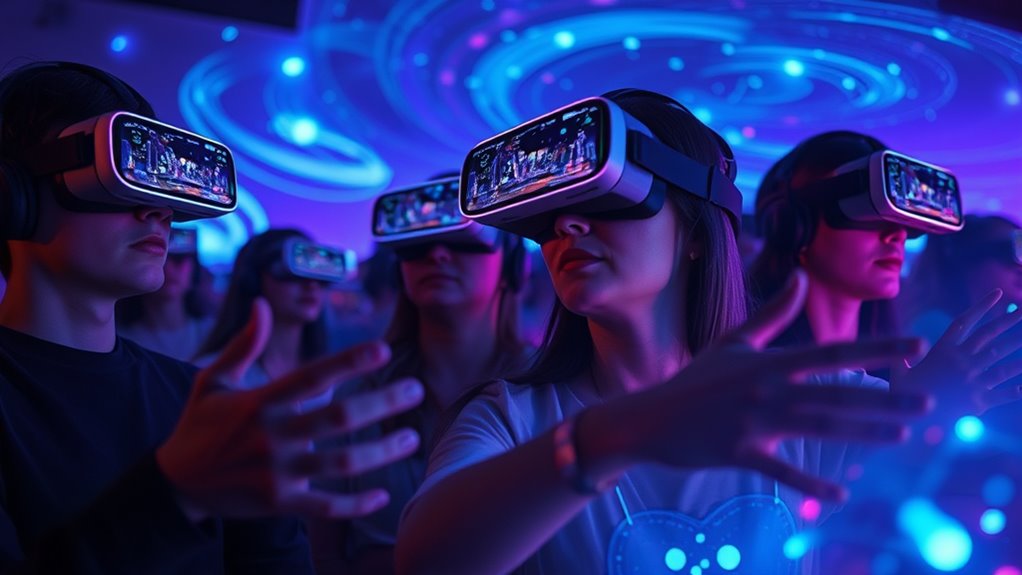
Interactive and immersive media experiences are transforming the way you engage with digital content, blurring the lines between the virtual and real worlds. With advancements like augmented reality and virtual environments, you’re now able to step beyond traditional screens and truly immerse yourself in digital spaces. These innovations create a seamless blend of physical and digital elements, making your interactions more dynamic and personalized. Instead of passively viewing content, you become an active participant, exploring virtual environments that respond to your movements and choices.
Interactive media blurs virtual and real worlds, making digital experiences more dynamic, personalized, and engaging.
Augmented reality (AR) enhances your real-world surroundings by overlaying digital information, graphics, or objects directly onto what you see through your smartphone or AR glasses. This technology transforms everyday experiences—whether it’s shopping, gaming, or education—by adding layers of interactive content that adapt to your environment. Imagine walking through a museum and seeing historical reconstructions overlaid on exhibits or trying on virtual clothes in your living room before making a purchase. AR makes these possibilities a reality, enriching your perception of the physical world with digital enhancements.
Virtual environments, on the other hand, allow you to fully immerse yourself in entirely digital worlds. Using VR headsets, you can transport yourself to distant locations, fantastical worlds, or simulated scenarios that feel incredibly real. This level of immersion isn’t just for gaming; it’s increasingly used in training, therapy, and social interactions. For example, you could attend a virtual conference, collaborate with colleagues from across the globe, or learn new skills in a controlled, simulated setting. The key is that you can manipulate and explore these environments as if they were tangible, giving you a sense of presence and agency that traditional media simply can’t match.
The rise of these interactive and immersive media experiences is driven by advances in hardware, software, and connectivity. High-quality graphics, real-time tracking, and low-latency data transfer make your interactions smooth and convincing. Developers are designing experiences that are intuitive and accessible, allowing you to jump into virtual environments or AR overlays without steep learning curves. As these technologies become more affordable and widespread, you’ll find yourself engaging with digital content in ways that feel natural and compelling.
Furthermore, understanding time zone information and utilizing tools like world clocks can help you coordinate these global, immersive interactions more effectively. Ultimately, these innovations are reshaping how you learn, work, play, and connect. They’re creating environments where your actions influence digital worlds and your surroundings are enriched with interactive content. The boundary between virtual and physical is becoming increasingly fluid, offering you an exciting glimpse into the future of digital engagement.
Frequently Asked Questions
How Do Interactive Media Experiences Impact User Engagement?
Interactive media experiences boost your engagement by immersing you through virtual reality, making you feel like you’re part of the environment. This user immersion keeps you actively involved, encouraging deeper exploration and emotional connection. When you’re more engaged, you’re likely to remember the experience longer and feel more satisfied. Virtual reality enhances this effect by creating realistic, enchanting worlds that draw you in and sustain your interest.
What Ethical Concerns Arise With Immersive Media Technologies?
Like a mirror reflecting our deepest fears, immersive media raises ethical concerns. You might unwittingly compromise data privacy as personal information becomes a tool for manipulation. Psychological effects, such as blurred reality and emotional dependency, pose risks to your mental health. These technologies challenge boundaries, urging you to contemplate how your digital self is shaped and protected, emphasizing the need for responsible development and ethical standards.
How Accessible Are These Experiences for Differently-Abled Users?
You might find that immersive media experiences are becoming more accessible for differently-abled users thanks to assistive technologies like voice commands, haptic feedback, and customizable interfaces. Developers increasingly prioritize user accessibility, but gaps remain, especially for those with complex disabilities. To fully enjoy these experiences, you’ll want continuous improvements and inclusive design practices that cater to diverse needs, ensuring everyone can participate fully in interactive and immersive environments.
What Are the Costs Associated With Developing Immersive Media Projects?
Sure, developing immersive media projects costs a fortune, but hey, who’s counting? You’ll need to contemplate cost estimation and budget planning carefully. High-quality visuals, 3D modeling, and interactive design all add up fast. Hardware requirements, software licenses, and testing also inflate the budget. So, while creating these experiences may seem like a costly adventure, meticulous planning helps you manage expenses and avoid surprises along the way.
How Do Immersive Media Experiences Influence Traditional Entertainment Industries?
Immersive media experiences revolutionize traditional entertainment by transforming virtual storytelling through sensory technology, making scenes more vivid and engaging. You’re drawn deeper into stories, experiencing environments firsthand rather than passively watching. This shift challenges industries like film, gaming, and live events to innovate continually, blending technology with creativity. As a result, audiences expect more interactive and personalized content, pushing traditional entertainment to evolve rapidly to stay relevant.
Conclusion
As you explore the world of interactive and immersive media, you become the captain of your own voyage, steering a sea of endless possibilities. These experiences are the bridges connecting you to new realities, transforming passive viewers into active participants. Embrace this evolution, for it’s a wildfire igniting creativity and connection. The future of media isn’t just knocking; it’s crashing through the door, inviting you to step into a universe where imagination knows no bounds.