
Power training helps you maintain strength, balance, and independence as you age. It boosts muscle responsiveness, reduces fall risk, and improves daily task performance like climbing stairs or carrying groceries. Easy exercises such as quick chair stands or resistance band presses can fit into your routine. Consistently practicing power movements enhances overall stability and resilience. If you want to learn simple sample exercises and tips for safe, effective training, keep exploring how you can age gracefully with strength.
Key Takeaways
- Power training enhances muscle strength, stability, and balance, reducing fall risk in aging populations.
- It improves daily functional abilities like climbing stairs and carrying objects.
- Exercises such as quick chair stands and resistance band presses are practical and effective.
- Regular power training boosts bone health, mood, and cardiovascular fitness.
- Consistent, safe practice maintains independence and overall well-being in older adults.
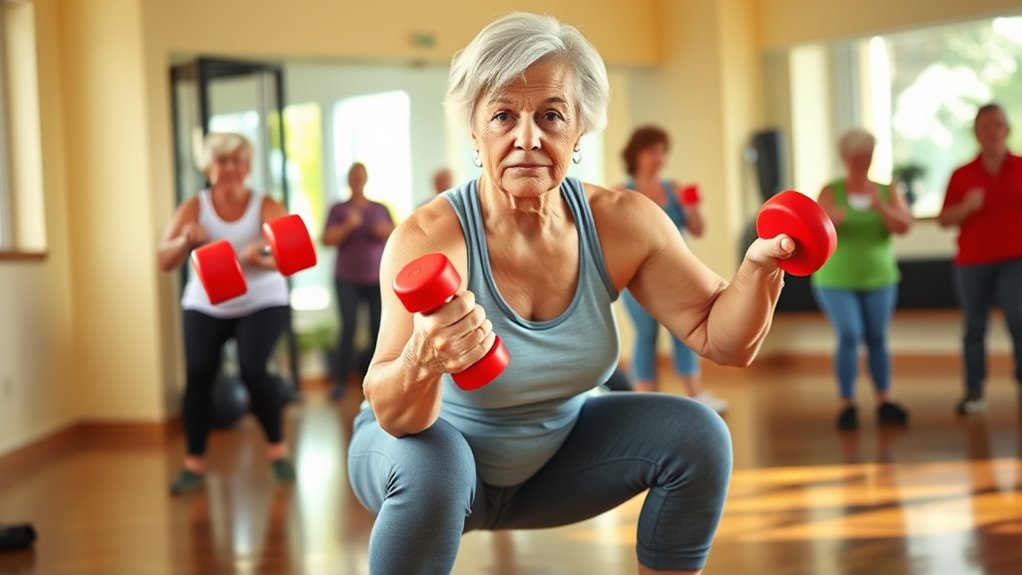
Have you ever wondered how maintaining strength can boost your health as you age? One of the most effective ways to do this is through power training, which focuses on building muscle strength and explosive movement. As you age, your muscle mass naturally declines, leading to weaker muscles and increased risk of falls. Power training helps counteract this loss by stimulating your muscles to stay strong and responsive. When you incorporate these exercises into your routine, you not only preserve muscle mass but also improve your overall stability and balance. This directly contributes to fall prevention, a critical factor in maintaining independence and reducing injury risk. By focusing on controlled, high-velocity movements, you can develop the strength needed to react quickly and maintain your footing during everyday activities.
Power training boosts strength, stability, and fall prevention as you age.
Power training doesn’t require elaborate equipment or hours at the gym. Simple exercises like standing up from a chair quickly, or doing quick leg presses with resistance bands, can be highly effective. The key is to perform movements with a focus on speed and control, emphasizing explosive effort rather than slow, heavy lifting. This approach trains your nervous system to activate muscles more efficiently, which is essential as you get older. When you regularly include power-focused exercises, you’ll notice improvements in your ability to perform daily tasks—carrying groceries, climbing stairs, or even catching yourself if you stumble. These skills are indispensable for maintaining independence and confidence in your daily life.
Moreover, engaging in power training can boost your bone health, improve cardiovascular fitness, and elevate your mood. It’s a manageable way to stay active without feeling overwhelmed. Start slow, and gradually increase the intensity and complexity of the exercises as your strength improves. For example, you could do quick squats, push-ups, or step-ups on a sturdy platform, always prioritizing proper form and safety. Incorporate these moves into your routine two to three times a week for best results. Remember, consistency is key—little efforts add up over time, helping you stay strong and resilient against age-related decline.
In essence, power training offers a practical, effective way to maintain muscle mass and prevent falls as you age. It empowers you to stay mobile, confident, and independent longer. By focusing on explosive, controlled movements, you’re training your body to respond better in everyday situations, reducing the risk of injuries and supporting your overall well-being. It’s never too late to start, and even small efforts can make a big difference in how you age gracefully and healthily.
Frequently Asked Questions
How Often Should Seniors Perform Power Training Exercises Weekly?
You should perform power training exercises two to three times a week, allowing at least one rest day between sessions. Maintain a moderate exercise intensity to challenge your muscles without risking injury. Consistent training frequency helps improve strength, balance, and overall mobility, which are vital for healthy aging. Remember to listen to your body and adjust the intensity and frequency as needed, ensuring safe and effective workouts.
Are There Any Risks or Contraindications for Older Adults Doing Power Training?
Did you know that about 70% of older adults experience injuries from improper exercise? While power training offers many benefits, you should consider medical considerations and exercise safety. Risks include joint strain or falls if exercises aren’t performed correctly. Always consult your healthcare provider before starting, and work with a trained instructor to ensure proper form and adapt exercises to your abilities. This approach helps mitigate risks and keeps you safe.
Can Power Training Help Improve Balance and Prevent Falls?
Power training can definitely help improve your balance and prevent falls. By increasing muscle strength and explosiveness, you enhance stability and coordination, making it easier to recover from slips or trips. Regularly engaging in power exercises boosts your confidence and functional ability, reducing fall risk. Incorporate safe, targeted movements into your routine, and you’ll notice improved balance and a stronger foundation for everyday activities.
What Equipment Is Necessary for Safe Power Training at Home?
Did you know that over 60% of falls happen at home? To guarantee safe power training, you only need basic equipment like light dumbbells, resistance bands, or a sturdy chair. Focus on equipment safety by checking for stability and avoiding clutter. Set up your home exercise space in a well-lit, clutter-free area, making sure your equipment is secure. This creates a safe, effective environment for your power training.
How Do I Modify Exercises for Existing Health Conditions?
You should start by considering your individual health considerations and consult with your healthcare provider. Use exercise modification techniques like reducing weight, slowing down movements, or avoiding certain positions to guarantee safety. Listen to your body, stop if you feel discomfort, and gradually increase intensity as tolerated. Always prioritize safety, and tailor exercises to your needs to effectively improve strength while managing existing health conditions.
Conclusion
By embracing power training, you’re building a sturdy foundation for your future, much like planting a resilient tree that withstands storms. Imagine feeling stronger and more confident with every workout, just as Anna did when she regained her independence after starting her routine. Remember, small steps lead to big changes—each session is like adding a brick to your fortress of health. Stay committed, and watch your vitality flourish as you age gracefully and powerfully.