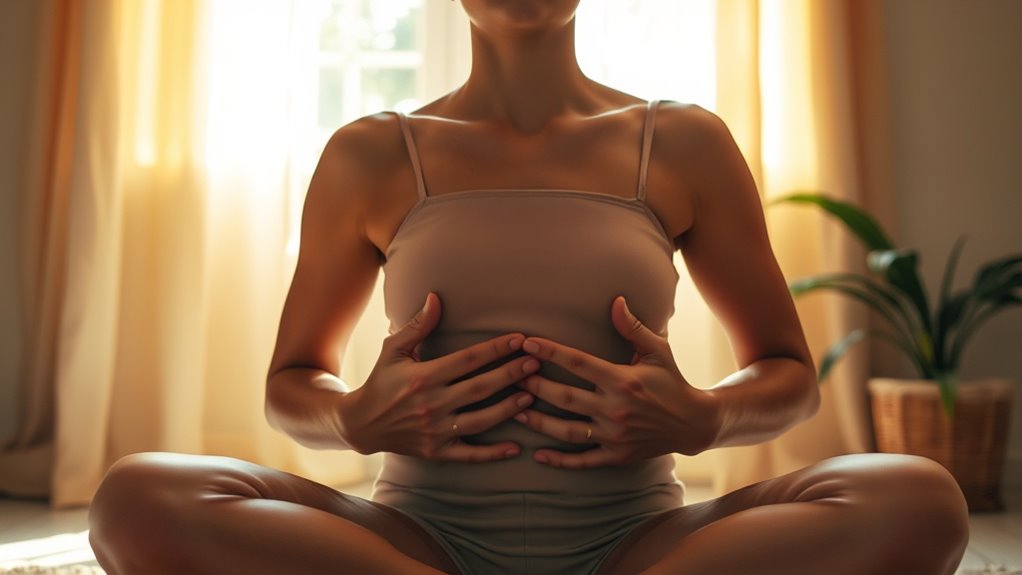

Breathing techniques like diaphragmatic (belly) breathing and mindfulness meditation activate your vagus nerve, helping you relax and reduce stress. You can do these exercises anytime—during work, rest, or hectic moments—by slowing your breath, focusing on your inhalation and exhalation, and engaging your diaphragm. These methods promote better mental clarity, emotional resilience, and physical health. Keep exploring to discover more simple practices that can boost your well-being through vagus nerve stimulation.
Key Takeaways
- Practice diaphragmatic (belly) breathing to gently activate the vagus nerve and promote relaxation.
- Focus on slow, deep inhalations and exhalations to stimulate parasympathetic response.
- Incorporate mindfulness meditation to enhance awareness and support vagus nerve engagement.
- Use breathing techniques during stress or anxiety for quick vagus nerve activation.
- Regular practice improves overall vagal tone, reducing stress and improving emotional resilience.

Breathing techniques are a simple yet powerful way to stimulate your vagus nerve and promote overall well-being. When you focus on your breath, you activate the parasympathetic nervous system, which encourages relaxation and reduces stress. Two effective methods you can practice are mindfulness meditation and diaphragmatic breathing. Both techniques help you harness your breath to improve mental and physical health.
Mindfulness meditation involves paying close attention to your breath, observing each inhale and exhale without judgment. As you settle into this practice, you become more aware of your body‘s responses to stress and tension. You might start by sitting comfortably, closing your eyes, and simply noticing the sensation of air moving in and out of your lungs. When your mind wanders, gently bring your focus back to your breath. This heightened awareness not only calms your mind but also stimulates your vagus nerve by fostering a state of presence and relaxation. Over time, mindfulness meditation can lower cortisol levels, reduce anxiety, and enhance your overall sense of well-being.
Pay close attention to your breath to calm your mind and activate your vagus nerve naturally.
Diaphragmatic breathing, also known as belly breathing, is another powerful technique that directly influences your vagus nerve. It involves taking slow, deep breaths that engage your diaphragm, the large muscle beneath your lungs. To practice, place one hand on your chest and the other on your belly. As you inhale deeply through your nose, focus on expanding your diaphragm so that your belly rises while your chest stays relatively still. Then, exhale slowly through your mouth or nose, allowing your belly to fall. This type of breathing encourages a full exchange of oxygen and carbon dioxide, which activates the vagus nerve and promotes a calming response. Diaphragmatic breathing can be easily integrated into your daily routine—whether you’re sitting at your desk, lying in bed, or taking a break during a hectic day.
Both mindfulness meditation and diaphragmatic breathing are accessible, requiring no special equipment or location. By regularly practicing these techniques, you strengthen your body’s natural ability to relax and recover from stress. Incorporating environmental considerations such as proper campsite selection and minimal impact practices can support your overall well-being during outdoor activities. Over time, you’ll notice improvements not just in your mental clarity and emotional resilience, but also in physical health markers like reduced blood pressure and heart rate variability. Incorporating these simple breathing practices into your routine allows you to tap into the power of your vagus nerve, fostering a calmer, more balanced state of being with each mindful breath.
Frequently Asked Questions
Can Breathing Techniques Replace Medical Treatment for Vagus Nerve Issues?
Breathing techniques and lifestyle modifications can support your vagus nerve health, but they shouldn’t replace medical treatment. Alternative therapies may help manage symptoms and improve your overall well-being, yet it is crucial to consult your healthcare provider for proper diagnosis and treatment. Combining these approaches can be beneficial, but always prioritize professional advice to ensure you’re addressing your specific condition effectively and safely.
Are There Any Risks Associated With Specific Breathing Exercises for Vagus Nerve Stimulation?
Breathing exercises are like steering a river—smooth sailing with proper caution. While generally safe, breathing safety isn’t guaranteed for everyone. Contraindication risks include dizziness, hyperventilation, or discomfort if you have certain health conditions. Always listen to your body and consult a healthcare professional if you experience adverse effects. Avoid pushing too hard, and remember that what’s safe for one person might not be for another.
How Long Does It Typically Take to Notice Benefits From These Techniques?
You might start noticing symptom improvement within a few days to a few weeks of consistent practice, but timing expectations vary. Some people experience benefits quickly, while others may need several weeks of regular breathing exercises. Keep practicing daily, and stay patient—consistent effort often leads to the best results. Remember, individual responses differ, so focus on maintaining your routine and tracking your progress over time.
Can These Breathing Methods Help With Anxiety or Depression?
Yes, these breathing methods can help with anxiety and depression. By practicing mindfulness meditation and diaphragmatic breathing regularly, you activate your vagus nerve, which promotes relaxation and reduces stress. These techniques help you stay present and calm your mind, making it easier to manage emotional challenges. Incorporate them into your daily routine, and over time, you’ll likely notice improved mood and decreased anxiety symptoms.
Are There Age Restrictions for Practicing Vagus Nerve Stimulation Exercises?
Sure, because everyone from tiny tots to grandpas should try vagus nerve exercises without a care, right? Actually, age considerations and pediatric safety are vital. Children should only practice under medical supervision, and adults can usually do these exercises safely. Always consult a healthcare professional to make certain that your age and health condition align with these techniques. Ignoring age restrictions could lead to unintended consequences—so, play it safe, and get expert advice.
Conclusion
Think of your breath as a gentle river flowing through your body, guiding calmness and balance. By mastering these breathing techniques, you become the skilled captain steering this river, calming storms and nourishing your inner landscape. With each mindful inhale and slow exhale, you send ripples of serenity through your vagus nerve, restoring harmony within. Embrace these practices, and watch as your well-being blossoms like a peaceful lake, deep and resilient.