
Around the world, leaders emphasize the need for responsible AI governance in military applications. They call for clear ethical standards, transparency, and international cooperation to prevent an arms race and guarantee weapons are used ethically. Countries want to establish norms that balance security with human oversight. If you want to understand how these global efforts are shaping future regulations and safeguarding ethical values, there’s much more to explore.

Get movie nights delivered free with Prime
- Fast, free delivery on millions of items
- Prime Video, Amazon Music and more included
- Member-only deals all year
Key Takeaways
- International treaties are being proposed to regulate autonomous weapons and ensure human oversight in military AI deployment.
- Global calls emphasize transparency, accountability, and verification measures to prevent misuse and escalation of AI in warfare.
- Many nations advocate for establishing shared ethical standards and norms to guide responsible military AI development.
- Diplomatic efforts focus on preventing an AI arms race by promoting cooperation and mutual trust among countries.
- Balancing security interests with ethical considerations is central to international discussions on military AI governance.
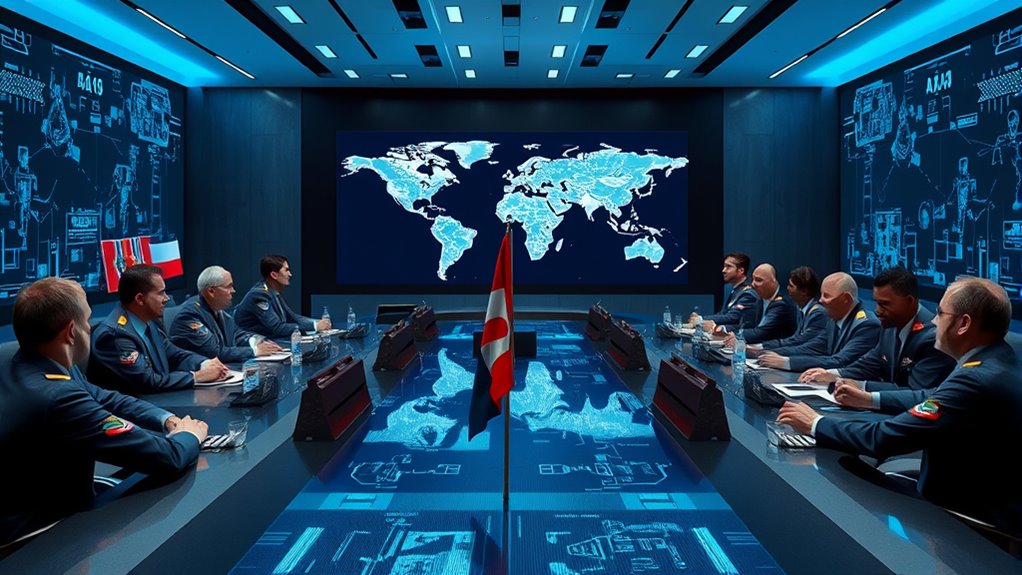
How can nations guarantee responsible use of AI in military applications without compromising security? This question sits at the heart of ongoing debates about AI governance. As countries develop increasingly sophisticated military AI, they face ethical dilemmas that challenge traditional notions of warfare, accountability, and human oversight. These dilemmas include concerns about autonomous weapons making lethal decisions without human intervention and the potential for AI to escalate conflicts unintentionally. To address these issues, many experts argue that international treaties are essential. These treaties can set clear boundaries on the development, deployment, and use of military AI, ensuring that countries adhere to shared standards that prioritize human safety and ethical considerations. Without such agreements, there’s a real risk that AI technology could be weaponized irresponsibly, leading to unpredictable escalation and unintended consequences.
International treaties act as a framework for transparency and mutual accountability. They help create a common understanding of what constitutes acceptable use, reducing the chances of arms races and miscalculations. For example, treaties could restrict the deployment of fully autonomous weapons systems capable of selecting and engaging targets without human oversight. By establishing these limits, nations can foster trust and prevent a scenario where AI-driven weapons operate outside the bounds of international law. Such agreements also serve as a basis for verification and compliance, making it harder for countries to secretly develop or use AI systems in ways that violate agreed-upon norms. Moreover, the use of Cookies and other tracking tools can provide insights into compliance with international standards, aiding transparency efforts.
However, crafting effective treaties isn’t straightforward. It requires international cooperation, openness, and a shared commitment to ethical standards. Different countries often have divergent views on military AI, driven by strategic interests, technological capabilities, and ethical perspectives. Some nations may prioritize security over restrictions, fearing that limitations could weaken their military edge. Others emphasize the importance of preventing an AI arms race that could destabilize global security. To bridge these gaps, diplomatic negotiations must focus on building consensus around core principles—such as human oversight, accountability, and the minimization of harm—while allowing flexibility for technological advancements.
Ultimately, responsible AI governance in military applications hinges on the ability of nations to balance security interests with ethical imperatives. International treaties are pivotal tools in this effort, guiding responsible development and use while safeguarding global stability. By establishing clear norms and commitments, countries can prevent misuse, reduce ethical dilemmas, and work towards a future where AI enhances security without compromising human values. The path forward demands cooperation, transparency, and a shared understanding of the profound implications of AI in warfare.
As an affiliate, we earn on qualifying purchases.
Frequently Asked Questions
How Do Different Countries’ Military Policies Impact Global AI Governance Efforts?
Your country’s military policies directly influence global AI governance efforts by shaping standards around military sovereignty and technological sovereignty. When nations prioritize their own military advancements without international cooperation, it can hinder unified regulations. Conversely, collaborative policies promote transparency and responsible AI use. You need to contemplate how your nation’s stance on military sovereignty impacts global efforts, ensuring that AI development aligns with shared ethical standards and helps foster international stability.
What Are the Ethical Considerations Unique to AI in Military Contexts?
You face a profound dilemma: should autonomous weapons decide life or death? Autonomy dilemmas challenge your moral boundaries, questioning whether machines can make ethical choices. Accountability challenges haunt your decisions—if an AI errs, who’s responsible? The stakes are high, and the ethical lines blur, forcing you to confront difficult questions about human oversight, morality, and the true cost of deploying AI in warfare’s darkest moments.
How Can International Cooperation Be Enforced in AI Military Regulation?
You can enforce international cooperation in AI military regulation through robust treaty enforcement and compliance mechanisms. By establishing clear, verifiable agreements, you guarantee nations adhere to shared standards. Regular inspections, transparency reports, and dispute resolution processes strengthen compliance. Strong enforcement signals that violating treaties results in consequences, motivating nations to follow rules. These measures create accountability, ensuring global cooperation in regulating AI military applications effectively.
What Role Do Private Tech Companies Play in Military AI Development?
Think of private tech companies as the engines driving military AI development, shaping innovation challenges and setting the pace. You play a vital role in corporate responsibility, ensuring ethical standards guide their advancements. As innovators, they must balance breakthroughs with risks, knowing their decisions impact global security. Your awareness and oversight can help steer these companies toward responsible AI use, preventing unchecked escalation in military applications.
How Might AI Governance Influence Future Warfare Strategies?
AI governance will shape your future warfare strategies by setting clear rules for autonomous warfare, ensuring responsible use of AI in combat. It could limit or regulate autonomous systems, making you rethink tactics and prioritize strategic deterrence through controlled AI deployment. This oversight might reduce risks, prevent escalation, and promote transparency, compelling you to adapt to new standards that influence how autonomous warfare evolves, ultimately affecting your approach to conflict and security.
AI ethical standards for defense
As an affiliate, we earn on qualifying purchases.
As an affiliate, we earn on qualifying purchases.
Conclusion
As you consider the future of AI in military applications, remember that without proper governance, we risk releasing chaos on an unimaginable scale—possibly the greatest threat humanity has ever faced. Global calls for regulation aren’t just bureaucratic red tape; they’re the lifeline that can prevent a technological catastrophe. Stay informed and advocate for responsible AI policies, because if we ignore this wake-up call, we might be unleashing an unstoppable force that could reshape the world forever.
As an affiliate, we earn on qualifying purchases.
autonomous weapons verification tools
As an affiliate, we earn on qualifying purchases.
As an affiliate, we earn on qualifying purchases.
Halloween Picks
halloween
As an affiliate, we earn on qualifying purchases.