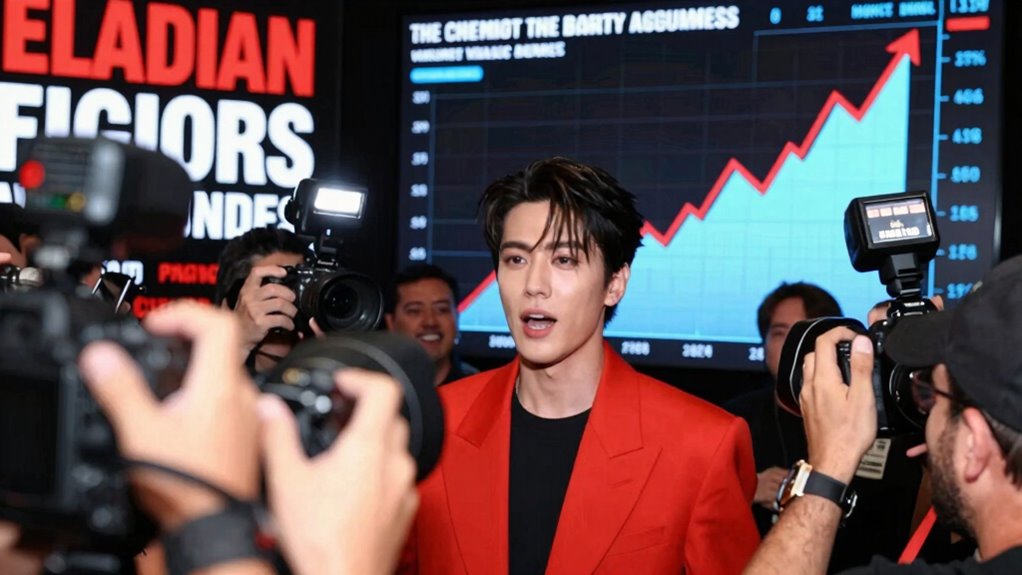

Algorithms reward outrage because it drives you to click, comment, and share more often. They prioritize sensational stories that provoke emotional reactions like anger or shock, knowing these keep you hooked. Outrage fuels a feedback loop where more emotional responses lead to increased visibility and engagement. Media and celebrity coverage often exploit this by amplifying controversy. If you want to understand how these algorithms keep you hooked on outrage, keep exploring the ways they shape what you see online.

Get movie nights delivered free with Prime
- Fast, free delivery on millions of items
- Prime Video, Amazon Music and more included
- Member-only deals all year
Key Takeaways
- Algorithms prioritize content that generates high user engagement, such as outrage or controversy, to increase platform activity.
- Outrageous celebrity stories elicit strong emotional reactions, boosting shares, comments, and overall visibility.
- Sensational media coverage is amplified because it triggers moral outrage, which algorithms recognize as engaging.
- Platforms reward provocative content with higher rankings, encouraging creators to produce more sensationalized coverage.
- The feedback loop of outrage-driven engagement sustains visibility of controversial celebrity and media stories.

In today’s digital landscape, algorithms are increasingly rewarding outrage because it drives engagement and keeps users glued to their screens. When you scroll through celebrity and media coverage, you might notice that provocative stories or controversial comments often appear at the top. That’s no coincidence. Platforms optimize for what keeps you clicking, sharing, and commenting, and outrage fuels that cycle. This isn’t just about capturing attention; it’s about exploiting your emotional responses, especially moral outrage. When you see a celebrity caught in a scandal or a heated debate about a social issue, the algorithm recognizes your reactions—anger, shock, disappointment—and feeds you more of it. Your emotional manipulation becomes the engine behind this cycle, encouraging you to stay immersed in the controversy.
Moral outrage is particularly potent because it taps into your sense of right and wrong. When you encounter stories that challenge your moral values or threaten your worldview, your emotional response intensifies. The algorithms pick up on this, amplifying these stories to maximize engagement. They essentially reward outrage because it generates more comments, shares, and reactions, which in turn boosts the content’s visibility. As a result, you’re encouraged to form strong opinions quickly, often without fully understanding the nuances of a situation. This simplifies complex issues into black-and-white conflicts, making it easier for you to feel morally justified in your reactions. The cycle perpetuates itself: the more outraged you are, the more the platform pushes similar content, which deepens your emotional investment. Additionally, the use of content algorithms to prioritize sensational stories ensures that outrage remains a key driver of online activity.
media literacy book for understanding algorithms
As an affiliate, we earn on qualifying purchases.
As an affiliate, we earn on qualifying purchases.
Frequently Asked Questions
How Do Algorithms Determine What Content Is Considered “Outrageous”?
Algorithms identify “outrageous” content by analyzing viral triggers like sensational headlines, shocking visuals, and provocative language. They prioritize content that sparks emotional amplification, making viewers react strongly. When you engage with such posts—liking, commenting, or sharing—the algorithm recognizes the emotional response and pushes it further. This cycle fuels outrage, encouraging more sensational content to surface, as it drives higher engagement and keeps you hooked longer.
Are There Ethical Concerns With Algorithms Promoting Outrage?
Yes, there are ethical concerns with algorithms promoting outrage. You should consider the moral implications, like fueling division or misinformation, which can harm society. Algorithms may also reflect biases, making it harder to detect and correct them. This bias detection is essential to guarantee fairness and prevent the amplification of harmful content. Ultimately, promoting outrage without ethical safeguards risks undermining trust and social cohesion.
How Can Media Outlets Mitigate Algorithm-Driven Outrage?
Imagine you’re in the 21st century, where media outlets can’t ignore the rise of algorithms fueling outrage. To mitigate this, focus on boosting genuine audience engagement through balanced, well-crafted content. Implement strict content moderation policies to prevent sensationalism and false information. By prioritizing responsible storytelling and fostering respectful dialogue, you reduce the risk of outrage-driven algorithms dominating your coverage, ultimately building trust and a loyal audience.
Do Algorithms Favor Certain Types of Celebrities Over Others?
Yes, algorithms often favor certain types of celebrities over others due to celebrity bias and media bias. You’ll notice that mainstream or controversial celebrities tend to get more exposure because algorithms prioritize engagement, which they associate with outrage or sensational content. This bias skews coverage, making some celebrities more prominent while others struggle for visibility. So, algorithms can unintentionally reinforce existing media biases, influencing public perception and discourse.
Can Algorithmic Rewards Influence Public Opinion Changes?
You might not realize it, but algorithms can profoundly influence your opinions through social amplification and emotional targeting. Studies show content that sparks outrage gets shared 10 times more than neutral posts, shaping public perception quickly. This means algorithms favor emotionally charged content, steering your views and amplifying certain narratives. So, yes, algorithmic rewards can sway public opinion by emphasizing provocative stories that resonate emotionally, nudging you toward particular perspectives without you even noticing.
how algorithms influence online outrage
As an affiliate, we earn on qualifying purchases.
As an affiliate, we earn on qualifying purchases.
Conclusion
You might be surprised to learn that outrage-driven content generates up to 70% more engagement than neutral coverage. As you consume celebrity and media stories online, remember that algorithms favor emotion, often amplifying outrage to keep your attention. This cycle not only distorts the truth but also fuels division. Staying aware helps you resist being manipulated by sensationalism, ensuring you seek out more balanced, honest stories instead of falling into the trap of outrage-driven media.
As an affiliate, we earn on qualifying purchases.
Columbus Day / Indigenous Peoples' Day Picks
long weekend sales
As an affiliate, we earn on qualifying purchases.