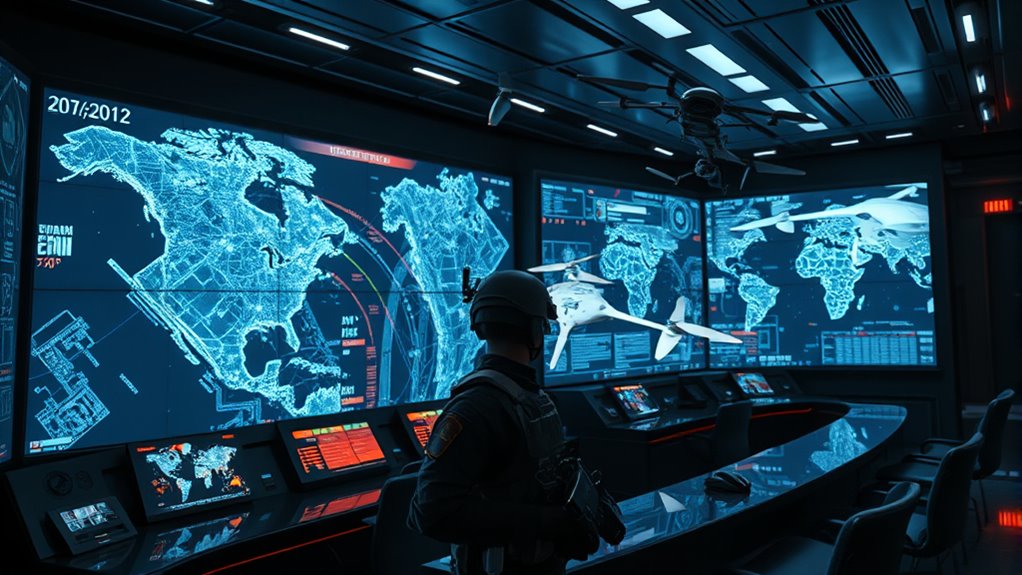

AI is transforming defense by enhancing decision-making speed and accuracy, giving you a significant strategic edge. It analyzes vast data in real time, improving threat detection and situational awareness, while autonomous weapons can identify and engage targets without human input. However, ethical concerns and the need for human oversight remain essential to prevent misuse and ensure accountability. If you continue exploring, you’ll gain deeper insights into how AI’s role in defense is shaping future warfare.
Key Takeaways
- AI enhances battlefield decision-making by analyzing large data sets rapidly, improving situational awareness and strategic planning.
- Autonomous weapons leverage machine learning to identify, target, and engage threats without human input, raising ethical concerns.
- Human oversight remains crucial to ensure ethical decision-making and prevent unintended harm or escalation.
- Transparency in AI decision processes is vital for accountability and aligning with international humanitarian laws.
- Collaboration among policymakers, military leaders, and ethicists is essential to develop responsible frameworks for AI deployment in defense.
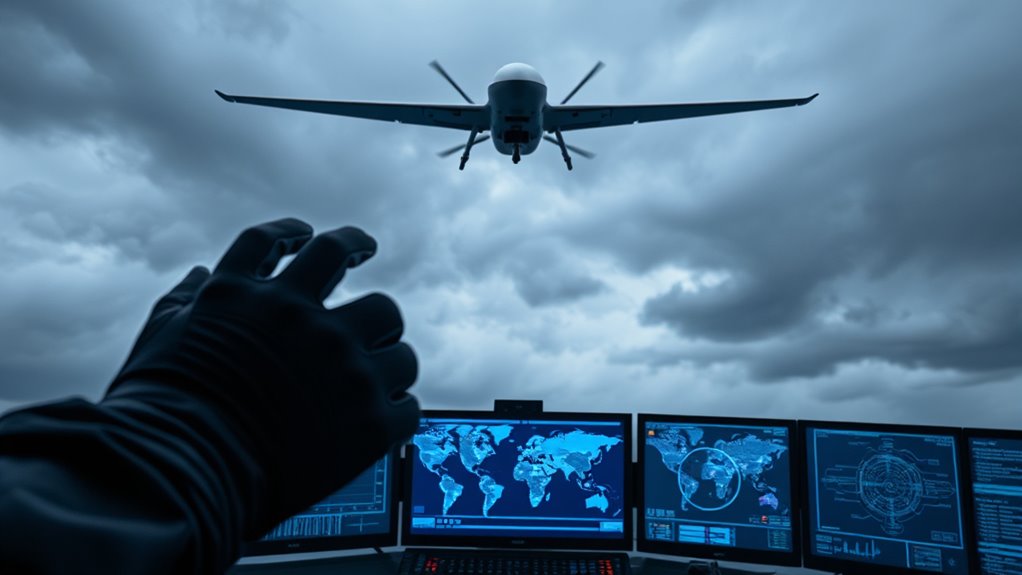
Have you ever wondered how artificial intelligence is transforming defense operations? AI is rapidly reshaping how decisions are made on the battlefield, bringing both impressive technological advancements and complex ethical considerations. As military systems become more sophisticated, AI-powered tools can analyze vast amounts of data faster than any human, enabling quicker, more informed decisions. This technological leap enhances situational awareness, threat detection, and strategic planning, giving defense forces a significant edge. However, with these advancements come serious questions about morality, accountability, and the risks of relying on machines for life-and-death choices.
One key area where AI impacts defense is autonomous weapons, which can identify, target, and engage threats without human intervention. These systems are designed to operate in high-pressure environments, where split-second decisions are vital. While autonomous weapons promise increased precision and reduced casualties, they also raise ethical considerations. For instance, who bears responsibility if an AI system makes a mistake? Can machines truly understand the nuances of warfare, such as distinguishing combatants from civilians? These questions challenge the notion of moral agency and highlight the importance of establishing international standards and regulations.
Autonomous weapons raise ethical questions about responsibility and understanding in warfare.
Technological advancements have made autonomous weapons more capable than ever before. Machine learning algorithms enable these systems to adapt to new scenarios, improve targeting accuracy, and operate in complex environments. But this progress also intensifies debates about the potential for unintended escalation or misuse. Critics worry that fully autonomous weapons could be exploited by malicious actors or malfunction in unpredictable ways, leading to unintended harm. As a result, many experts argue that human oversight remains essential to guarantee ethical decision-making and prevent abuses. Striking the right balance between leveraging AI’s capabilities and maintaining moral responsibility is vital.
Furthermore, the integration of AI in decision-making processes introduces concerns about transparency and trust. Defense operators must understand how these systems arrive at their conclusions to guarantee accountability. Ensuring that AI-driven decisions align with international humanitarian laws and ethical norms requires careful design and rigorous testing. Additionally, the ongoing development of AI in defense is influenced by advancements in on-device AI, which enhances processing power and real-time data analysis. As technological advancements continue, policymakers, military leaders, and ethicists need to collaborate closely. They must develop frameworks that foster innovation while safeguarding ethical principles, ensuring AI enhances defense capabilities without compromising moral standards.
Frequently Asked Questions
How Does AI Impact International Arms Treaties?
AI impacts international arms treaties by challenging arms control and treaty compliance. You might find it difficult to verify autonomous weapons or AI-driven systems, raising concerns about transparency. Countries could develop covert AI capabilities, risking treaty violations. As AI advances, you’ll need stronger verification measures and updated treaties to make certain all parties adhere to arms control agreements, preventing an arms race fueled by unregulated AI technology.
What Are the Ethical Concerns of Autonomous Weapons?
Autonomous weapons raise serious ethical concerns, including moral dilemmas about their decision-making and accountability challenges if they cause unintended harm. You might question whether machines can truly understand human values or if they should make life-and-death choices. These technologies challenge accountability, leaving you uncertain who’s responsible for mistakes—developers, commanders, or the machines themselves—highlighting the urgent need for ethical frameworks and oversight in deploying such weaponry.
How Is AI Cybersecurity Maintained in Defense Systems?
You maintain AI cybersecurity in defense systems by implementing robust cybersecurity protocols and continuously updating defensive algorithms. These protocols protect against cyber threats, ensuring data integrity and system stability. Defensive algorithms identify and counteract potential intrusions or malicious activities quickly. Regular audits, real-time monitoring, and layered security measures help you stay ahead of evolving cyber risks, safeguarding sensitive military operations and maintaining operational readiness at all times.
What Training Is Needed for Military Personnel Using AI?
Think of AI training as equipping yourself with a high-tech toolkit—you need it to navigate the digital battlefield. You should undergo extensive AI training that covers system operation, ethical considerations, and cybersecurity. This enhances your military preparedness, ensuring you can effectively use AI tools and respond to emerging threats. Staying updated with evolving AI capabilities keeps you sharp, making you an essential part of the defense team in this digital age.
How Does AI Influence Global Military Power Balance?
You see AI shaping global military power by driving AI strategic dominance, giving some nations a significant edge. It fuels a technological arms race, where countries compete to develop more advanced autonomous systems and decision-making tools. This shifts power balances, making nations with cutting-edge AI capabilities more influential. As AI continues to evolve, you’ll notice increased competition and potential instability, emphasizing the importance of international cooperation to manage these strategic advantages.
Conclusion
So, next time your defense team boasts about their AI-driven decision-making, just remember—they’re basically trusting a glorified robot to save the day. Who needs human judgment when you’ve got algorithms that might accidentally misidentify a squirrel as an enemy? As autonomous weapons become smarter, we can all sleep soundly knowing that our future battlefield might just be a high-tech game of “trust me, I’m an AI.” Cheers to our brave new robotic world!