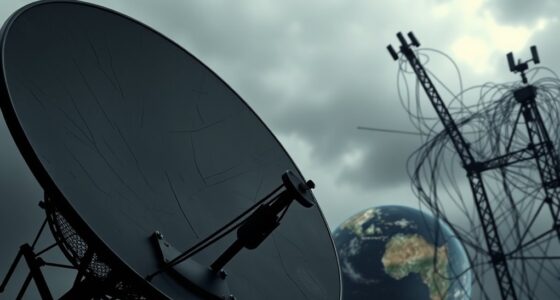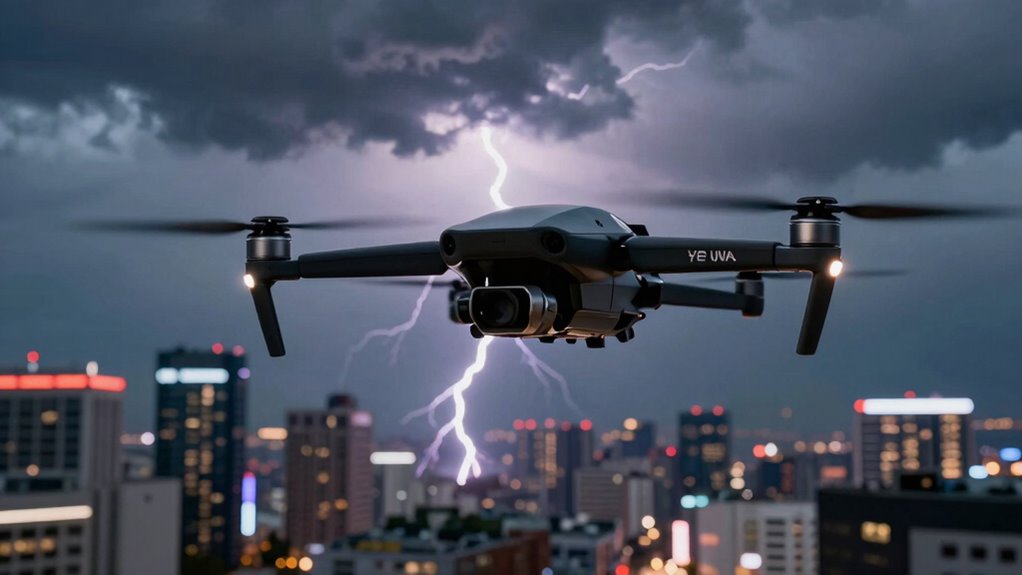
Drones have revolutionized warfare by enabling precise surveillance and targeted strikes, all while reducing soldier risks, but they also raise ethical and accountability questions. In pop culture, drones symbolize both innovation and intrusion, often appearing as sleek tools of progress or symbols of surveillance. Their visual impact shapes how society perceives technology—both as hope and threat. To uncover more about how drones influence our perceptions and realities, keep exploring this fascinating shift.
Key Takeaways
- Drones revolutionized warfare by enabling remote surveillance and precise targeted strikes, reducing soldier risk and raising ethical concerns.
- In pop culture, drones symbolize technological progress and surveillance, shaping societal perceptions through movies, TV, and media imagery.
- The sleek design and capabilities of drones make them iconic symbols of innovation and intrusion in visual media.
- Drones’ societal impact, including privacy invasion and regulation gaps, influences their portrayal as both symbols of hope and skepticism.
- The dual role of drones in warfare and culture reflects their significance as tools of power, control, and technological advancement.
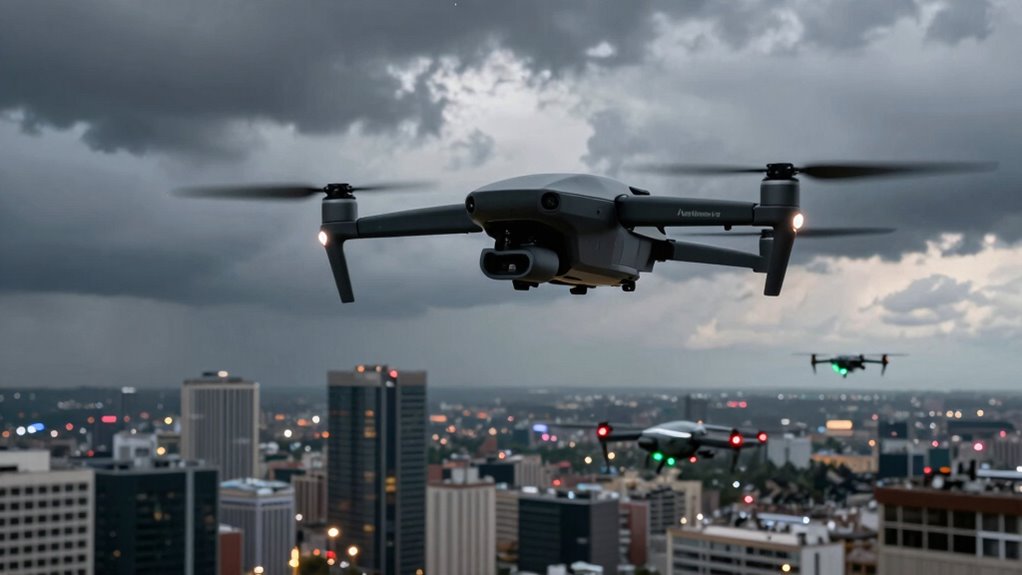
Drones have revolutionized both warfare and popular culture, transforming how conflicts are fought and how they’re perceived by the public. Their rise has sparked intense debates about technology ethics and privacy concerns, which you can’t ignore when considering their impact. In warfare, drones have changed the game by allowing for surveillance and targeted strikes with unprecedented precision. This shift means military operations can be conducted from afar, reducing the risk to soldiers but raising questions about accountability and the morality of remote killing. You might wonder if relying on drones blurs the line between combatant and civilian, especially when mistakes happen. The ethical dilemmas surrounding drone use aren’t just theoretical—they directly influence policies, public opinion, and international relations. As technology advances, the potential for misuse grows, making questions about oversight and responsibility more urgent. Meanwhile, in pop culture, drones have become iconic symbols, appearing in movies, TV shows, and even music videos. They often evoke themes of surveillance, technological progress, and control, shaping how society visualizes the future. You see drones depicted as tools of innovation, but also as instruments of intrusion, which stirs both fascination and fear. This duality influences public perceptions, making drones a reflection of both technological hope and skepticism. The visual imagery surrounding drones in media often amplifies these contrasting views, emphasizing their sleek design and capabilities while hinting at the darker implications of constant surveillance. Privacy concerns are at the core of these cultural shifts. As drones become more accessible and affordable, more individuals and organizations deploy them for various purposes—sometimes intruding into private spaces without consent. You might worry about your own privacy being compromised, knowing that drones can capture high-resolution images from miles away. Governments and private entities alike grapple with balancing innovation with personal rights, but regulations haven’t always kept pace with technological growth. The pervasive presence of drones in everyday life raises questions about consent, data security, and the right to privacy. Understanding the role of technology is crucial to navigating this evolving landscape. Additionally, the regulatory landscape continues to struggle with keeping up with rapid technological advancements, leaving gaps in legal frameworks that need urgent attention. These issues are further complicated by the fact that drone footage can be used in legal disputes, journalism, or even harassment. Recognizing the importance of regulation and oversight can help mitigate some of these risks while enabling society to benefit from the technological advancements. Given the rapid development of drone technology, ensuring that ethical guidelines are established is essential to prevent misuse and protect individual rights, especially as privacy concerns become more pronounced in public discourse.
consumer drone with high-resolution camera
As an affiliate, we earn on qualifying purchases.
As an affiliate, we earn on qualifying purchases.
Frequently Asked Questions
How Have Drones Affected Civilian Privacy Rights?
Drones have profoundly impacted your civilian privacy rights by increasing privacy intrusion and expanding surveillance. As drones fly over neighborhoods and public spaces, they often capture images and data without your consent, leading to concerns about constant monitoring. This surveillance expansion makes you worry about your personal privacy being compromised, as authorities and private entities can easily gather information, raising questions about how to balance safety and individual privacy rights.
What Are the Ethical Concerns Surrounding Drone Warfare?
Imagine flying a drone that decides on its own to strike, raising questions about autonomous decision making. The biggest ethical concern is accountability; who’s responsible if a mistake occurs? Without clear oversight, it’s like handing over a weapon to a child. In warfare, this blurs moral lines, risking unintended harm. Ensuring ethical accountability becomes essential to prevent misuse and uphold moral standards in drone operations.
How Do Drones Influence Modern Film and Television Storytelling?
Drones influence modern film and television by enabling aerial cinematography that offers stunning, immersive perspectives viewers haven’t seen before. You feel more engaged as you experience dynamic shots and sweeping landscapes, making scenes more vivid and dramatic. Filmmakers use drones to tell stories with greater visual impact, creating a sense of realism and immediacy. This technology transforms storytelling, allowing you to see the world from new angles and depths.
Are Drones Accessible to Everyday Consumers Beyond Military Use?
Yes, drones are accessible to everyday consumers now. You might think they’re just for professionals, but consumer affordability has made hobbyist applications possible for many. With compact designs and user-friendly controls, you can capture stunning aerial shots or explore drone racing. Whether for photography or recreation, drones have become a popular, affordable tool for enthusiasts, transforming how you experience and create from a new perspective.
What Future Technological Advancements Are Expected in Drone Development?
Future drone advancements will likely focus on autonomous navigation, allowing drones to fly independently without human input, enhancing safety and efficiency. Swarm technology will also evolve, enabling multiple drones to work together seamlessly for complex tasks like search-and-rescue or environmental monitoring. These innovations will make drones more versatile, smarter, and accessible, transforming industries and everyday activities, while also raising new ethical and security considerations you’ll need to stay aware of.
As an affiliate, we earn on qualifying purchases.
Conclusion
You see, drones have revolutionized both warfare and pop culture by transforming how we perceive conflict and entertainment. Their presence in movies, videos, and military strategy highlights a shift toward remote, precise, and often impersonal actions. This visual change reflects a deeper truth: technology shapes our reality, blurring lines between combat and entertainment. Embracing this evolution, you can imagine a world where drones continue to redefine how we see power, danger, and creativity in everyday life.
As an affiliate, we earn on qualifying purchases.
As an affiliate, we earn on qualifying purchases.