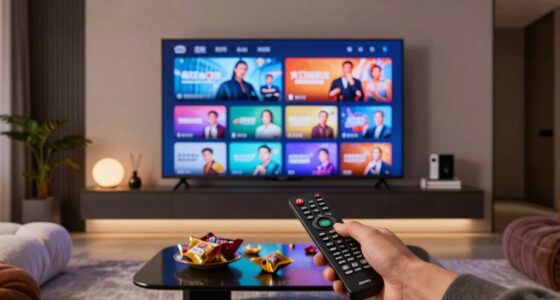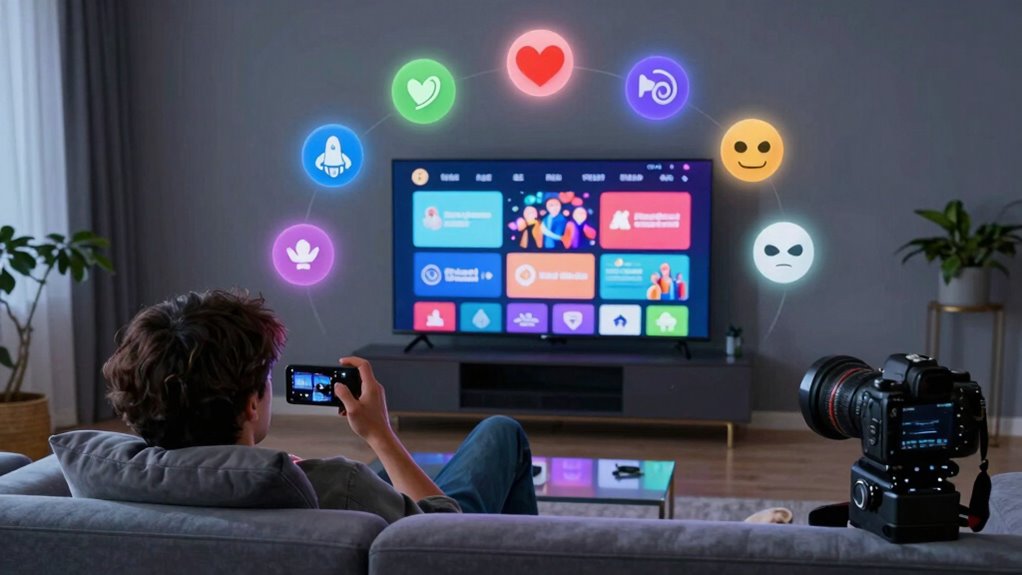

Streaming recommendations tend to show you content similar to what you’ve already watched, creating a genre bubble that keeps you stuck in familiar types of shows or movies. This personalization can limit your exposure to diverse genres and perspectives, reinforcing existing preferences and narrowing your options. Algorithms favor popular, trending content, making it harder to discover new or international titles. If you keep exploring, you’ll see ways to broaden your entertainment choices and break free from these cycles.

Get movie nights delivered free with Prime
- Fast, free delivery on millions of items
- Prime Video, Amazon Music and more included
- Member-only deals all year
Key Takeaways
- Recommendations are based on viewing history, reinforcing existing genre preferences and limiting exposure to diverse content.
- Algorithms prioritize familiar and trending titles, creating loops that trap viewers in similar content cycles.
- Repeated genre clicks shape future suggestions, reducing opportunities for discovering new or different genres.
- Popularity bias favors mainstream titles, decreasing visibility for independent, international, or underrepresented works.
- Balancing personalization with diversity strategies can help break genre bubbles and promote broader content exploration.
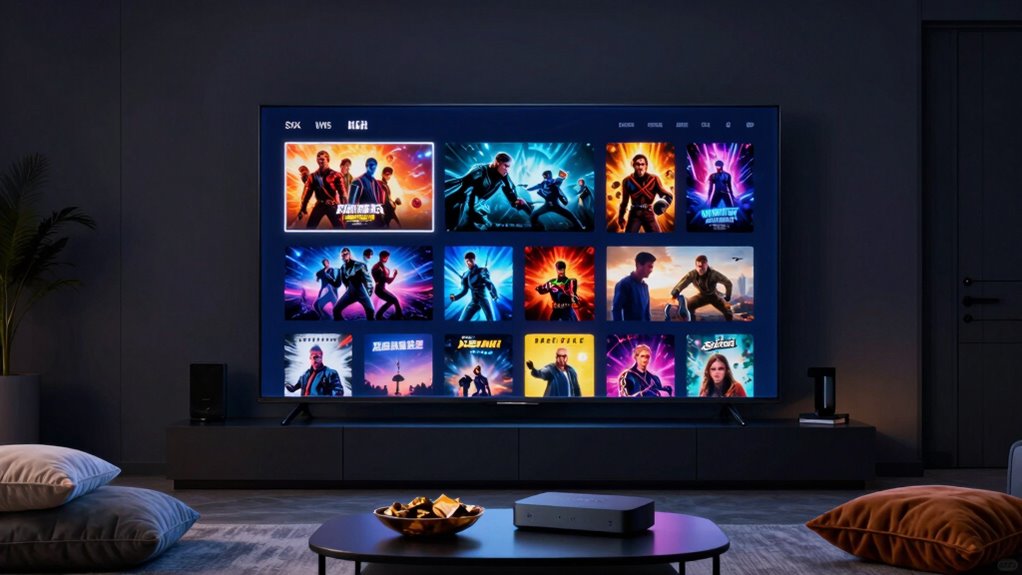
Streaming platforms now tailor recommendations based on your viewing history, but this often creates what’s known as genre bubbles—where you’re repeatedly exposed to similar types of content. While this personalization aims to enhance your experience, it can also limit your exposure to diverse genres and perspectives. The algorithms behind these recommendations tend to favor what you’ve already watched, reinforcing your preferences and reinforcing existing habits. Over time, this can create a narrow content landscape that feels comfortable but ultimately stifles discovery.
This phenomenon isn’t just about convenience; it reveals deeper issues like algorithm bias. These algorithms are designed to maximize engagement, often by prioritizing what’s familiar, creating recommendation loops that can trap viewers in a cycle of similar content. However, this bias can inadvertently reinforce stereotypes or overlook lesser-known, diverse voices, leading to what’s called diversity challenges. When the system favors mainstream, popular titles, it reduces the visibility of independent or culturally specific works, meaning your recommendations may lack the variety needed to broaden your understanding of different cultures, stories, and viewpoints. Additionally, the content curation process often leans toward trending genres, further narrowing the range of options presented to viewers.
As you keep clicking on similar genres, the algorithm interprets this as your primary interest, which then feeds back into the recommendation cycle. This creates a self-perpetuating loop—your viewing habits shape what the platform suggests next, which in turn influences your future choices. Without intentional intervention, you might find yourself stuck in a genre bubble, watching a continuous stream of similar content without realizing there’s a much wider world out there.
The challenge here is balancing personalized recommendations with diversity. Streaming services could do more to introduce you to new genres, independent filmmakers, international titles, or underrepresented voices. However, many algorithms lean heavily on data that favors popular, already successful content, which can reinforce existing biases. This limits your exposure to different cultures, ideas, and storytelling styles, ultimately narrowing your entertainment universe.
In the end, genre bubbles aren’t just a minor inconvenience—they’re a reflection of how algorithm bias and diversity challenges shape your viewing experience. While algorithms are powerful tools for customization, they need to be designed with intentional strategies to promote diversity and mitigate the risks of echo chambers. Only then can streaming platforms truly serve as gateways to a richer, more inclusive world of stories.
Popular right now

Hisense 43-Inch R6 Series 4K UHD Smart Roku TV (43R6G)

Ninja Air Fryer XL, 6.5 Qt, 6-in-1, MaxCrisp, Dark Grey (AF181)

Dyson Cyclone V10 Origin Cordless Vacuum
As an affiliate, we earn on qualifying purchases.
Frequently Asked Questions
How Do Algorithms Determine Viewer Preferences?
Algorithms determine your preferences through data collection, tracking what you watch, search, and rate. They analyze this info to identify patterns, creating personalization biases that shape future recommendations. This means you’re more likely to get suggestions similar to your past choices, which can trap you in genre bubbles. The more data they collect, the better they get at predicting your tastes, but it also limits your exposure to new genres or content.
Can Genre Bubbles Influence Cultural Diversity in Media?
You’re playing with fire when genre bubbles influence your viewing, as they can lead to cultural homogenization and diversity erosion. These bubbles trap you in familiar themes, stifling exposure to different cultures and ideas. Over time, this limits your perspective, making media less rich and varied. To break free, seek out diverse content consciously, and challenge your habits—your media choices shape cultural landscapes more than you realize.
Are There Ways to Break Out of Genre Bubbles?
To break out of genre bubbles, actively seek out diverse content beyond your usual preferences. Use platform features like curated playlists or genre-specific pages to explore new genres. Engage with different types of shows and movies to expand your horizons, which boosts audience engagement with varied content. This approach promotes content diversity, helping you discover fresh stories and perspectives, ultimately enriching your viewing experience and breaking the cycle of genre confinement.
Do Genre Bubbles Affect New Filmmakers’ Opportunities?
Genre bubbles can limit new filmmakers’ visibility because streaming platforms often reinforce genre bias, making it harder for diverse or innovative projects to stand out. When recommendations focus narrowly, your work risks being overlooked if it doesn’t fit popular genres. To improve opportunities, filmmakers should actively promote their unique voices, seek diverse distribution channels, and challenge genre stereotypes, ensuring their talent reaches broader audiences beyond algorithm-driven bubbles.
How Do Recommendations Impact Long-Term Viewer Tastes?
Streaming recommendations shape your long-term tastes by reinforcing familiar genres, driven by viewer nostalgia and content saturation. As algorithms favor what you already enjoy, you’re less likely to explore diverse options, narrowing your viewing horizon. This repetitive cycle keeps you anchored in comfort zones, making it harder to discover new genres or innovative content. Over time, your preferences become predictable, limiting your exposure to fresh, diverse storytelling experiences.
Conclusion
While streaming platforms promise endless choices, their algorithms often confine you to familiar genre bubbles, limiting your exploration. Instead of broadening your horizons, you might find yourself stuck in a loop of similar stories, missing out on new experiences. Ironically, the very technology meant to personalize your viewing can trap you in predictable patterns. To truly discover, you must step outside the algorithm’s comfort zone and embrace the unknown—because sometimes, the greatest adventures lie beyond your usual genres.