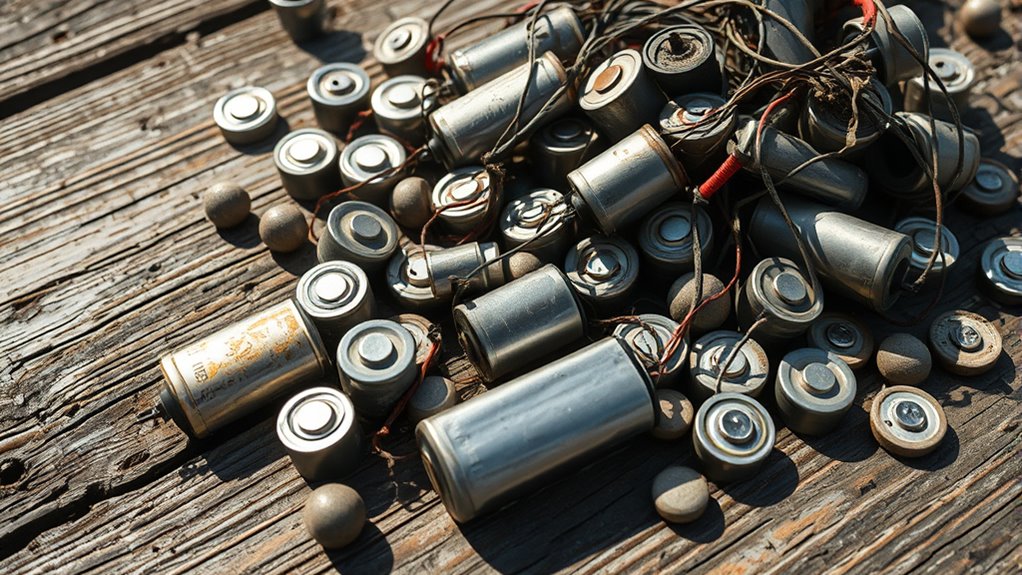

Battery technology struggles as the Achilles’ heel of green innovation because of limited resources like lithium, cobalt, and nickel, which are essential yet scarce and environmentally damaging to extract. Recycling methods are not yet efficient or widespread, leading to waste and further resource depletion. Additionally, batteries degrade quickly, requiring replacements that add to environmental harm. These challenges threaten the sustainability of energy storage solutions, but there’s more to uncover on how these issues can be addressed.
Key Takeaways
- Scarcity of critical raw materials like lithium, cobalt, and nickel limits supply and drives up costs for green technologies.
- Inefficient and underdeveloped recycling processes lead to resource depletion and environmental hazards.
- Battery degradation and manufacturing demand increase resource consumption, offsetting environmental benefits.
- Ethical and environmental concerns in raw material extraction threaten sustainable green innovation.
- Dependence on finite resources and waste management challenges hinder long-term scalability of battery-dependent solutions.
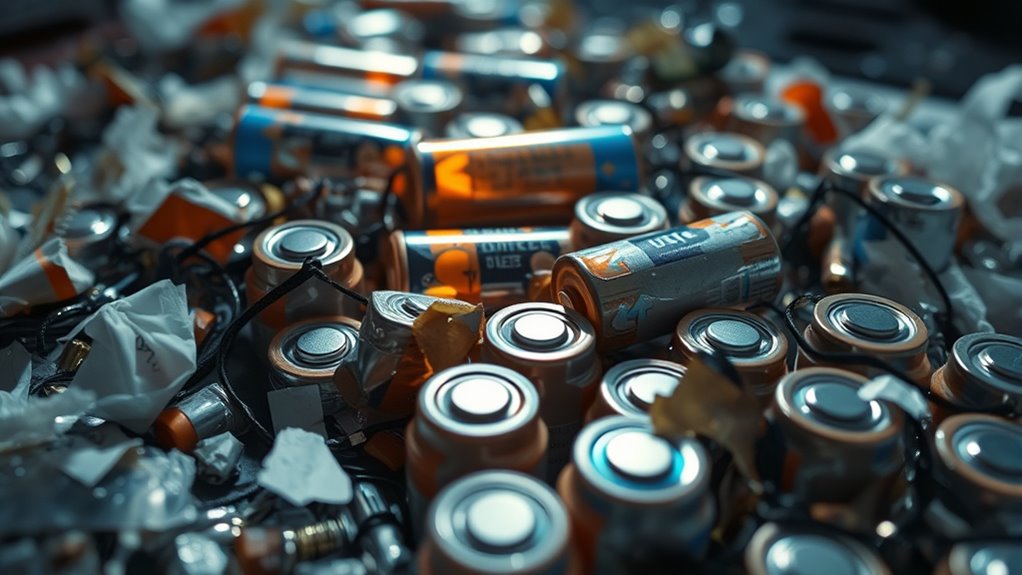
Despite the hype surrounding green innovations, battery technology remains a significant weak spot in the shift to sustainable energy. While electric vehicles and renewable energy storage solutions promise cleaner futures, they hinge heavily on batteries, which pose serious challenges. One of the biggest issues is raw material scarcity. The demand for lithium, cobalt, and nickel has skyrocketed as more companies push for greener transportation and energy storage, but these resources are finite. You might think that mining more will solve the problem, but the process is complex, environmentally damaging, and often ethically questionable. This scarcity not only drives up costs but also creates supply chain vulnerabilities, risking delays that threaten the momentum of green initiatives.
Battery scarcity and environmental concerns threaten the future of green energy solutions.
Battery recycling is often touted as a solution, yet it remains underdeveloped and inefficient. Current recycling methods struggle to recover valuable materials at scale, which means that a significant portion of used batteries ends up in landfills or is discarded improperly. This waste not only wastes precious raw materials but also causes environmental hazards, such as soil and water contamination. You might wonder why recycling isn’t more widespread, but the technology is still evolving, and economic incentives are often lacking. Without robust recycling infrastructure, the lifespan of batteries becomes a critical concern, as disposed batteries contribute to resource depletion rather than conservation.
Furthermore, the lifecycle of batteries presents a major obstacle. Batteries degrade over time, losing capacity and requiring replacement. This creates a cycle of continuous production, intensifying resource strain and environmental impact. You need to consider that manufacturing new batteries consumes vast amounts of energy and raw materials, which can negate some of the environmental benefits gained from their use. The challenge is not just making better batteries but also creating systems for sustainable disposal and reuse. Additionally, research into sustainable materials and alternative chemistries is essential to address these issues long-term.
The environmental footprint of battery production and disposal forms a significant part of the problem. As demand increases, so does the pressure on ecosystems and communities involved in raw material extraction. Without improvements in recycling and alternative materials, the entire green energy sector risks being undermined by resource scarcity and waste management issues. You’re left wondering whether technological innovation alone can keep pace with these constraints or if fundamental changes in supply chain practices and recycling methods are necessary. Until these issues are addressed, batteries will continue to be a weak link, limiting the sustainability of even the most promising green tech solutions.

EZ on the Earth Primary Lithium Battery Recycling Container – 3.5 Gallon, Battery Disposal Bin with Lid that Holds up to 41.8 lbs Batteries – Recycling Pail with Cardboard Box
- Capacity: Holds up to 41.8 lbs of batteries
- Versatile Compatibility: Recycles various lithium batteries
- Easy Recycling Process: Drop batteries, attach label, send back
As an affiliate, we earn on qualifying purchases.
As an affiliate, we earn on qualifying purchases.
Frequently Asked Questions
What Are the Latest Advancements in Battery Recycling Methods?
You’re curious about the latest advancements in battery recycling methods. Researchers are developing new techniques to extend battery lifespan and address recycling challenges, like more efficient separation of materials. Innovations include hydrometallurgical processes that recover valuable metals with less environmental impact and direct recycling methods that preserve cathode materials. These improvements aim to make recycling more cost-effective and sustainable, helping reduce waste and reliance on raw material extraction.
How Do Battery Supply Chains Impact Global Sustainability Efforts?
Your supply chain acts like a fragile web, connecting resources to innovation. Vulnerabilities in this web can cause disruptions, delaying green efforts worldwide. When sourcing materials ethically, you guarantee sustainability and social responsibility. However, ethical sourcing often complicates logistics, exposing weaknesses. By strengthening supply chain resilience and prioritizing transparency, you help build a sustainable future where green innovations thrive without being derailed by unseen vulnerabilities.
What Alternatives Exist to Lithium-Ion Batteries for Green Tech?
You should consider alternatives to lithium-ion batteries, given concerns about material scarcity and limited battery lifespan. Options like solid-state batteries offer longer life and improved safety, while sodium-ion batteries use more abundant materials, reducing scarcity issues. Flow batteries provide scalable energy storage suited for renewable integration. These alternatives can help you develop greener tech, but each faces challenges in efficiency, cost, and commercial viability.
How Long Will Current Battery Technologies Remain Viable?
You might be surprised to learn that current battery technologies typically last around 8-15 years, depending on use and maintenance. As batteries approach the end of their lifespan, the risk of technology obsolescence increases, potentially making them less reliable for long-term green projects. While ongoing innovations aim to extend battery lifespan, you should anticipate that existing tech will remain viable for the next decade, but not indefinitely.
What Policies Can Accelerate Sustainable Battery Development?
To accelerate sustainable battery development, you should advocate for policies that boost battery manufacturing and offer strong policy incentives. Support government grants, tax breaks, and research funding focused on innovative, eco-friendly materials. Encouraging partnerships between industry and academia can also foster breakthroughs. By pushing for these policies, you help create a robust ecosystem that speeds up the progression to greener energy solutions and reduces environmental impacts.

OPTIMA® Batteries High Performance DH7 YELLOWTOP® Sealed AGM Battery
- Voltage and Cold Cranking Amps: 12V, 880 CCA
- Battery Dimensions: 12.44" x 6.88" x 7.5"
- Weight: 54 pounds
As an affiliate, we earn on qualifying purchases.
As an affiliate, we earn on qualifying purchases.
Conclusion
So, you might think better battery tech alone will solve all green issues. But remember, it’s just one piece of the puzzle. Improving batteries is vital, yes, but without tackling manufacturing impacts and recycling challenges, true sustainability stays out of reach. Don’t let the current limitations discourage you—innovation is ongoing, and every breakthrough gets us closer to a cleaner, greener future. Stay hopeful; your support can drive the change we need.

Batteries: Materials principles and characterization methods (Renewable & Sustainable Power)
As an affiliate, we earn on qualifying purchases.
As an affiliate, we earn on qualifying purchases.

Battery Recycling Container with Battery Testers for Household Batteries, QHAND Used Battery Disposal Container with lid for Home Use, Office, Garage, Schools (1.32 Gallon)
- Battery Tester Included: Tests various household batteries
- Complete Disposal Package: Includes tester and recycling container
- Ideal Compact Size: Fits in narrow spaces and corners
As an affiliate, we earn on qualifying purchases.
As an affiliate, we earn on qualifying purchases.