

Audience interactivity in modern competition shows turns you from a passive viewer into a key participant. You can influence outcomes through live polls, voting apps, and sharing on social media. This engagement keeps you connected, boosts excitement, and creates a sense of community around the show. When your voice matters, the experience becomes more personal and memorable. If you want to discover how producers leverage this engagement to boost the show’s success, keep exploring.
Key Takeaways
- Audience interactivity enhances engagement by allowing viewers to influence show outcomes through voting and real-time decisions.
- Social media integration amplifies viewer participation via live tweets, comments, and sharing, creating a buzz around the show.
- Interactive features like polls and voting apps foster a sense of agency, making viewers feel personally connected to the results.
- Continuous engagement through updates and discussions builds loyal communities and sustains interest beyond broadcast times.
- Overall, interactivity shifts influence from producers to viewers, making competition shows more dynamic and participatory.
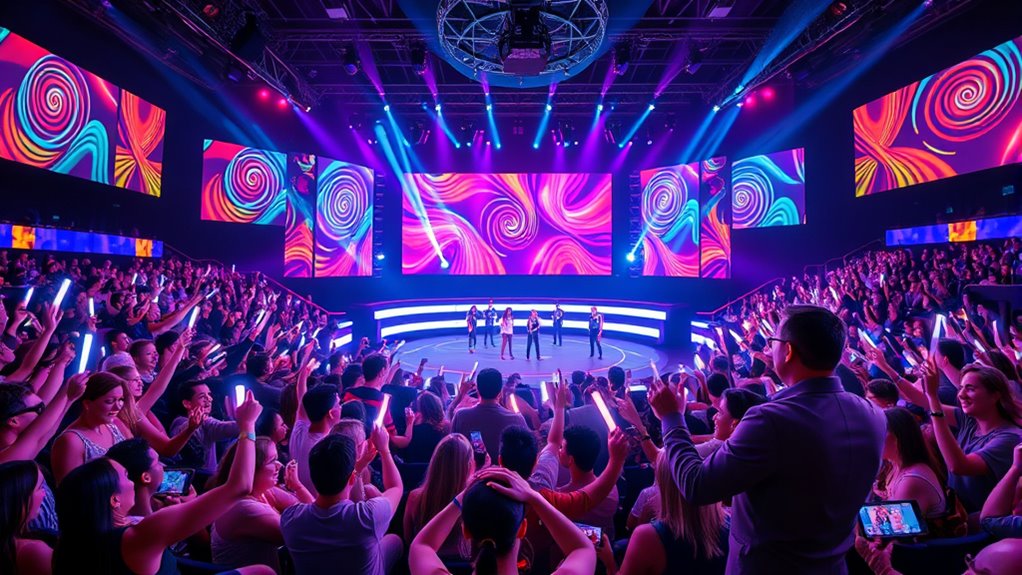
In today’s competition shows, audience interactivity has become a vital element that keeps viewers engaged and invested. You’re no longer just a passive spectator; you’re actively involved in shaping the show’s outcome through audience participation. Producers recognize that when viewers can influence decisions, vote, or interact in real-time, they feel a stronger connection to the program. This sense of involvement transforms a simple viewing experience into an immersive event, making you part of the show’s ecosystem. Social media integration plays a pivotal role here, allowing you to engage with the show on platforms like Twitter, Instagram, or TikTok. When you tweet your thoughts, share memes, or comment live during broadcasts, you’re not only consuming content—you’re contributing to the show’s buzz and visibility. This integration creates a dynamic feedback loop where your interactions influence the show’s content and tone, encouraging you to stay engaged longer.
By integrating social media into the competition format, producers tap into your desire for instant gratification and social validation. For example, live polls and voting apps give you the power to decide who advances or gets eliminated, making the outcome more personal and exciting. When you see your vote counted in real-time, it fuels your enthusiasm and sense of agency. This direct involvement can turn casual viewers into dedicated fans, as they feel their voice genuinely matters. Additionally, social media integration fosters community among viewers, who can share opinions, celebrate favorites, or rally support for contestants. This collective participation makes the show more than just a televised event; it becomes a shared social experience. Incorporating digital engagement strategies enhances overall viewer interaction and satisfaction.
Moreover, audience participation through social media encourages ongoing engagement beyond the broadcast. You might follow updates, join discussions, or participate in challenges related to the show long after the episode airs. This continuous interaction helps build a loyal fan base and boosts the show’s popularity. It also provides producers with instant feedback, allowing them to tailor content to audience preferences and trends. This cycle of interaction benefits everyone: you get more personalized, engaging content, and the show gains higher ratings and social currency.
Ultimately, this blend of audience participation and social media integration transforms competition shows into interactive platforms where your voice truly matters. It shifts the power from producers alone to include viewers like you, making the entire experience more exciting, participatory, and memorable.
live polling app for smartphones
As an affiliate, we earn on qualifying purchases.
As an affiliate, we earn on qualifying purchases.
Frequently Asked Questions
How Has Audience Interactivity Evolved Over the Past Decade?
Over the past decade, audience interactivity has drastically evolved through virtual voting and social media integration. You now actively participate by casting votes online and engaging with contestants via social platforms. This creates a more immersive experience, making you feel like a part of the show’s decision-making process. The shift allows for real-time interaction, increasing viewer engagement and making the competition more dynamic and inclusive.
What Technological Tools Are Most Commonly Used for Audience Participation?
Think of audience participation like a lively town square, where everyone’s voice matters. You use mobile voting and social media integration most often to join the fun. Mobile voting lets you cast real-time decisions, while social media platforms like Twitter or Instagram keep you engaged and share your opinions instantly. These tools turn viewers into active participants, making the show feel more interactive and exciting for everyone involved.
Are There Demographic Differences in Audience Engagement Levels?
You’ll find that demographic preferences markedly influence engagement levels, with younger audiences often more active through social media and live polls. Older viewers might prefer traditional participation like phone-ins. These engagement disparities can shape how shows tailor their interactivity, aiming to maximize appeal across diverse age groups. Recognizing these differences helps you create a more inclusive experience, ensuring everyone feels involved regardless of their demographic background.
How Do Producers Measure the Success of Interactivity Features?
You can measure the success of interactivity features by analyzing audience feedback and engagement metrics. Producers track real-time data such as poll participation, social media interactions, and app usage to gauge viewer involvement. Positive feedback and high engagement levels indicate that interactive elements resonate with viewers. Comparing these metrics over multiple episodes helps producers refine features and verify they enhance overall audience experience, boosting show success.
What Are Potential Privacy Concerns With Audience Data Collection?
You should be aware that collecting audience data raises privacy concerns, especially around data security and consent management. If you don’t secure data properly, sensitive information could be leaked or misused. It’s essential that you obtain clear consent from viewers before gathering their data and implement robust data security measures. By doing so, you protect your audience’s privacy and build trust, ensuring your interactive features remain ethical and compliant with regulations.

Social Media QR Code NFC Stand for Instagram (Large Size: 6.3*4.45 in)– Tap or Scan to Follow Us – Boost Followers – Social Media Tag Sign for Storefront, Counter, or Events – No App or Subscription
No App, No Subscription, No Hassle: One-time setup, zero ongoing fees. This Instagram NFC stand is ready to…
As an affiliate, we earn on qualifying purchases.
As an affiliate, we earn on qualifying purchases.
Conclusion
As a viewer, you’re no longer just a passive observer; you’re an active participant shaping the show’s outcome. While traditional competition shows relied solely on contestants’ skills, modern interactivity adds a new layer of excitement—your voice, votes, and reactions matter. It’s a mesmerizing contrast: in the past, you watched silently, but today, you influence the game’s course. This shift transforms your experience from spectator to stakeholder, making every moment more engaging and personal.

UltraPro OneTouch Backlit Remote Control for Smart TV
Remote designed in the USA for six popular TV brands – Preprogrammed TV device buttons for Samsung, LG,…
As an affiliate, we earn on qualifying purchases.
As an affiliate, we earn on qualifying purchases.
audience participation voting device
As an affiliate, we earn on qualifying purchases.
As an affiliate, we earn on qualifying purchases.