
The “Skip Intro” button has transformed TV storytelling by encouraging faster-paced episodes and shifting your viewing habits toward immediate engagement. It lets you bypass slow or traditional openings and dive straight into the story, prompting creators to make shorter, more dynamic intros. This change has led to tighter pacing and more hooks at the start of each episode. Want to find out how it continues to shape modern TV? Keep exploring for the full story.
Key Takeaways
- It promotes faster narrative pacing by enabling viewers to bypass slow-opening credits and dive directly into the story.
- It encourages episode openings to become more immediate and action-driven, shaping modern storytelling conventions.
- It shifts viewer engagement focus from traditional intros to character interactions and plot development.
- It reflects a cultural shift towards personalized, on-demand viewing, emphasizing efficiency and instant gratification.
- It influences content design, leading to shorter or integrated openings that align with contemporary consumption habits.
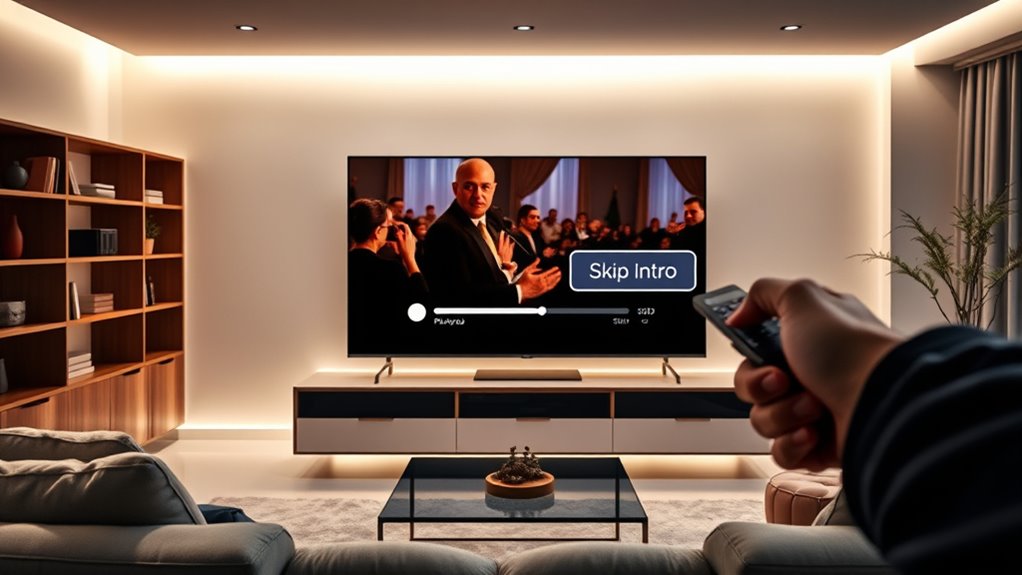
Have you ever wondered why so many viewers now choose to skip the intro sequence before diving into a TV show’s story? It’s become such a common habit that streaming platforms even offer the “Skip Intro” button, allowing you to bypass the opening credits in a single click. This shift isn’t just about convenience; it signals a fundamental change in how television storytelling is experienced and crafted. When you skip the intro, you’re essentially jumping straight into the narrative, which has significant implications for how stories are paced and how engaged you remain throughout the episode.
By skipping the opening credits, you help maintain a faster narrative pacing. Traditional TV shows often relied on slow-building openings and elaborate intros to set the mood, introduce themes, or build anticipation. But today’s viewers tend to favor rapid engagement, wanting to get to the story as quickly as possible. This desire influences creators to design episodes with tighter, more dynamic pacing, where every scene serves a purpose and advances the plot. When you skip the intro, you’re signaling to producers that audiences prefer their stories delivered more directly, which pushes writers to craft episodes that start immediately with compelling action or dialogue. This keeps you hooked from the very first second and minimizes the risk of losing your interest before the story gets going.
Your engagement as a viewer becomes more immediate and intense when you skip the intro. Without the traditional opening sequence, the focus shifts directly onto character interactions and plot developments. This format encourages a more immersive experience, where you’re less likely to be distracted or disengaged during slower, decorative segments. It also creates a sense of personalization—you’re in control of how quickly you access the core story, which enhances your overall viewing experience. As a result, shows are increasingly designed to hook you right away, knowing that many will hit “Skip Intro” without hesitation. This interaction influences storytelling conventions, prompting creators to craft openings that are shorter or more integrated into the episode itself.
Furthermore, the rise of streaming platforms has facilitated this shift, making it easier for viewers to skip intro sequences and consume content on their own terms. In the end, the “Skip Intro” button has transformed TV storytelling into a faster, more viewer-centric experience. It reflects a cultural shift where your desire for immediate gratification and sustained engagement shapes narrative pacing and episode structure. Instead of lengthy intros that take up valuable screen time, shows now prioritize grabbing your attention quickly and maintaining it throughout. This evolution aligns with how you consume content—fast, efficient, and tailored to your preferences—ultimately changing the way stories are told on television forever.
Top picks for "skip intro chang"
Open Amazon search results for this keyword.
As an affiliate, we earn on qualifying purchases.
Frequently Asked Questions
Has the “Skip Intro” Button Impacted TV Show Ratings?
You might notice that the “skip intro” button has impacted TV show ratings by changing viewer engagement. When viewers skip intros, they often watch more episodes consecutively, boosting overall engagement. This shift can also influence ad revenue, as less time is spent on ads during the intro, potentially reducing ad impressions but encouraging binge-watching. Overall, the “skip intro” feature reshapes how audiences interact with shows and advertisers alike.
Do All Streaming Platforms Support the “Skip Intro” Feature?
Imagine settling in for your favorite show, the familiar theme music swirling around you. Not all streaming platforms support the “skip intro” feature, so you might miss that quick escape. Platform compatibility varies, and some haven’t fully adopted the feature yet. This inconsistency affects your viewing experience, making it feel less seamless. As more platforms embrace it, your ability to jump straight into the story improves, enhancing overall convenience.
How Has “Skip Intro” Affected Episode Viewership Duration?
You might notice that “skip intro” impacts your viewing habits by allowing you to jump straight into episodes, which encourages binge-watching trends. This feature shortens episode durations, leading you to watch more content in less time. As a result, your overall episode viewership may increase, but your engagement with the show’s opening sequences decreases. This shift influences how long you spend watching each episode, shaping modern streaming and binge-watching behaviors.
Are There Any Negative Effects of Skipping Intros on Storytelling?
Think about the story you might miss when skipping intros—could it lead to viewer disengagement and break narrative coherence? While skipping saves time, it risks losing key context, making episodes feel disjointed. By jumping ahead, you might miss subtle foreshadowing or character development, which can weaken your connection to the storyline. Ultimately, skipping intros could subtly diminish the storytelling richness that keeps viewers truly engaged.
Will “Skip Intro” Influence Future TV Show Format Innovations?
You might wonder if “skip intro” will shape future TV show formats. It certainly influences narrative pacing by encouraging shorter, punchier openings that keep viewers engaged from the start. As a result, creators may innovate with quicker storytelling techniques, balancing engagement with meaningful content. This trend could lead to more dynamic formats, prioritizing viewer retention and pacing, ultimately changing how shows are structured to meet audience expectations.
Conclusion
You see how “Skip Intro” transformed TV storytelling, giving viewers control and shaping pacing. Imagine binge-watching a new series where you skip the opening every time, diving straight into the plot. This change encourages tighter storytelling and keeps your attention sharp. For example, shows like “Game of Thrones” adapted their intros to be shorter, reflecting this shift. Ultimately, “Skip Intro” isn’t just a feature—it’s a game-changer that keeps you engaged and in charge of your viewing experience.