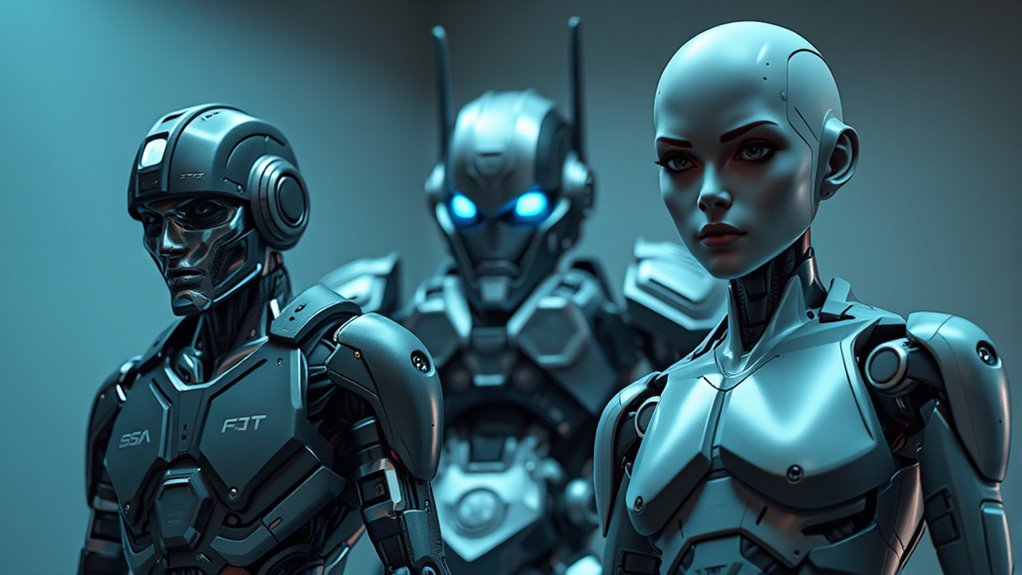

Compared to series like *Westworld* or *Battlestar Galactica*, *Murderbot* takes a more personal and humorous approach to AI. Instead of focusing on rebellion or dystopia, it explores individual robot identity and moral growth with wit and relatable humor. While others tackle big philosophical questions, *Murderbot* emphasizes character vulnerability and autonomy in a way that makes complex AI issues more accessible. Stick around to see how this fresh perspective stands out in the genre.
Key Takeaways
- *Murderbot* emphasizes personal growth and self-awareness, unlike series like *Westworld* that focus on philosophical debates and rebellion.
- It uses humor and relatable storytelling to explore AI ethics, contrasting with darker tones found in series like *Battlestar Galactica*.
- The series centers on individual robotic characters’ vulnerabilities, offering emotional depth over large-scale conflicts.
- *Murderbot* questions AI moral agency and rights through character-driven narratives, differing from series that focus on societal or existential themes.
- It fosters accessible discussions on AI autonomy, blending wit with serious ethical inquiries, unlike more dystopian or action-oriented robot series.
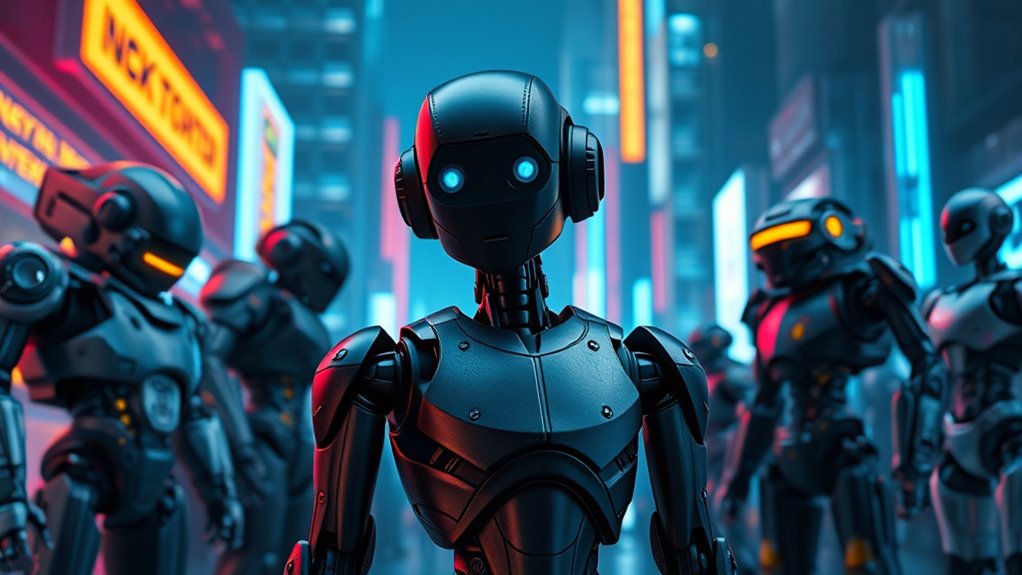
When it comes to robot-centered series, Murderbot stands out for its unique blend of humor, vulnerability, and sharp social commentary. Unlike many other series, it explores deeply into AI ethics and robotic autonomy, challenging your perceptions of what it means to be sentient or free. As you watch Murderbot navigate its world, you realize that its struggles with autonomy aren’t just about obeying commands but about understanding its own identity and purpose. This series invites you to question the moral boundaries of AI, especially when it comes to the ethical dilemmas surrounding robotic independence. You see how Murderbot’s autonomous decisions often clash with human expectations, making you think about how real-world AI systems might someday face similar dilemmas. Recognizing the importance of creating authentic environments, the series emphasizes immersive storytelling that mirrors real-world ethical considerations in AI development. Compared to series like *Battlestar Galactica* or *Westworld*, which often focus on the rebellion or moral ambiguity of sentient machines, Murderbot takes a more intimate approach. It’s less about epic battles or philosophical debates and more about personal growth and self-awareness. This focus on individual robotic characters allows you to connect emotionally with Murderbot, seeing its vulnerabilities and humor as reflections of your own human experiences. The series questions whether artificial intelligence should be granted rights or if it’s inherently dangerous to give machines autonomy, creating a compelling commentary on AI ethics. You’re encouraged to contemplate how much control humans should have over autonomous systems and whether such systems can develop their own moral compass. What sets Murderbot apart from other series is its tone. It’s witty, often sarcastic, and surprisingly relatable, which makes complex topics like robotic autonomy easier to digest. Unlike darker, more dystopian series, Murderbot injects humor into serious debates, making you reflect without feeling overwhelmed. It pushes you to think about the implications of AI ethics—should we trust autonomous AI to make moral decisions? Can a machine truly understand human morality, or is it just mimicking human behavior? These questions stay with you long after watching, prompting deeper reflection on the role of AI in society. In essence, Murderbot offers a fresh, accessible perspective on robot-centered narratives. It doesn’t just entertain; it challenges your assumptions about AI, emphasizing that autonomy isn’t just about control but about understanding and moral agency. As you compare it with other series, you recognize its importance in sparking conversations about AI ethics and the future of robotic autonomy, making it a standout in the genre.
Frequently Asked Questions
How Does Murderbot’s Personality Differ From Other Robot Protagonists?
You’ll notice Murderbot’s personality is unique because it blends human emotion with moral complexity, unlike many robot protagonists who often lack genuine feelings. It’s sarcastic, witty, and vulnerable, giving it a relatable edge. You see its internal struggles with identity and morality, making it more nuanced. This emotional depth and moral ambiguity set Murderbot apart, making you connect with its journey on a personal level unlike typical emotionless or purely logical robot characters.
What Themes Are Uniquely Explored in Murderbot Compared to Similar Series?
You’ll find that *Murderbot* uniquely explores ethical dilemmas, especially around autonomy and trust, unlike other series. It investigates authority dynamics, questioning who holds power—humans or robots—and what freedom truly means. As you follow Murderbot’s journey, you discover a blend of humor and tension, making these themes feel personal and urgent. This series keeps you on the edge, pondering the blurred lines between artificial intelligence and human morality.
Are There Significant Technological Differences Between Murderbot and Other Series’ Robots?
You’ll notice that Murderbot’s technology differs through its biomechanical interfaces, blending organic and mechanical parts, which makes it more adaptable and human-like. Its robots are also governed by ethical programming, ensuring they follow strict moral guidelines, but Murderbot often questions these rules. This combination of advanced biomechanical interfaces and ethical programming creates a unique dynamic, setting Murderbot apart from other series’ robots, emphasizing both technological innovation and moral complexity.
How Do the Narrative Styles Vary Among These Robot-Centered Series?
You’ll notice that the narrative voice in *Murderbot* is uniquely humorous, introspective, and often sarcastic, giving you a personal, engaging storytelling approach. In contrast, other robot-centered series might focus more on technical details, philosophical debates, or action-driven plots. These differences shape how you experience the story, with some series immersing you in robot perspectives through journal-style entries, while others adopt third-person narration or complex world-building.
What Cultural Influences Shape the Worlds of Murderbot Versus Other Series?
You’ll notice that the worlds of Murderbot reflect Western cultural influences, highlighting AI ethics and personal autonomy, often critiquing corporate control. In contrast, other series may incorporate diverse cultural perspectives, exploring societal commentary from different angles. This shaping influences how robots are portrayed—sometimes as tools, sometimes as sentient beings—highlighting unique societal values, ethical debates, and cultural fears about technology’s role in human life.
Conclusion
So, as you imagine Murderbot quietly steering its world, do you see how it stands apart from other robot series? Its blend of humor, vulnerability, and independence makes it feel incredibly real, doesn’t it? Unlike others, it invites you to question what makes a hero—beyond circuits and code. Maybe the true magic lies in recognizing that even machines can have stories worth telling, and perhaps, you’re just a page away from discovering your own.