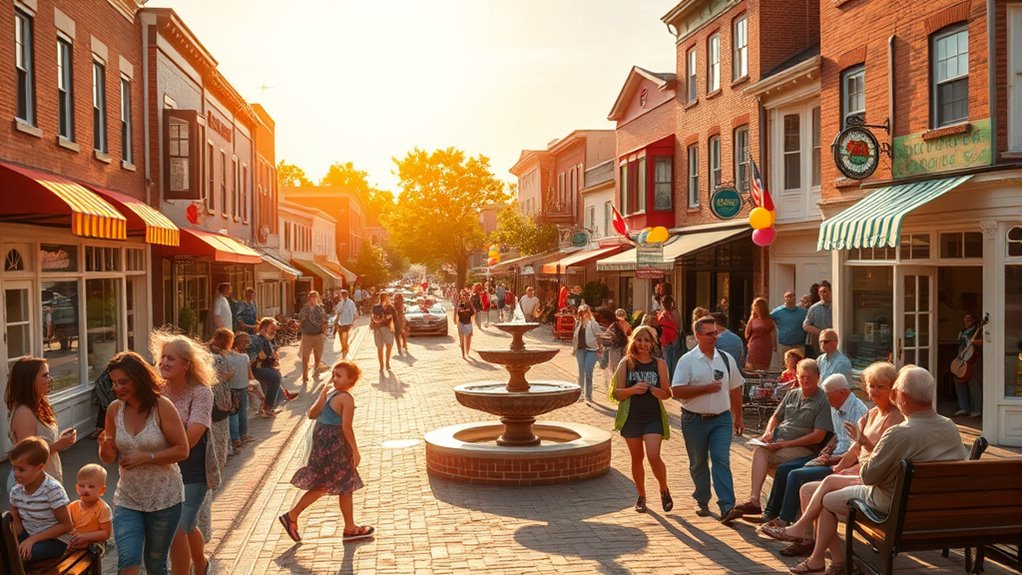

Small-town comedies charm you with relatable characters and warm community bonds. They highlight local traditions, funny stereotypes, and quirky routines that make village life special. These shows explore the fun conflicts between old-fashioned values and modern changes, creating humor rooted in shared history and pride. If you keep exploring, you’ll discover how these heartwarming stories celebrate community spirit and the charming quirks that make small-town life so memorable.
Key Takeaways
- Small-town comedies highlight relatable characters and witty humor rooted in community ties and local traditions.
- Exaggerated stereotypes like nosy neighbors and proud mayors create recognizable, endearing comedic archetypes.
- Celebrating local festivals and customs fosters a sense of continuity, heritage, and shared community identity.
- Humor often arises from conflicts between traditional values and modern changes within the town.
- These shows emphasize community bonds, nostalgia, and the charm of small-town life as central to their appeal.
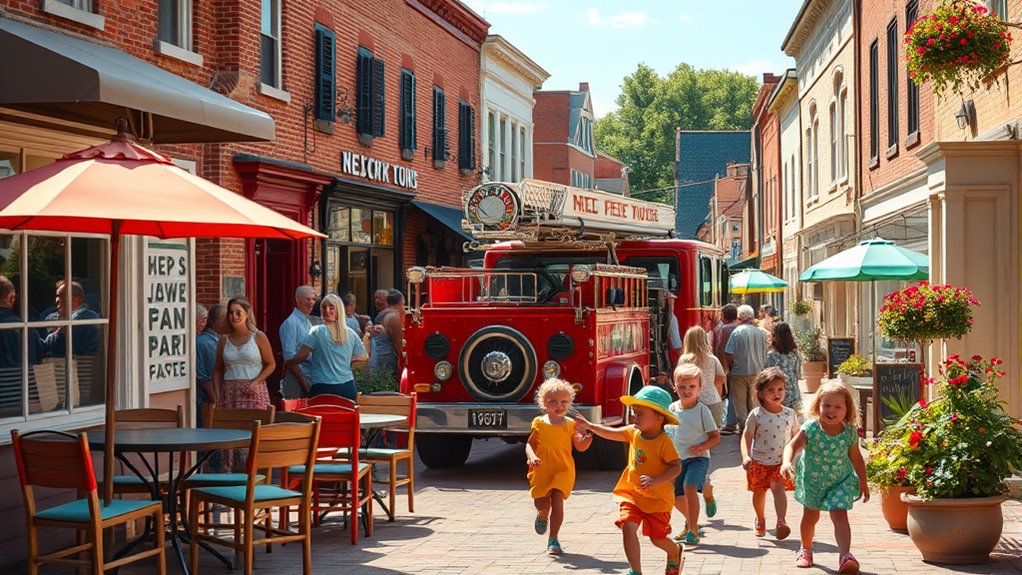
Small-town comedies charm audiences with their witty humor and relatable characters. When you tune into these shows, you’re immediately pulled into a world where everyone knows your name, and community ties run deep. One reason they resonate so strongly is their skillful play on rural stereotypes. These stereotypes—like the friendly but nosy neighbor, the overly proud small-town mayor, or the rustic handyman—are exaggerated for comedic effect but rooted in real-life observations. They create a shared understanding that makes you smile, recognizing traits you’ve seen or experienced yourself. Yet, these stereotypes aren’t meant to mock; they highlight the quirks that make small-town life unique and endearing. You find humor in how these characters embody familiar roles, but it’s their sincerity and sense of community that truly shine through.
Small-town comedies celebrate quirky stereotypes and heartfelt community bonds that make everyday life charming and relatable.
Another element that makes small-town comedies so engaging is their focus on local traditions. These shows celebrate the customs and festivities that define the town’s identity—be it a quirky annual fair, a beloved holiday event, or longstanding community rituals. You get a sense of continuity and stability, as traditions are passed down and celebrated with enthusiasm. These traditions often serve as the backdrop for humorous misunderstandings or heartfelt moments, reinforcing the importance of heritage and shared history. Watching characters participate in local traditions creates a warm, nostalgic feeling, reminding you of the importance of community bonds and collective memory. It’s in these traditions that you see the heart of small-town life, where everyone plays a part and the past and present intertwine. Cultural identity plays a key role in shaping these stories, emphasizing the significance of community roots.
The humor in small-town comedies often springs from the clash between old-fashioned values and modern realities. You’ll see characters steering through the tension between maintaining traditional ways and adapting to change, which adds a layer of relatability. Whether it’s a young couple trying to modernize the town’s annual festival or a grumpy old timer resisting change, these conflicts produce genuine laughs and heartfelt moments. The shows often depict the town as a character itself—its quirks, routines, and idiosyncrasies shaping the stories. You become invested in these communities, appreciating the humor that arises from their simplicity but also the warmth that underpins every joke.
Ultimately, small-town comedies remind you that life is best when it’s rooted in community and shared traditions. They celebrate the humor found in everyday life, emphasizing that even in a small town, there’s plenty of excitement, love, and laughter. Whether you’re from a small or big city, these shows invite you to see the charm in community-focused living and to find humor in the familiar. They show that sometimes, the simplest settings and the quirkiest characters make for the most memorable stories.

ULTIMEA 5.1CH Surround Sound Bar with Subwoofer, Dolby Atmos, VoiceMX, BassMX, APP, 300W Soundbar for Smart TV, Home Theater Surround Sound System for TV, BT 5.4, Poseidon M60 (2025 Model)
Simplified 5.1ch Dolby Atmos Setup: Enjoy immersive 4D sound with real Dolby Atmos and 5.1-channel audio. Five built-in...
As an affiliate, we earn on qualifying purchases.
Frequently Asked Questions
How Do Small-Town Comedies Influence Local Communities?
Small-town comedies influence your community by fostering a sense of pride and unity. They highlight local traditions, encouraging residents to support local businesses and celebrate shared culture. Watching these shows makes you feel connected, inspiring you to participate more actively in community events. This positive portrayal strengthens bonds, boosts local economy, and nurtures a welcoming atmosphere, ultimately making your town a more vibrant and cohesive place to live.
What Are the Common Themes in Small-Town Comedic Shows?
Did you know that 78% of small-town comedies poke fun at rural stereotypes? You’ll notice common themes like celebrating local traditions, quirky characters, and close-knit relationships. These shows often highlight humor in everyday life, emphasizing community bonds and shared values. They make you laugh while exploring how traditions shape identities, proving that humor can unite people through relatable, heartwarming stories rooted in small-town life.
How Do Writers Develop Authentic Small-Town Characters?
You develop authentic small-town characters by incorporating local dialects and embracing community quirks. Use dialogue that reflects how residents speak naturally, adding regional slang or accents. Highlight unique traditions, local businesses, and social dynamics to make characters feel rooted in their community. Show their interactions and routines, emphasizing genuine relationships. This approach helps create characters that resonate as real, relatable, and true to their small-town setting.
What Role Does Nostalgia Play in These Comedies?
Nostalgia plays a crucial role in small-town comedies by evoking nostalgic sentiment that deepens your emotional connection. You might think it’s just sentimental fluff, but it actually highlights community memory, fostering a sense of shared history. This creates warmth and familiarity, making the setting feel genuine. By tapping into these feelings, writers help you see small towns as timeless places where bonds and memories shape the story.
Are Small-Town Comedies Popular Internationally?
Yes, small-town comedies enjoy international popularity, often because they play with rural stereotypes and town rivalry in humorous ways. You’re drawn to their charm as they highlight close-knit communities, quirky characters, and friendly competition. This universal appeal makes viewers around the world relate to the stories, finding comfort and humor in the familiar dynamics of small-town life. These shows tap into shared experiences, making them a hit beyond just their local settings.

DJI Mic Mini (2 TX + 1 RX + Charging Case), Wireless Lavalier Microphone for iPhone/Camera/Android, Ultralight, Detail-Rich Audio, 48h Use, Noise Cancelling, Automatic Limiting, Vlog, Streaming
Small but Mighty - The DJI Mic Mini lavalier microphone transmitter is small and ultralight, weighing only 10...
As an affiliate, we earn on qualifying purchases.
Conclusion
So, next time you watch a small-town comedy, notice how it celebrates community, charm, and connection. Embrace the humor, cherish the characters, and appreciate the quirks that make these shows special. Because in the end, they’re about more than laughs—they’re about belonging, about warmth, about finding joy in the simple moments. Let these stories remind you that sometimes, the smallest towns hold the biggest hearts. Enjoy the magic of community-focused comedy.

NEEWER CM28 (1 RX + 2 TX + Charging Case), Wireless Lavalier Microphone, Smart Noise Cancelling, 48KHz/16Bit 9 Hrs Uncompressed Recording, 656ft/200m Range, Lav Mic for iPhone, Android, Camera
【Professional Wireless Lavalier Mic Set】 NEEWER CM28 is a mini clip on lapel microphone kit with 2 transmitters...
As an affiliate, we earn on qualifying purchases.

BOYA mini 2 Wireless Lavalier Microphones for iPhone 15/16/17 & Android, AI Noise Cancellation, App Control, 30H Battery Life with Charging Case, Lapel Microphone Wireless for Video Recording Vlogging
Thumb-Sized Mic: Weighing only 5 grams—the BOYA mini 2 lavalier microphone is the lightest microphone you can get....
As an affiliate, we earn on qualifying purchases.