
For fans choosing among horror movie board games, I’d start with Funko Games Scream: The Game as the best overall pick for a recognizable slasher theme paired with group play. CLUE: Universal Monsters Edition stands out for deduction and classic monster fandom, while Trivial Pursuit: Horror Ultimate Edition suits groups that want a longer test of movie knowledge. The main tradeoff is whether you want an actual board-game experience, a quick party activity, or trivia that rewards genre experts. Group size, familiarity with horror films, and tolerance for competitive play can matter as much as the theme. Read on for the full breakdown of all 12 options and how I’d match each one to a game night.

Get movie nights delivered free with Prime
- Fast, free delivery on millions of items
- Prime Video, Amazon Music and more included
- Member-only deals all year
Key Takeaways
- Scream: The Game is the strongest all-around fit when you want a recognizable horror property and an activity built around group interaction rather than movie questions alone.
- CLUE: Universal Monsters Edition gives classic monster fans a deduction-focused alternative to the lineup’s trivia-heavy options.
- Trivial Pursuit: Horror Ultimate Edition is the better direction for committed film buffs who want a sustained knowledge challenge; the shorter trivia decks suit more casual rounds.
- Don’t Get Stabbed!, Taboo: Horror Edition, and Scary Screen Bingo lean toward social, easy-to-explain play, not a substantial board-game session.
- The movie-specific titles—Halloween 1978 and The Texas Chainsaw Massacre Board Game—make the most sense for fans of those franchises, while their narrower appeal is a tradeoff for mixed groups.
| Halloween 1978: The Board Game |  | Best for Hidden-Movement Suspense | Players: 2–4 | Recommended age: 14 years and up | Playing time: 60 minutes | VIEW LATEST PRICE | See Our Full Breakdown |
| Don’t Get Stabbed! Horror Party Card Game for Adults |  | Best for Horror Party Groups | Players: 3–5 | Recommended age: 17 years and up | Card count: 77 total: 64 Main Deck Cards and 13 Car Deck Cards | VIEW LATEST PRICE | See Our Full Breakdown |
| Scary Screen Bingo: Slasher Edition |  | Best for Movie-Night Side Play | Edition: Slasher | Bingo cards: 25 | Theme: Slasher horror movies | VIEW LATEST PRICE | See Our Full Breakdown |
| Horror Trivia Part II Expansion Card Game |  | Best for Horror Trivia Fans | Players: 2 or more | Recommended age: 13 years and up | Contents: 150 cards with 300 questions and answers | VIEW LATEST PRICE | See Our Full Breakdown |
| The Texas Chainsaw Massacre Board Game | 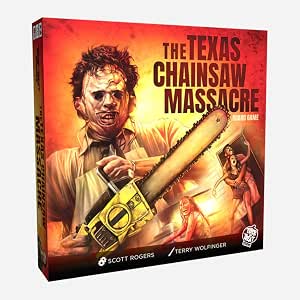 | Best for Cooperative Horror | Players: 1–4 | Recommended age: 14 years and up | Playing time: 60 minutes | VIEW LATEST PRICE | See Our Full Breakdown |
| Trivial Pursuit: Horror Movie Edition |  | Best for Horror Film Specialists | Questions: 600 | Cards: 100 | Players: 2 or more | VIEW LATEST PRICE | See Our Full Breakdown |
| Funko Games Scream: The Game |  | Best Cooperative Horror Party Game | Players: 3–8 | Recommended age: 13 years and up | Playing time: 20 minutes | VIEW LATEST PRICE | See Our Full Breakdown |
| Trivial Pursuit: Horror Ultimate Edition Trivia Board Game |  | Best for Deep-Dive Horror Trivia | Questions: 1,800 | Categories: 6 | Players: 2 or more | VIEW LATEST PRICE | See Our Full Breakdown |
| Taboo: Horror Edition Party Board Game |  | Best for Lively Horror Parties | Players: 2 or more | Recommended age: 13 and up | Guess words: 900 | VIEW LATEST PRICE | See Our Full Breakdown |
| Horror Trivia Card Game with 300 Questions |  | Best for Quick, Accessible Trivia | Players: 2 or more | Recommended age: 13 years and up | Cards: 150 | VIEW LATEST PRICE | See Our Full Breakdown |
| Brass Monkey Mini Poorly Explained Movies: Horror Edition Trivia Game |  | Best for Horror Movie Fans Who Like Wordplay | Brand: Brass Monkey | Game type: Dedicated card game | Edition: Horror Edition | VIEW LATEST PRICE | See Our Full Breakdown |
| CLUE: Universal Monsters Edition Board Game |  | Best for Classic Horror Mystery Fans | Brand: USAOPOLY | Players: 2–6 | Recommended age: 8 years and up | VIEW LATEST PRICE | See Our Full Breakdown |
| horror movie board game | Players | Recommended age | Playing time | Included components |
|---|---|---|---|---|
| Halloween 1978: The Board Game | 2–4 | 14 years and up | 60 minutes | — |
| Don’t Get Stabbed! Horror Part | 3–5 | 17 years and up | — | Cards and instruction booklet |
| Scary Screen Bingo: Slasher Ed | — | — | — | — |
| Horror Trivia Part II Expansio | 2 or more | 13 years and up | — | — |
| The Texas Chainsaw Massacre Bo | 1–4 | 14 years and up | 60 minutes | — |
| Trivial Pursuit: Horror Movie | 2 or more | 17 years and up | 60 minutes | Cards, die, and rules |
| Funko Games Scream: The Game | 3–8 | 13 years and up | 20 minutes | — |
| Trivial Pursuit: Horror Ultima | 2 or more | 17 years and up | 60 minutes | Game board, 300 cards, 6 custom movers, die, 36 wedges, and rulebook |
| Taboo: Horror Edition Party Bo | 2 or more | 13 and up | — | — |
| Horror Trivia Card Game with 3 | 2 or more | 13 years and up | — | 150 game cards and complete instructions |
| Brass Monkey Mini Poorly Expla | 2 or more | — | — | 125 movie cards |
| CLUE: Universal Monsters Editi | 2–6 | 8 years and up | 60 minutes | Custom game board |
More Details on Our Top Picks
Halloween 1978: The Board Game
Halloween 1978: The Board Game puts one player in control of Michael Myers while the others guide Laurie and her friends, creating a direct cat-and-mouse contest rather than a group of players answering horror questions. The hidden-movement rule gives Myers room to stalk out of sight, while survivors must search for weapons and children and find a way to escape. That makes it a stronger pick for fans who want to recreate slasher tension than The Texas Chainsaw Massacre Board Game, which centers on cooperative push-your-luck decisions. The tradeoff is its narrower table fit: it needs at least two players, and one person takes the antagonist role rather than everyone sharing the same goal. Its 60-minute play time and 14-and-up recommendation also make it a more involved choice than a quick party game.
Pros:- Asymmetric one-versus-many roles create a clear hunter-and-survivors contest.
- Hidden movement lets Michael Myers remain unseen until characters look directly at him.
- Based on the original Halloween movie, giving the scenario a specific slasher identity.
- Supports two to four players.
Cons:- Requires at least two players, so it cannot serve as a solo game.
- The divided roles may not suit groups that prefer everyone to cooperate.
- The 60-minute play time and 14-and-up recommendation make it less suited to quick, younger-family sessions.
Best for: Groups of two to four slasher fans who want one player to hunt while the others coordinate an escape.
Not ideal for: Solo players or groups seeking a fully cooperative game where everyone has the same objective.
- Players:2–4
- Recommended age:14 years and up
- Playing time:60 minutes
- Game mechanics:Asymmetric, cooperative, hidden movement
- Theme:Horror, movie
- Material:Cardboard, paper, plastic
- Item weight:1100 g
- Edition:Standard Edition
Our verdict“Choose this for a small group seeking a tense Halloween cat-and-mouse game, not a quick trivia or all-player-cooperative session.”
Don’t Get Stabbed! Horror Party Card Game for Adults
Don’t Get Stabbed! is the party-first choice here: one player becomes the killer as the others try to escape, with a compact deck standing in for a longer slasher scenario. Its 77 cards and instruction booklet make it easier to bring to a gathering than the larger, hour-long The Texas Chainsaw Massacre Board Game. The role-based setup also gives the group an immediate premise, while the card format favors a casual game night over a more substantial board-game session. The main limitation is the player and age range: it needs three to five players and is recommended for ages 17 and up. Compared with Halloween 1978: The Board Game, it accommodates more players at the table but offers a card-game format rather than that title’s hidden-movement hunt.
Pros:- Killer-versus-escapees roles establish a clear horror-party premise.
- The 77-card set and booklet come in a compact package for easy storage and transport.
- Supports three to five players, including groups larger than Halloween 1978: The Board Game.
- Card-based play suits casual gatherings better than a 60-minute board-game session.
Cons:- Requires at least three players, ruling out smaller groups.
- The 17-and-up recommendation limits suitability for family or teen game nights.
- Its compact card format may disappoint players seeking a more involved board-game experience.
Best for: Adult horror fans planning a casual gathering with three to five players who want a compact killer-versus-escapees card game.
Not ideal for: Two-player groups, younger teens, or players looking for a longer board-based slasher experience.
- Players:3–5
- Recommended age:17 years and up
- Card count:77 total: 64 Main Deck Cards and 13 Car Deck Cards
- Card dimensions:2.5 x 3.5 inches
- Package dimensions:4.5 x 1.5 x 6 inches
- Material:Cards
- Brand:Rookie Mage Games
- Included components:Cards and instruction booklet
Our verdict“Pick it for an adult party of three to five that wants a compact slasher card game rather than a full-length board game.”
Scary Screen Bingo: Slasher Edition
Scary Screen Bingo: Slasher Edition takes a different approach from the other games here: it is a viewing companion, not a hunt, escape scenario, or horror quiz. Its 25 slasher-themed bingo cards give a group a way to stay engaged while a movie plays, making it a natural fit for watch parties and Halloween gatherings. Compared with Horror Trivia Part II Expansion Card Game, it asks players to follow the film rather than answer prepared questions, so it works best when the movie itself is the main event. That same dependence is the tradeoff: the provided details do not specify player count, play time, age guidance, or how bingo wins are handled. Buyers wanting a standalone board-game session should choose a more fully described option, such as Halloween 1978: The Board Game.
Pros:- Includes 25 slasher-themed bingo cards for a shared viewing activity.
- Designed for movie nights, watch parties, date nights, and Halloween gatherings.
- The film-watching format differs from trivia games that pause the focus for questions.
- Slasher theme gives the activity a clear fit with horror movie screenings.
Cons:- Works best alongside a movie rather than as a standalone board-game session.
- The supplied product details do not specify player count or recommended age.
- The supplied details do not describe play time or how a round is won.
Best for: Slasher fans hosting a movie night who want a themed activity that runs alongside the film.
Not ideal for: Buyers seeking a standalone strategy game or who need confirmed player-count and age guidance before choosing.
- Edition:Slasher
- Bingo cards:25
- Theme:Slasher horror movies
- Suggested use:Movie nights, date nights, watch parties, and Halloween gatherings
- Game format:Horror movie bingo
- Player count:Not specified in the supplied product details
Our verdict“Choose this as a slasher-themed add-on for a movie screening, not as a replacement for a full horror board game.”
Horror Trivia Part II Expansion Card Game
Horror Trivia Part II Expansion Card Game suits players who want their horror knowledge to drive the session. Across 150 cards, its 300 questions cover classic and modern horror, and players collect three different weapon cards by answering correctly. That gives it more structure than a simple question-and-answer quiz, while individual or team play lets a group adjust around the table. Unlike Scary Screen Bingo: Slasher Edition, this is a standalone activity rather than something designed to accompany a film; it can also be combined with the original Horror Trivia game. The tradeoff is its dependence on familiarity with the genre: less dedicated fans may struggle to enjoy a game built around horror questions. It also needs at least two players, so it cannot fill a solo-game role like The Texas Chainsaw Massacre Board Game.
Pros:- Includes 300 questions across classic and modern horror.
- Different question difficulty levels can suit mixed-knowledge groups.
- Individual or team play gives groups flexibility in how they compete.
- Can be played on its own or combined with the original Horror Trivia game.
Cons:- Requires at least two players.
- The quiz format favors people already familiar with horror films.
- As an expansion, it may be less appealing to buyers seeking a narrative board-game experience.
Best for: Horror fans who enjoy genre knowledge contests and want a short game that works for individuals or teams.
Not ideal for: Players who are new to horror, prefer narrative slasher play, or need a solo option.
- Players:2 or more
- Recommended age:13 years and up
- Contents:150 cards with 300 questions and answers
- Play time:20 minutes
- Material:Cardstock
- Play format:Individual or team play
- Game objective:Collect three different weapon cards
- Model year:2021
Our verdict“Choose it for a short, competitive horror quiz with friends or teams, especially if you already enjoy genre trivia.”
The Texas Chainsaw Massacre Board Game
The Texas Chainsaw Massacre Board Game makes the strongest case for players who want the whole group to face the same threat. After the van runs out of gas, players work together to escape the Slaughter family, drawing tokens from a gruesome bag to take actions while risking trouble if they push their luck too far. That shared win-or-lose structure separates it from Halloween 1978: The Board Game, where one player takes the killer’s side. Solo play is another useful distinction: this game supports one to four players, unlike Halloween 1978, which requires at least two. The token-drawing tension can make choices feel risky, but it also means a group’s plans may be disrupted by drawing too many tokens. Its 60-minute play time and 14-and-up recommendation call for a dedicated session.
Pros:- Cooperative play keeps the group working toward a shared escape.
- Push-your-luck token drawing creates tension around how far to press each turn.
- Supports one to four players, including solo play.
- The Slaughter family scenario gives the game a distinct movie-horror setting.
Cons:- Drawing too many tokens may antagonize the family and disrupt the group’s plans.
- The 60-minute play time requires more commitment than a short trivia or party-card session.
- The 14-and-up recommendation makes it a less suitable choice for younger children.
Best for: Horror fans who want a cooperative escape game for one to four players, including someone playing solo.
Not ideal for: Groups that want a player to control the killer, or players who prefer predictable outcomes over push-your-luck tension.
- Players:1–4
- Recommended age:14 years and up
- Playing time:60 minutes
- Language:English
- Game mechanics:Action point allowance, cooperative
- Material:Cardboard
- Weight:4 pounds
- Dimensions:12.5 x 12.5 x 2.5 inches
Our verdict“Choose this for cooperative, risk-based escape play, particularly if you want a solo option or a group without a hidden antagonist.”
Trivial Pursuit: Horror Movie Edition
Trivial Pursuit: Horror Movie Edition is the most film-focused trivia choice here: its 600 questions span monsters, slashers, gore, psychological horror, paranormal stories, and international cinema. That range rewards players who watch beyond familiar franchises, while the quick-play format keeps it lighter to organize than the larger Trivial Pursuit: Horror Ultimate Edition. The tradeoff is scope: this edition sticks to horror films, whereas Ultimate Edition also covers television and books and has three times as many questions. At a listed 60 minutes, it may also take longer than the 20-minute Horror Trivia Card Game with 300 Questions. The age-17 recommendation and need for at least two players make it a better fit for adult horror fans than mixed-age family game nights.
Pros:- 600 questions cover a broad range of horror-film subgenres.
- Film-only focus suits players who want questions centered on cinema.
- 100 cards and a die keep the format straightforward to set up.
- Quick-play framing offers a lighter alternative to the larger Ultimate Edition.
Cons:- Recommended for ages 17 and up, limiting mixed-age play.
- Requires at least two players.
- Covers movies rather than the books and television included in Horror Ultimate Edition.
Best for: Adult movie buffs who want trivia spanning multiple horror-film subgenres, including international cinema.
Not ideal for: Families with younger teens, solo players, or groups seeking broader horror coverage across books and television.
- Questions:600
- Cards:100
- Players:2 or more
- Recommended age:17 years and up
- Playing time:60 minutes
- Included components:Cards, die, and rules
- Edition:Horror Movie Edition
Our verdict“Choose this for adult groups who want broad horror-movie trivia without the extra media categories of Ultimate Edition.”
Funko Games Scream: The Game
Scream: The Game stands apart from the trivia picks by asking players to work together to escape Ghost Face, rather than prove who knows the most horror facts. Its 20-minute sessions suit a party that wants a brisk, shared challenge, and the downloadable app adds narration and music voiced by Roger L. Jackson for a more film-specific atmosphere. Compared with Taboo: Horror Edition Party Board Game, which builds its energy around describing words under pressure, Scream offers a cooperative scenario and a location board. That atmosphere depends on using the app, though, so it is less convenient for groups who prefer games that work entirely from the box. It also needs three or more players, making it less flexible than the trivia games designed for two.
Pros:- Cooperative play gives the group a shared goal instead of head-to-head trivia.
- A 20-minute playing time fits short party-game slots.
- Free app narration and music connect the experience to the Scream films.
- Ghost Face figure, knife marker, and location board add visual theme to play.
Cons:- Narration and music require a downloadable app.
- Needs at least three players, unlike the two-player trivia options.
- Small parts and the age-13 recommendation make it less suitable for young children.
Best for: Scream fans hosting a group of three to eight who want a short cooperative game with audio atmosphere.
Not ideal for: Two-player households or groups who avoid downloadable apps and want a game that works without a phone or tablet.
- Players:3–8
- Recommended age:13 years and up
- Playing time:20 minutes
- Included cards:24 Scene Cards and 60 Scream Cards
- Other components:Ghost Face figure, knife marker with base, location board, and instructions
- Language:English
- Dimensions:5.25 × 2.5 × 9 inches
Our verdict“Pick this for a Scream-themed group that wants cooperative action and is happy to use an app for the audio.”
Trivial Pursuit: Horror Ultimate Edition Trivia Board Game
Trivial Pursuit: Horror Ultimate Edition is the broadest knowledge test in this batch, with 1,800 questions across six categories and coverage of horror movies, television, and books. Its board, custom movers, and wedges create a more traditional, substantial game-night format than the card-focused Horror Trivia Card Game with 300 Questions. That extra scope is useful for groups whose horror interests extend beyond films, but it is less tightly matched to movie-only fans than Trivial Pursuit: Horror Movie Edition. Both Trivial Pursuit editions are listed for 60-minute play and ages 17 and up; Ultimate Edition brings far more questions and components, but asks for more commitment from the table. Choose it for variety and replay, not the shortest session.
Pros:- 1,800 questions provide substantially more variety than the 300-question Horror Trivia Card Game.
- Six categories cover distinct horror styles and subjects.
- Questions include movies, television, and books.
- Board, custom movers, and wedges deliver a fuller tabletop experience than a card-only quiz.
Cons:- The 60-minute playing time is a bigger commitment than the 20-minute trivia card game.
- Recommended for ages 17 and up.
- Broader media coverage may be less appealing to players focused only on horror films.
Best for: Adult horror fans who want a full board-game format and questions spanning films, television, and books.
Not ideal for: Players seeking a movie-only quiz, a short game, or an option suitable for younger teens.
- Questions:1,800
- Categories:6
- Players:2 or more
- Recommended age:17 years and up
- Playing time:60 minutes
- Included components:Game board, 300 cards, 6 custom movers, die, 36 wedges, and rulebook
- Dimensions:11 × 11 × 0.1 inches
Our verdict“Choose Ultimate Edition for adult groups who want the largest question pool and broader horror-media coverage in a traditional board game.”
Taboo: Horror Edition Party Board Game
Taboo: Horror Edition turns horror references into a fast verbal party challenge: players describe a target while avoiding its forbidden words, with a screaming buzzer adding a dramatic cue when someone slips. Its 900 guess words give groups plenty of prompts, but the appeal comes more from quick talk and team energy than from testing detailed movie knowledge. That makes it a livelier party alternative to Trivial Pursuit: Horror Movie Edition, which relies on players recalling facts and film history. The tradeoff is that Taboo’s play hinges on describing words under pressure; groups who dislike word games may find the central challenge frustrating rather than fun. It is also less of a themed board-game scenario than Scream: The Game, which offers cooperative escape play.
Pros:- 900 guess words offer a broad set of horror-themed prompts.
- The screaming buzzer adds a clear, lively party cue.
- Describing clues creates a different challenge from conventional horror trivia.
- Can accommodate groups of two or more.
Cons:- Players must avoid forbidden words while describing each answer, which can frustrate some groups.
- The verbal format relies on players being comfortable giving clues aloud.
- Offers less of a story-driven horror scenario than Scream: The Game.
Best for: Horror-themed party hosts who want a verbal team game and have guests comfortable improvising clues.
Not ideal for: Players who prefer factual trivia, cooperative horror scenarios, or games that do not depend on quick wordplay.
- Players:2 or more
- Recommended age:13 and up
- Guess words:900
- Included feature:Screaming buzzer
Our verdict“Choose this for a talkative horror-party crowd that prefers clue-giving and buzzer-driven rounds to film-fact quizzes.”
Horror Trivia Card Game with 300 Questions
Horror Trivia Card Game with 300 Questions is the straightforward pick for groups who want a short quiz without committing to a full board-game session. The 20-minute play time and 150-card deck make it easier to fit into a casual gathering than either 60-minute Trivial Pursuit edition. Its questions range across horror movies, books, television, and classic and modern horror, so it offers broader subject matter than the film-only Trivial Pursuit: Horror Movie Edition, even with a smaller question pool. That smaller pool is the main tradeoff: it has less built-in question variety than either Trivial Pursuit game. The age-13 recommendation also makes it more suitable for teen groups, though it still needs at least two players.
Pros:- 20-minute play time suits short gatherings and quick rounds.
- Questions cover movies, books, television, and classic and modern horror.
- The age-13 recommendation allows younger players than the Trivial Pursuit editions.
- Can be played individually or in teams.
Cons:- 300 questions provide less variety than either Trivial Pursuit edition.
- Requires at least two players.
- Card-based trivia offers less of a full board-game setup than Horror Ultimate Edition.
Best for: Teen and adult groups who want a compact, cross-media horror quiz that fits into a short game-night slot.
Not ideal for: Horror trivia regulars seeking a large question bank, or solo players looking for a game they can play alone.
- Players:2 or more
- Recommended age:13 years and up
- Cards:150
- Questions:300
- Play time:20 minutes
- Included components:150 game cards and complete instructions
- Theme:Horror
Our verdict“Pick this for a short, accessible horror quiz across several media, but choose Trivial Pursuit if a larger question pool matters more.”
Brass Monkey Mini Poorly Explained Movies: Horror Edition Trivia Game
Misleading summaries make this a lighter, more conversational pick than CLUE: Universal Monsters Edition: players identify horror films rather than solve a crime through deduction. Its 125 movie cards give a group plenty of prompts, while the rules allow either competitive or casual play, so the tone can suit a lively party or a relaxed game night. The hook depends on recognizing the films behind the deliberately muddled descriptions, which rewards genre knowledge and can spark table talk between guesses. That same focus limits its reach: unlike horror-themed games with broader deduction or party mechanics, it has little to offer guests who rarely watch horror. I’d choose it for a group eager to trade movie references, not for players looking for a full board-game mystery or a general-knowledge quiz.
Pros:- 125 horror movie cards provide a substantial set of guessing prompts.
- Hilariously misleading summaries give players a distinct wordplay-based challenge.
- Competitive and casual play options let groups adjust the tone.
- A dedicated card format suits parties and game nights without a board-based mystery.
Cons:- The horror-only subject matter can leave genre newcomers out of the fun.
- Players need enough film knowledge to identify titles from indirect summaries.
- It offers trivia and guessing rather than the deduction and story progression of CLUE: Universal Monsters Edition.
Best for: Adult friend groups with several horror movie fans who want quick, joke-driven guessing rounds at a party.
Not ideal for: Groups with casual or non-horror viewers, who may struggle to recognize the films and get less from the card prompts.
- Brand:Brass Monkey
- Game type:Dedicated card game
- Edition:Horror Edition
- Included components:125 movie cards
- Players:2 or more
- Age range:Adult
Our verdict“Choose this for horror-savvy groups who want humorous movie guessing, and skip it if your guests need a game that works without genre knowledge.”
CLUE: Universal Monsters Edition Board Game
This pick brings horror into a familiar deduction format: players investigate Van Helsing’s disappearance by working out the culprit, the item used, and where the evidence is hidden. The six Universal Monsters give the mystery its classic creature-film identity, while the premise offers more of a shared investigation than the misleading-title guessing in Brass Monkey’s Poorly Explained Movies: Horror Edition. It also supports 2–6 players and lists an age recommendation of 8 and up, giving it broader household appeal than an adult-focused horror trivia game. The tradeoff is that it relies on CLUE’s deduction structure rather than horror-specific action or movie trivia. Product details list only a custom game board as an included component, so buyers should check what else comes in the box before assuming the listed information covers the full setup.
Pros:- Features six iconic Universal Monsters characters.
- Uses familiar deduction mechanics to give the horror theme a clear mystery objective.
- Supports 2–6 players, making it suitable for a range of group sizes.
- Recommended for ages 8 and up, opening play to younger family members.
Cons:- The familiar CLUE deduction format may feel less distinctive to players seeking horror-specific mechanics.
- The product details list only a custom game board as an included component, leaving the full contents unclear.
- Its 60-minute playing time is a larger commitment than a short party card game such as Brass Monkey Poorly Explained Movies.
Best for: Families and classic Universal Monsters fans who want a familiar deduction game with a horror setting and room for up to six players.
Not ideal for: Horror fans seeking movie trivia, intense slasher-style play, or clearly documented component details before purchase.
- Brand:USAOPOLY
- Players:2–6
- Recommended age:8 years and up
- Playing time:60 minutes
- Game mechanics:Deduction
- Theme:Horror
- Language:English
- Included components:Custom game board
- Batteries:Not required
Our verdict“Pick this for a group that wants a classic deduction mystery starring Universal Monsters, but choose a trivia game for movie-knowledge challenges.”
How We Picked
I compared these games by how directly they deliver on the promise of horror movie board games: a horror-film connection, a clear activity for a group, and enough play structure to suit the audience each title targets. I weighed the difference between a full board-game format, trivia, and short party games rather than treating them as interchangeable. I also considered how much genre knowledge a game appears to ask of players, how quickly its central idea can be explained, and whether its theme is broad or tied to one film or franchise.
The ranking favors options that combine a clear horror identity with a useful fit for more than one narrow audience. Scream: The Game leads as the most balanced pick, while CLUE: Universal Monsters Edition and Trivial Pursuit: Horror Ultimate Edition rise for buyers with specific preferences. Party activities and compact trivia remain valuable for casual gatherings, but rank lower as full board-game choices because their appeal depends more on group mood, question familiarity, or a short-session format.
Factors to Consider When Choosing Horror Movie Board Games
Before choosing, I’d decide what you want the game night to feel like. Horror titles span deduction, movie trivia, party prompts, and franchise-focused play, so the label alone does not tell you whether a game will suit your group. These broader checks can help prevent a mismatch between the box’s theme and the kind of evening you want.
Choose the Activity Before the Franchise
Start by choosing between strategy or deduction, trivia, and party play, then narrow the options by movie property. A famous title can draw people to the table, but it cannot make a question-heavy game fun for players who dislike quizzes. Likewise, a party game may suit a lively gathering better than a board game with a longer sequence of decisions. A common mistake is buying for the horror theme alone and discovering that the core activity does not fit the group. If your guests have mixed tastes, prioritize a format they already enjoy and let the horror connection act as the bonus.
Match Movie Knowledge to the Least-Familiar Player
Trivia can create a sharp gap between genre experts and casual viewers, particularly when questions reach beyond familiar films. Consider whether the group wants a genuine knowledge test or whether players need ways to participate without having seen every reference. If only one or two people know the genre deeply, a deduction game or party prompt may keep the evening more balanced. Check whether the experience appears to rely on film recall, visual clues, or general wordplay; those demand different kinds of familiarity. Choosing for the least-familiar player often makes a gathering more welcoming without spoiling the fun for horror devotees.
Think About Session Length and Replay Variety
A quick card or party game can be easier to fit between other plans, while a more involved board game gives the group a central activity for the evening. The tradeoff is that short formats may feel repetitive if the same people play them often, whereas a longer game can ask for more attention than a casual group wants to give. Look for signs of replay variety in the game’s structure, question pool, or changing player interactions rather than assuming a horror theme alone keeps each round fresh. Also think about whether you want one complete session or something guests can join and leave between rounds. Buying for the occasion—not just the number of players—helps set realistic expectations.
Use Group Size and Social Energy as Filters
Some games work best when players can trade clues or compete around a shared table; others depend on quick, vocal participation. Think about whether your group enjoys bluffing, word challenges, or taking turns answering questions before choosing. A quiet group may prefer structured deduction over a party format that rewards fast reactions, while a larger gathering may benefit from rules that keep everyone involved. Do not assume that an adult-themed horror label means the game will suit every household or event. Match the game’s social demands to the people who will actually play it.
Decide How Much Franchise Specificity You Want
A game tied to one film can make a strong gift for a devoted fan, but its references may be less meaningful to players who do not know that story. Broader horror collections can serve more varied tastes, though they may feel less personal to someone devoted to a single series. Before choosing a franchise title, ask whether the recipient enjoys the film itself or simply likes horror in general. This distinction matters when the game’s theme supplies much of its appeal. For shared game nights with changing guests, a wider genre focus is often the safer choice; for a fan-centered gift, specificity can be the point.
Frequently Asked Questions
Which horror movie board game is the best choice for a mixed group?
I’d favor a game whose main activity does not depend on every player recognizing obscure films. Scream: The Game is my overall starting point for a horror-themed group night, while a deduction or party format can be a better fit than trivia when knowledge levels vary. Before buying, check the game’s actual play style and whether the group enjoys competition or collaborative discussion. If your guests have very different tastes, a familiar franchise may attract them, but a flexible format is more likely to keep everyone involved.
Should I choose a horror trivia game or a themed board game?
Choose trivia if your group likes recalling titles, characters, and film details—and enjoys being challenged by what other players know. Pick a themed board game if you want decisions, deduction, or interaction to carry more of the experience. The distinction matters because a horror setting does not automatically make a game a movie-knowledge test. Trivia can be a natural fit for a film club, while a board-game format may work better for guests who know the genre only casually. I’d match the game’s central activity to the group before weighing the specific horror property.
Are franchise-specific horror games a good gift for casual fans?
They can be, but the recipient’s connection to that particular film matters more than a general interest in scary movies. Halloween 1978 and The Texas Chainsaw Massacre Board Game have a narrower thematic draw than a broader horror collection, so they suit fans who recognize and enjoy those stories. For someone who watches horror occasionally, a general trivia or party game may offer more familiar entry points. I’d also check whether the person enjoys the game’s format, since a strong franchise theme cannot compensate for an activity they do not like.
What should I pick if players have very different horror film knowledge?
Look beyond the title and ask how much success depends on knowing movie facts. Trivial Pursuit: Horror Ultimate Edition is better suited to players who want a knowledge challenge, while wordplay, bingo, or other party formats can give less devoted viewers a different way to join in. A mixed group can still enjoy trivia if players are comfortable with uneven scores and treat the questions as conversation starters. If that imbalance would frustrate the table, choose a game where interaction or deduction matters more than recall. This is a group-fit decision, not a measure of which game is better for everyone.
Can a horror party game replace a full board game for game night?
It can replace one if the group wants a light, flexible activity rather than a long session built around a board and sustained decisions. Options such as Don’t Get Stabbed!, Taboo: Horror Edition, and Scary Screen Bingo lean toward quick social play, so they can work well for guests arriving at different times or for a short gathering. They may not satisfy players looking for deeper strategy or a longer arc. Decide whether the goal is easy participation or a substantial tabletop experience, then choose the format that meets that goal.
Conclusion
For most groups, I’d choose Funko Games Scream: The Game as the best overall because it offers the clearest balance of horror identity and group appeal in this lineup. For a deduction-focused night, CLUE: Universal Monsters Edition is my pick; for trivia fans who want a more substantial challenge, go with Trivial Pursuit: Horror Ultimate Edition. The best value in play flexibility is a compact party or card format such as Don’t Get Stabbed!, especially when you want an easy activity rather than a full board-game session. For beginners or mixed-experience groups, I’d start with an accessible party game instead of a demanding horror quiz. For a specific-fandom gift, choose Halloween 1978 or The Texas Chainsaw Massacre Board Game only when the recipient has a clear connection to that franchise; for classic monster fans, choose CLUE. Match the format to your group first, then let the horror theme break the tie.
Fall Picks
fall essentials
As an affiliate, we earn on qualifying purchases.