Military history board games range from approachable tactical battles to demanding campaign simulations, so the right choice depends on how much rules learning and table time your group wants. I rank Memoir ’44 as the best overall pick for its accessible WWII scenarios, while Undaunted: Stalingrad stands out for a more personal, evolving campaign and Axis & Allies 1942 Second Edition for a broad, strategic WWII contest. The main tradeoff is between ease and historical detail: lighter games are quicker to teach, while heavier titles ask players to manage more rules, planning, and play time. Solo players also have dedicated options, including Midway Solitaire Travel Game and Pacific War 1942. Read on for the full breakdown and recommendations by player type.

Get movie nights delivered free with Prime
- Fast, free delivery on millions of items
- Prime Video, Amazon Music and more included
- Member-only deals all year
Key Takeaways
- Memoir ’44 is the strongest all-around fit for groups seeking WWII battles without the rules load of a full campaign simulation.
- Undaunted: Stalingrad offers a campaign-focused alternative, while its evolving play is a better match for players who want a continuing story than a one-session battle.
- Axis & Allies 1942 Second Edition offers a broader strategic contest than the shorter 1941 editions, but asks for more time and commitment.
- Stalingrad ’42, Army of the Potomac, and By Swords & Bayonets suit players who prioritize campaign scope or historical battle detail over quick teaching.
- Solo and travel needs change the shortlist: Midway Solitaire and Pacific War 1942 are purpose-built solo options, while Tank Wars and the Opoly titles take a lighter, less simulation-focused approach.
| Axis & Allies 1941 Strategy Board Game |  | Best for a Faster Grand-Strategy Introduction | Brand: Avalon Hill | Players: 2–5 | Playing time: Approximately 120 minutes | VIEW LATEST PRICE | See Our Full Breakdown |
| GMT Games Army of the Potomac: Campaigns of 1862 and 1864 |  | Best for Broad Civil War Campaign Battles | Brand: GMT Games | Players: 1–2 | Genre: Wargame | VIEW LATEST PRICE | See Our Full Breakdown |
| GMT Games By Swords & Bayonets: Great Battles of the American Civil War |  | Best for Tactical Civil War Battles | Brand: GMT Games | Players: 1–2 | Age range: Adult; product description states ages 18+ | VIEW LATEST PRICE | See Our Full Breakdown |
| MasterPieces U.S. Army Opoly Board Game |  | Best for Casual Army-Themed Family Play | Brand: MasterPieces | Players: Up to 6 | Theme: U.S. Army and military vehicles | VIEW LATEST PRICE | See Our Full Breakdown |
| Memoir ’44 WWII Strategy Board Game | 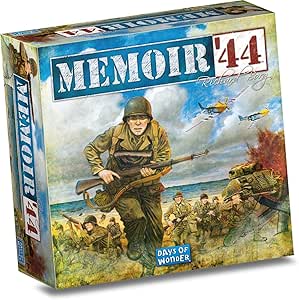 | Best Overall for Accessible Historical Tactics | Brand: Days of Wonder | Publisher: Asmodee | Edition: 2025 Edition | VIEW LATEST PRICE | See Our Full Breakdown |
| Tank Wars: The War Game Strategy Board Game for 2 Players, Ages 8+ |  | Best for Younger Two-Player Duels | Players: 2 | Recommended age: 8 years and up | Playing time: 30 minutes | VIEW LATEST PRICE | See Our Full Breakdown |
| Pacific War 1942 Solitaire Travel Game, 2nd Edition |  | Best Solo Pacific War Campaign | Players: 1 | Edition: 2nd Edition | Recommended age: 15 years and up | VIEW LATEST PRICE | See Our Full Breakdown |
| Axis & Allies: 1941 WWII Strategy Board Game |  | Best for a Shorter Axis & Allies Session | Players: 2–5 | Recommended age: 12 years and up | Play time: 1–3 hours | VIEW LATEST PRICE | See Our Full Breakdown |
| Axis & Allies 1942 Second Edition Board Game |  | Best for a Full-Length WWII Campaign | Players: 2–5 | Edition: Second Edition | Recommended age: 12 years and up | VIEW LATEST PRICE | See Our Full Breakdown |
| Monopoly World War II: We Are All in This Together |  | Best for Casual WWII-Themed Group Play | Players: 2–6 | Recommended age: 8 years and up | Game type: Board game | VIEW LATEST PRICE | See Our Full Breakdown |
| Worthington Publishing Midway Solitaire Travel Game |  | Best Compact Solo Pick | Brand: Worthington Publishing | Game type: Wargame | Players: 1–2 | VIEW LATEST PRICE | See Our Full Breakdown |
| Stalingrad ’42 Board Game |  | Best for Operational Detail | Brand: GMT Games | Players: 2–4 | Recommended age: 15 years and up | VIEW LATEST PRICE | See Our Full Breakdown |
| Blitzkrieg! Combined Edition |  | Best for Quick Strategic Matches | Brand: PSC Games | Edition: Combined Edition | Players: 1–2 | VIEW LATEST PRICE | See Our Full Breakdown |
| Undaunted: Stalingrad |  | Best Branching Campaign | Brand: Osprey Games | Players: 2 | Recommended age: 14 years and up | VIEW LATEST PRICE | See Our Full Breakdown |
| military history board game | Players | Brand | Recommended age | Playing time |
|---|---|---|---|---|
| Axis & Allies 1941 Strategy Bo | 2–5 | Avalon Hill | — | Approximately 120 minutes |
| GMT Games Army of the Potomac: | 1–2 | GMT Games | 15 years and up | — |
| GMT Games By Swords & Bayonets | 1–2 | GMT Games | — | — |
| MasterPieces U.S. Army Opoly B | Up to 6 | MasterPieces | — | — |
| Memoir ’44 WWII Strategy Board | 2 | Days of Wonder | — | 30–60 minutes |
| Tank Wars: The War Game Strate | 2 | — | 8 years and up | 30 minutes |
| Pacific War 1942 Solitaire Tra | 1 | — | 15 years and up | — |
| Axis & Allies: 1941 WWII Strat | 2–5 | Renegade Game Studios | 12 years and up | — |
| Axis & Allies 1942 Second Edit | 2–5 | — | 12 years and up | Approximately 3–4 hours |
| Monopoly World War II: We Are | 2–6 | — | 8 years and up | — |
| Worthington Publishing Midway | 1–2 | Worthington Publishing | 15 years and up | 15–30 minutes |
| Stalingrad ’42 Board Game | 2–4 | GMT Games | 15 years and up | — |
| Blitzkrieg! Combined Edition | 1–2 | PSC Games | 14 years and up | Approximately 20 minutes |
| Undaunted: Stalingrad | 2 | Osprey Games | 14 years and up | 45–75 minutes |
More Details on Our Top Picks
Axis & Allies 1941 Strategy Board Game
Axis & Allies 1941 is my pick for players who want a broad World War II map and competing national powers without taking on the heft of a longer campaign game. Its streamlined rules and quicker setup make the familiar Axis & Allies mechanics easier to approach than the more involved 1942 Second Edition, while five powers give players a sense of a global conflict rather than one battlefield. That wider scope comes at the cost of detail: this version simplifies the series’ strategic choices, so players seeking more intricate military planning may prefer the campaign focus of Stalingrad ’42. A session can still run about two hours, which is a substantial commitment for a game billed as quicker. I’d choose it as an accessible entry point, not as the deepest WWII simulation in this lineup.
Pros:- Quicker setup and play than other Axis & Allies games
- Familiar series mechanics make it a more approachable starting point
- Five major powers create a broad WWII strategic scope
- Includes newly sculpted units
Cons:- Simplifies the experience compared with other Axis & Allies titles
- Play can take approximately two hours
- Its global scope offers less battle-level detail than focused games such as Stalingrad ’42
Best for: Players new to Axis & Allies who want to command major WWII powers in a comparatively streamlined game.
Not ideal for: Experienced wargamers seeking detailed operational decisions or anyone who needs a short game well under two hours.
- Brand:Avalon Hill
- Players:2–5
- Playing time:Approximately 120 minutes
- Genre:Strategy
- Edition:2nd Edition
- Language:English
- Theme:World War II; five major powers
- Included components:Game
Our verdict“Choose Axis & Allies 1941 for a more approachable global WWII strategy game, but skip it if you want deep campaign detail or a brief session.”
GMT Games Army of the Potomac: Campaigns of 1862 and 1864
Army of the Potomac: Campaigns of 1862 and 1864 earns its place for covering several major Civil War engagements, including the Seven Days and battles from the 1864 campaign. Its low counter density is intended to keep attention on the larger battle picture: finding a flank, concentrating troops, and choosing where artillery matters, rather than managing a crowded field of units. That makes it a different proposition from By Swords & Bayonets, which focuses on smaller regimental-level battles and a more tactical scale. The tradeoff is a specific historical focus; this is not a general Civil War overview, and its large collection of maps and game materials calls for table space and a willingness to learn a dedicated wargame. I’d favor it for players who want campaign-level Civil War decisions over a shorter, more introductory WWII game such as Memoir ’44.
Pros:- Covers several major Civil War battles, including the complete Seven Days battle
- Low counter density helps foreground the larger battle situation
- Supports solo play or two players
- Includes multiple maps, player aids, dice, and campaign materials
Cons:- Focuses on selected Civil War campaigns rather than offering a broad survey
- Recommended for ages 15 and up
- Multiple large maps require substantial table space
Best for: Civil War wargamers who want to compare multiple Army of the Potomac battles and make large-scale maneuver decisions.
Not ideal for: Casual players, younger groups, or buyers without room for extensive maps and patience for a focused historical wargame.
- Brand:GMT Games
- Players:1–2
- Genre:Wargame
- Language:English
- Recommended age:15 years and up
- Battles:Seven Days, Seven Pines, Spotsylvania II, North Anna River, and Cold Harbor
- Maps:Four 22 × 34 in maps, three 11 × 34 in map sheets, one 11 × 17 in map sheet, and one small cardstock map extension
- Other components:Two counter sheets, rulebook, playbook, Union 1864 off-map display, two time record tracks, two player aid cards, two 10-sided dice, and one special die
- Model number:2524
Our verdict“Pick this for expansive Army of the Potomac campaign scenarios and broad battlefield maneuver, not for a compact or casual history game.”
GMT Games By Swords & Bayonets: Great Battles of the American Civil War
Where Army of the Potomac emphasizes the wider campaign picture, By Swords & Bayonets puts the focus on regimental-level action across four American Civil War battles. Its compact force count—fewer than 50 combat units per side—keeps the battlefield legible while still giving players room to manage troop positions and scenario objectives. The 140-yard hex scale suits buyers interested in tactical engagements rather than commanding a whole war. That specificity has a clear cost: scenarios are estimated at about four hours, so this is a planned sit-down game, not a quick history-themed evening. The product information also positions it for adults, unlike the more accessible, shorter Memoir ’44. I’d choose it over Army of the Potomac for focused tactical battles, but not for a wider campaign sweep or a shorter learning session.
Pros:- Covers four distinct Civil War battles
- Fewer than 50 combat units per side keep the tactical field manageable
- Includes maps, scenario materials, rules, dice, and counters
- 140-yard hex scale supports close battlefield decision-making
Cons:- Scenarios take about four hours or more
- Designed for adults; the product description states ages 18+
- Tactical focus is narrower than Army of the Potomac’s campaign coverage
Best for: Adult Civil War enthusiasts who want regimental-scale decisions across several distinct battle scenarios.
Not ideal for: Younger players, casual groups, or anyone looking for a short game or a broad campaign-level overview.
- Brand:GMT Games
- Players:1–2
- Age range:Adult; product description states ages 18+
- Battles:Big Bethel, Mill Springs, New Bern, and Rappahannock Station
- Gameplay scale:Regimental-level; fewer than 50 combat units per side
- Map and hex scale:22 × 17 in maps; 140-yard hexes
- Estimated playing time:About 4 hours or more
- Components:Two map sheets, eight organizational cards, four TEC disorder charts, scenario book, rules booklet, two 10-sided dice, and 1/2-inch game counters
- Model number:GMT2413
Our verdict“Choose By Swords & Bayonets for long, focused regimental Civil War battles, and pass if you need a quicker or broader historical game.”
MasterPieces U.S. Army Opoly Board Game
U.S. Army Opoly takes a lighter route into military history than the dedicated wargames in this roundup. Its Army theme, vehicle references, and trivia on property cards give casual players a chance to encounter U.S. Army facts while playing a familiar property-style board game. Six metal military-themed pieces add a tactile theme, and support for up to six players makes it easier to bring a group together than two-player titles such as Memoir ’44. The tradeoff is historical depth: this is not a battle simulation, and its educational material centers on Army history and vehicles rather than tactical command. Small parts also make it a poor fit for homes with very young children, despite the conflicting age information in the product data. I’d pick it for relaxed themed play, not for a serious military history study.
Pros:- Officially licensed U.S. Army theme with vehicle trivia on property cards
- Accommodates up to six players
- Six metal pieces feature military-themed designs
- Combines casual strategy with Army history and basic math
Cons:- Does not simulate historical battles like Memoir ’44 or the GMT wargames
- Small parts present a choking hazard
- Designed for indoor play
Best for: Families or casual groups who want an Army-themed property game with vehicle trivia and room for up to six players.
Not ideal for: Wargamers seeking historical battle decisions, or households where small pieces could pose a choking hazard to young children.
- Brand:MasterPieces
- Players:Up to 6
- Theme:U.S. Army and military vehicles
- Mechanics:Area control, auction, and modular board
- Playing pieces:Six metal pieces: drill sergeant hat, tank, helicopter, Humvee, military truck, and combat boot
- Educational objectives:U.S. Army history and vehicles, strategic thinking, and basic math
- Dimensions:15.5 × 2 × 10.5 inches
- Material and use:Plastic; indoor use
- Safety notice:Choking hazard—small parts
Our verdict“Choose U.S. Army Opoly for casual group play and themed trivia, not for a serious or battle-focused military history game.”
Memoir ’44 WWII Strategy Board Game
Memoir ’44 is my strongest all-around choice for buyers who want recognizable WWII scenarios and meaningful tactical choices without the scale of a long campaign game. Its command cards shape which parts of the battlefield a player can activate, while dice, terrain, and objectives keep each scenario distinct. That creates a more approachable entry than the larger economic and territorial contest in Axis & Allies 1941, and sessions are listed at 30–60 minutes rather than roughly two hours. The tradeoff is that card-driven command can restrict options, and dice add uncertainty; players seeking sustained campaign maneuver may prefer a GMT title such as Army of the Potomac. The 2025 edition’s scenario count is inconsistent across the supplied descriptions, so I would verify the included guide before buying specifically for a particular number of battles.
Pros:- Historical battle scenarios use terrain, troop placement, and objectives
- Command cards and dice combine planning with uncertainty
- Includes 144 miniatures, terrain, and a double-sided hex board
- Listed play time of 30–60 minutes makes it easier to schedule than longer campaign wargames
Cons:- Command cards can limit which battlefield sections players can activate
- Dice introduce outcomes players cannot fully control
- Scenario counts conflict across the supplied product descriptions
Best for: Two-player groups who want replayable WWII battle scenarios, tactical choices, and a shorter session than Axis & Allies.
Not ideal for: Buyers who want a broad global campaign, dislike card-driven limits and dice variance, or require a confirmed scenario count.
- Brand:Days of Wonder
- Publisher:Asmodee
- Edition:2025 Edition
- Players:2
- Playing time:30–60 minutes
- Age range:8 years and up
- Scenarios:Over 20 listed for the 2025 edition; manufacturer description lists 17
- Board and miniatures:Double-sided, three-section hexagonal board; 144 army miniatures
- Other components:36 obstacles, 44 double-sided terrain tiles, 60 command cards, 22 summary cards, 8 attack dice, activation tokens, cardholders, rulebook, and scenario guide
Our verdict“Choose Memoir ’44 for accessible, replayable two-player WWII tactics, but look elsewhere for campaign-scale command or a confirmed scenario total.”
Tank Wars: The War Game Strategy Board Game for 2 Players, Ages 8+
Tank Wars is the most approachable head-to-head pick here: its 30-minute sessions and age-8 recommendation ask less of players than Axis & Allies: 1941, while still giving terrain and tactical choices a role in each battle. Modular board plates change the battlefield between games and can connect with additional sets, so the layout need not stay fixed. Terrain cards shape movement and combat, and Warcards such as Ambush and Reinforcement offer ways to alter a turn. That makes it a better fit for quick, repeatable tank clashes than for a sweeping historical campaign. The tradeoff is its narrow scope: it supports exactly two players and does not offer the multi-nation command or economic layer found in Axis & Allies. Small parts also call for care around young children.
Pros:- Modular plates create different battlefield layouts and can connect with additional sets.
- Terrain cards affect movement and combat, giving the map tactical importance.
- Warcards add options such as Ambush, Reinforcement, and Sabotage.
- About 30 minutes of play makes it easier to fit in than Axis & Allies: 1941.
Cons:- Designed for exactly two players, limiting its use for group game nights.
- Its compact tank-battle format offers less campaign and historical scope than the Axis & Allies games.
- Small parts pose a choking hazard for children under 3.
Best for: Two players, especially families with children ages 8 and up, who want short tactical tank battles and a changing board.
Not ideal for: Groups needing a game for three or more, or history enthusiasts seeking a detailed campaign across multiple fronts.
- Players:2
- Recommended age:8 years and up
- Playing time:30 minutes
- Genre:Family, military, strategy, wargame
- Mechanics:Area control, modular board, roll and move
- Board:Modular plates connect in multiple directions; additional sets can be combined
- Included components:Board plates, dice, game cards, rule book, tanks
- Language:English
Our verdict“Choose Tank Wars for quick, replayable tank duels with a younger opponent, but pick Axis & Allies: 1941 for broader WWII strategy and more players.”
Pacific War 1942 Solitaire Travel Game, 2nd Edition
Pacific War 1942 earns its place as the clearest choice for a solo player who wants WWII operations rather than a two-sided duel. Its Japanese AI provides opposition, while control of sea areas feeds into land battles and campaign progress; that connection gives naval decisions weight beyond simply moving pieces around a map. Compared with Midway Solitaire Travel Game, also in this roundup, this title frames the conflict across both naval and land operations in the Pacific, rather than centering the choice on a single-player Midway game. The second edition adds Japanese Action Cards and an upgraded rules booklet. Its 30-minute estimate and small travel format suit short sessions, but the single-player design rules out shared play, and the listed components provide little detail beyond one board game.
Pros:- Japanese AI supplies opposition without requiring a second player.
- Sea-area control influences land battles and campaign progress.
- Covers naval and land operations across the Pacific War.
- Second edition includes Japanese Action Cards and an upgraded rules booklet.
Cons:- Designed for one player, so it does not serve as a multiplayer game.
- The listed included components are limited to one board game, with no detailed inventory.
- Its Pacific WWII focus is narrower than the multi-theater scope of Axis & Allies 1942.
Best for: Solo players who want a compact WWII game linking Pacific naval control with land-campaign outcomes.
Not ideal for: Couples or groups who want to play against each other, or buyers who prefer a listed component inventory with more detail.
- Players:1
- Edition:2nd Edition
- Recommended age:15 years and up
- Estimated playing time:30 minutes
- Theme:World War II
- Genre:Historical, solitaire, strategy, wargame
- Mechanic:Area control
- Dimensions:7.25 × 4 × 0.1 inches
- Included components:1 board game
Our verdict“Pick Pacific War 1942 for a short solo campaign connecting sea control to land fighting, not for multiplayer sessions or broad WWII coverage.”
Axis & Allies: 1941 WWII Strategy Board Game
Axis & Allies: 1941 keeps the appeal of commanding WWII powers and weighing military moves against economic decisions, but its 1–3-hour play estimate makes it a more contained commitment than Axis & Allies 1942 Second Edition, listed at about 3–4 hours. Its 160 plastic miniatures give armies a visible presence on the board, while support for two to five players lets the group divide major powers. The shorter format makes this the better entry point for players curious about the series but wary of a long session. That streamlining comes with a tradeoff: it offers less room for an extended strategic arc than its longer sibling. It also cannot work as a solo game, and the age-12 recommendation places it above the family-friendly reach of Tank Wars.
Pros:- Combines military tactics with economic decisions.
- Supports two to five players, allowing groups to share command of the major powers.
- Includes 160 plastic miniatures to represent military units.
- Its 1–3-hour estimate is shorter than Axis & Allies 1942 Second Edition.
Cons:- Requires at least two players and has no solo mode.
- The age-12 recommendation makes it less suitable for younger family groups than Tank Wars.
- Its shorter format offers less extended campaign play than Axis & Allies 1942 Second Edition.
Best for: Groups of two to five who want WWII power-and-economy strategy but have less time than a full-length Axis & Allies session requires.
Not ideal for: Solo players, younger children, or experienced players specifically seeking the longer strategic arc of Axis & Allies 1942 Second Edition.
- Players:2–5
- Recommended age:12 years and up
- Play time:1–3 hours
- Miniatures:160 plastic figures
- Genre:WWII strategy board game
- Language:English
- Brand:Renegade Game Studios
- Model number:RGS02553
Our verdict“Choose Axis & Allies: 1941 when you want the series’ military-and-economic decisions in a shorter group session than 1942 Second Edition.”
Axis & Allies 1942 Second Edition Board Game
Axis & Allies 1942 Second Edition is the most expansive pick in this batch for players who want to command a major power and manage the resources that keep its forces moving. Five nations—the United States, United Kingdom, Soviet Union, Germany, and Japan—create a wider strategic contest than Axis & Allies: 1941, and the 40 × 26-inch board gives the conflict room to unfold across a large play area. Its 410 plastic pieces support that scale, while economic decisions connect production to military plans. The cost of that breadth is time and table space: sessions run about 3–4 hours, compared with 1–3 hours for the 1941 version, and the board is substantial. Players who want a brisk introduction should choose 1941 instead; this edition is for groups ready to settle in.
Pros:- Five major powers give players distinct national commands.
- Combines military operations with wartime economic management.
- Large 40 × 26-inch board supports an expansive map.
- Includes 410 plastic pieces and setup and control markers.
Cons:- The 3–4-hour playing time demands a long, uninterrupted session.
- The 40 × 26-inch board requires substantial table space.
- Its age-12 recommendation is less accessible to younger players than Tank Wars.
Best for: Two-to-five-player groups who want a long WWII strategy session with multiple national powers, resource management, and a large map.
Not ideal for: Players with limited table space, short play windows, or a preference for the more contained Axis & Allies: 1941 session.
- Players:2–5
- Edition:Second Edition
- Recommended age:12 years and up
- Playing time:Approximately 3–4 hours
- Board dimensions:40 × 26 inches
- Playing pieces:410 plastic pieces
- Game type:Wargame
- Language:English
- Included components:Game board, battle strip, casualty strip, plastic pieces, industrial complex markers, national control markers, setup cards, chips, dice
Our verdict“Choose 1942 Second Edition for a sprawling, long-form WWII campaign; choose Axis & Allies: 1941 if a shorter session matters more.”
Monopoly World War II: We Are All in This Together
Monopoly World War II: We Are All in This Together brings recognizable events such as Pearl Harbor, D-Day Normandy, and the Battle of the Bulge into a familiar Monopoly-style format. Its support for two to six players and age-8 recommendation make it easier to bring to a casual family table than Axis & Allies: 1942 Second Edition, which asks players for a longer, more involved strategy session. The six custom tokens—including a B-17 Bomber and Sherman Tank—add military-history flavor, while Camps and Headquarters adapt the building theme. The tradeoff is strategic depth: this is a WWII-themed take on an established property game, not a detailed operational wargame like Pacific War 1942. Buyers should also note the listed AAA battery requirement and small-part warning.
Pros:- References WWII events including Pearl Harbor, D-Day Normandy, and the Battle of the Bulge.
- Six custom tokens include a B-17 Bomber, LCVP, and Sherman Tank.
- Supports two to six players, more than the two-player Tank Wars.
- Age-8 recommendation suits younger groups better than the Axis & Allies titles.
Cons:- Uses a familiar Monopoly-style format rather than detailed military campaign mechanics.
- Listed components specify dice but give limited detail about the rest of the game contents.
- Requires one AAA battery and contains small parts.
Best for: Families and casual groups of two to six who want familiar property-game play with WWII events and military-themed tokens.
Not ideal for: History gamers seeking detailed campaign decisions, military operations, or the strategic depth of Axis & Allies and Pacific War 1942.
- Players:2–6
- Recommended age:8 years and up
- Game type:Board game
- Genre:Wargame
- Mechanic:Area control
- Custom tokens:B-17 Bomber, Boot, Cathedral Radio, LCVP, Sherman Tank, American Helmet
- Material:Cardboard
- Item dimensions:19.7 × 9.8 × 1.4 inches
- Power requirement:1 AAA battery
Our verdict“Choose this for accessible group play with WWII references, but pick Axis & Allies or Pacific War 1942 for deeper military decision-making.”
Worthington Publishing Midway Solitaire Travel Game
Midway Solitaire Travel Game makes the military-history list for a focused solo recreation of the 1942 carrier battle, not for sprawling two-sided command. You direct American task forces, manage aircraft strikes, and work against an automated Japanese opponent while trying to stop invasion convoys. Its 15–30-minute sessions make it easier to fit in a short break than the longer campaign play of Undaunted: Stalingrad, while the travel-sized format is the most portable choice in this batch. That compactness comes with a narrower scope: it centers on one historical operation and supports less player interaction than a dedicated two-player game such as Blitzkrieg! Combined Edition. I’d choose it for a quick, historically anchored solo challenge, but skip it if you want a large map, a long campaign, or broad multiplayer play.
Pros:- Solo play uses an automated Japanese opponent.
- 15–30-minute sessions suit brief play windows.
- Compact format is easier to carry than the larger campaign games in this roundup.
- Centers decisions on aircraft strikes and convoy objectives in a specific 1942 operation.
Cons:- Focused on one battle rather than a broader war or multi-scenario campaign.
- Military-history theme and wargame decisions may not suit casual family play.
- Small parts present a choking hazard.
Best for: Solo wargamers who want a compact, short-session game about the Battle of Midway that can travel easily.
Not ideal for: Groups seeking a multiplayer campaign or players who want a large, detailed battlefield and extended historical simulation.
- Brand:Worthington Publishing
- Game type:Wargame
- Players:1–2
- Playing time:15–30 minutes
- Recommended age:15 years and up
- Language:English
- Dimensions:7.25 × 1.75 × 0.1 inches
- Material:Paper
Our verdict“Choose Midway Solitaire for portable solo play and a compact Battle of Midway challenge, not for a large or deeply social wargame.”
Stalingrad ’42 Board Game
Stalingrad ’42 is the pick here for players who want military history expressed through operational decisions rather than a fast, abstract contest. Its division-level treatment of the Axis offensive from June to December 1942 gives movement and attacks a campaign context, with rules for leaders, elite panzer divisions, planned operations, hidden Soviet buildup, and offensive support. The multiple maps, countersheets, scenarios, and player aids support that broader battlefield picture. Compared with Blitzkrieg! Combined Edition, which condenses competition across theaters into roughly 20 minutes, this game asks for a much larger time and rules commitment. It also differs from the branching narrative of Undaunted: Stalingrad: this is built around operational-level forces and scenario play. I’d rank it for historical depth, but not for a quick or low-preparation session.
Pros:- Division-level scale gives movement and attacks an operational focus.
- Campaign-specific rules cover leaders, elite panzer divisions, planned operations, and Soviet buildup.
- Includes multiple scenarios and substantial map and counter components.
- Supports two to four players.
Cons:- Detailed rules can require substantial learning and play time.
- Recommended for ages 15 and up, limiting its fit for younger players.
- The larger component set is less suited to compact, casual sessions than Blitzkrieg! Combined Edition.
Best for: Experienced two-player wargamers who want division-level decisions and scenario variety around the 1942 Axis offensive.
Not ideal for: Newcomers seeking a short rules-light game, or players without time for a detailed historical wargame.
- Brand:GMT Games
- Players:2–4
- Recommended age:15 years and up
- Game scale:Division-level
- Playing piece size:9/16 inch
- Maps:Two full map sheets and two half map sheets
- Playing pieces:Three countersheets
- Other components:Five scenario cards, two player aid cards, one rules booklet, one playbook, and two dice
Our verdict“Pick Stalingrad ’42 if you value operational detail and scenario play more than a short, accessible session.”
Blitzkrieg! Combined Edition
Blitzkrieg! Combined Edition is the strongest fit for players who want World War II strategy without committing to a lengthy operational simulation. Instead of resolving battles through dice or card combat, players allocate army tokens among campaigns to gain victory points, resources, weapons, and strategic advantages. That makes each move a contest over where limited forces matter most, and its approximately 20-minute playtime leaves room for repeat games in one sitting. The included expansion and solo mode add options missing from a straightforward two-player-only contest, although the game still caps standard play at two. Compared with Stalingrad ’42, it trades historical operational detail for speed and accessibility; compared with Midway Solitaire, it offers a broader theater-spanning strategic contest. Choose it for brisk decisions, not detailed battlefield simulation.
Pros:- Approximately 20-minute games make repeat matches practical.
- Token allocation creates strategic choices without dice- or card-based battles.
- Combined Edition includes an expansion.
- Solo mode allows play without a second player.
Cons:- Designed for a maximum of two players.
- Its streamlined theater strategy offers less operational detail than Stalingrad ’42.
- Small parts present a choking hazard.
Best for: Players who want short World War II strategy matches, with a solo option and added content for repeat play.
Not ideal for: Groups larger than two or wargamers seeking a detailed, historically specific campaign with extensive rules.
- Brand:PSC Games
- Edition:Combined Edition
- Players:1–2
- Playing time:Approximately 20 minutes
- Recommended age:14 years and up
- Modes:Two-player and solo
- Material:Cardboard
- Dimensions:2.16 × 8.07 × 8.07 inches
Our verdict“Choose Blitzkrieg! Combined Edition for quick, strategic World War II matches rather than a detailed historical campaign.”
Undaunted: Stalingrad
Undaunted: Stalingrad earns its place through a campaign structure in which battlefield outcomes carry into later scenarios. Across up to 15 branching scenarios, casualties and damage can shape what follows, giving tactical choices a lasting cost rather than treating each mission as a reset. The large set of cards, map tiles, tokens, dice, and booklets supports that evolving two-player experience. Compared with Stalingrad ’42, which focuses on division-level operational decisions and multiple scenarios, Undaunted builds continuity through campaign consequences. It also demands more session time than the roughly 20-minute Blitzkrieg! Combined Edition. The campaign’s lasting effects are part of its appeal, but they can also make choices feel consequential for players who prefer self-contained matches. A full reset permits another run, though this remains a dedicated two-player game.
Pros:- Up to 15 branching scenarios connect the campaign.
- Casualties and battlefield damage carry forward, making earlier decisions matter later.
- Campaign can be fully reset and replayed to explore different outcomes.
- Large component set includes cards, map tiles, tokens, dice, and booklets.
Cons:- Designed specifically for two players.
- Persistent consequences may frustrate players who prefer each scenario to stand alone.
- 45–75-minute playtime is a bigger commitment than Blitzkrieg! Combined Edition.
Best for: Two-player campaign fans who want Stalingrad scenarios linked by persistent casualties, damage, and branching choices.
Not ideal for: Solo players, larger groups, or anyone who prefers short, independent matches without lasting campaign consequences.
- Brand:Osprey Games
- Players:2
- Recommended age:14 years and up
- Playing time:45–75 minutes
- Scenarios:Up to 15 branching scenarios
- Contents:375 cards, 129 map tiles, 204 tokens, 4 dice, and 4 booklets
- Material:Cardboard, paper, and plastic
- Edition:1st edition
Our verdict“Choose Undaunted: Stalingrad for a two-player campaign where decisions persist, and skip it if you want brief, standalone games.”
How We Picked
I compared these games by the kind of military history experience they offer: tactical battle, theater-wide strategy, campaign simulation, solo play, or a lighter history-themed game. I gave more weight to how clearly each title serves its intended audience than to sheer scope. Teaching burden, expected commitment, player count, and the fit between the mechanics and the historical subject all shaped the ranking.
Memoir ’44 leads because it offers a strong middle ground between accessible play and WWII battlefield decisions. The larger Axis & Allies 1942 and detailed campaign games rank highly for players who want more strategic reach, but their longer sessions and heavier demands narrow their audience. Dedicated solo games earn a place for serving a distinct need; lighter titles remain useful for casual groups but rank lower for buyers seeking a close military simulation. The two listings for Axis & Allies 1941 appear to name the same game, so I treat them as one option rather than implying a meaningful difference.
Factors to Consider When Choosing Military History Board Games
Before choosing a title, decide what kind of history you want the game to put on the table. The label can describe anything from a direct battlefield simulation to a family game with military themes. These choices affect rules learning, play time, solo suitability, and how much the game rewards repeat sessions.
Choose the Scale of Conflict You Want to Command
Military games can focus on a handful of units in one battle, the movement of armies across a theater, or a campaign spanning many decisions. A larger map or longer timeline does not automatically create a better fit; it shifts attention from local tactics to supply, fronts, and long-range planning. Before buying, ask whether your group wants to solve one battlefield problem or manage a connected sequence of operations. Players who enjoy detailed historical context may favor a campaign system, while casual groups may get more from a compact scenario. A common mismatch is choosing a grand strategy game for players who mainly want immediate combat. Match the scale to the kind of decisions you want to make each turn.
Match Rules Weight to Your Group
Rules complexity affects more than the first teach: it determines who can join, how often the game reaches the table, and how quickly players can make meaningful choices. A concise ruleset can still offer tactical decisions, while a long rulebook may be worthwhile when its added detail supports the subject. Look for clarity around turn structure, combat resolution, and special rules before assuming that historical detail will feel intuitive. If one person will teach the game, account for the time they need to prepare and answer questions. Avoid buying a demanding simulation solely because it appears more historically serious. Pick the highest rules load your group will actually enjoy learning.
Check Session Length and Campaign Commitment
A game that plays well in one sitting serves a different purpose from a campaign that expects players to return to the same conflict. Longer sessions can support layered planning, but they are harder to schedule and may leave less room for trying different scenarios. Campaign games add continuity and consequences; that appeal fades if your group rarely meets or dislikes keeping a game state between sessions. Check whether a title can be played as a standalone battle or asks players to follow connected chapters. For irregular groups, a self-contained scenario can provide a more reliable experience than an ambitious campaign. Buy for the time your group can regularly give, not the time it hopes to have someday.
Decide Whether You Need Solo or Multiplayer Play
Player count is a practical constraint, not a small feature. A dedicated solitaire design can provide a structured challenge on days when no opponent is available, while a two-player game may be a poor substitute for a group title if the experience changes substantially. Check whether solo play is built into the rules or depends on one player controlling multiple sides. That distinction affects both convenience and the quality of decision-making. Travel games can be easier to bring along, but compact components may mean a different table experience from a larger map game. Choose around who will actually be available, especially if the game is meant for regular use.
Separate Historical Theme from Simulation
A military setting does not guarantee that a game models military operations in depth. Some titles use the subject mainly for atmosphere or accessible family play; others ask players to manage tactical choices or campaign logistics. Neither approach is automatically superior, but they serve different expectations. Buyers seeking historical simulation should check how much the rules connect to the real conflict, rather than relying on a war name or period in the title. Players who want a relaxed game may prefer a theme-forward design that avoids lengthy procedures. Set your expectation before purchasing so a lighter experience is not mistaken for a failed simulation.
Weigh Replayability Against Setup and Table Space
Scenario variety, changing objectives, and campaign development can all support replay, but each may bring extra setup or bookkeeping. A large map and many pieces can make a game feel substantial while also demanding more room and organization. For a small table or limited storage, a portable format may be more practical even if it offers less visual scope. Ask whether replay comes from genuinely different decisions or simply from repeating the same opening with another side. If setup takes a large share of a short session, that friction may outweigh a deep rules system. Consider the whole routine—storage, setup, play, and cleanup—not just the game once it is underway.
Frequently Asked Questions
Which game is the safest choice for a group new to military history games?
Memoir ’44 is the clearest starting point in this lineup for players who want recognizable WWII battles without beginning with a long campaign simulation. It gives the group a more direct route into battlefield decisions than titles such as Stalingrad ’42 or Army of the Potomac, which are better suited to players comfortable with more detailed systems. Newcomers should still check the rules and session expectations before buying, especially if they prefer very short games. If the group wants a broad map and strategic planning rather than individual battles, an accessible tactical game may not satisfy them. Choose based on the type of decisions that sounds fun, not just the easiest ruleset.
Which options work when I want to play alone?
Midway Solitaire Travel Game and Pacific War 1942 Solitaire Travel Game are the most direct choices because solo play is central to their purpose. Their compact, travel-oriented formats also suit players who want a game that does not depend on arranging an opponent or a large group. Before choosing between them, compare the specific conflict and the amount of space and setup you are willing to manage. A solo title is not interchangeable with a multiplayer game played by controlling both sides; the decision structure can feel different. If you want shared table play, choose a multiplayer design instead of treating solo support as a substitute for it.
Should I choose Axis & Allies 1941 or Axis & Allies 1942 Second Edition?
The 1941 editions are the more approachable direction for buyers who want the Axis & Allies format with a more limited commitment. 1942 Second Edition is the better fit for players seeking a broader WWII strategy contest and willing to spend more time planning across a larger scope. This roundup contains two listings labeled Axis & Allies 1941, but they do not identify a distinct edition difference, so I would not treat them as separate experiences without checking the product details. Think about how long your group will stay engaged with a turn-based strategic game. If you want tactical scenarios rather than a wide conflict, Memoir ’44 may be a closer match than either option.
Are the Monopoly-themed WWII and U.S. Army games military simulations?
Monopoly World War II: We Are All in This Together and U.S. Army Opoly are best approached as theme-led, casual board games, not as close models of military operations. They may suit families or players who want a familiar format with military or wartime references. Buyers looking for battlefield tactics, campaign decisions, or a detailed representation of a historical conflict should look elsewhere in this list. The distinction matters because a familiar game framework can make a title easier to introduce but does not provide the same kind of strategic challenge. Check the stated rules and audience before treating the theme as evidence of simulation depth.
When does a more detailed campaign game make sense over a shorter battle game?
A campaign title makes sense when your group enjoys sustained planning, learning a more involved ruleset, and returning to a conflict across a longer session or multiple sessions. Games such as Stalingrad ’42, Army of the Potomac, and By Swords & Bayonets are more compelling choices for players who want historical scope and detailed battle decisions. A shorter battle game is a better fit when meeting time is limited or players want to teach the rules quickly. Do not pay for complexity your group will rarely use; depth only helps when it supports decisions players enjoy making. Consider the group’s schedule and appetite for rules before choosing the more ambitious format.
Conclusion
For most groups, I recommend Memoir ’44 as the best overall because it balances accessible WWII tactics with enough battlefield decision-making to serve both newer and returning players. For best value, the shorter Axis & Allies 1941 format is the practical choice for buyers who want broad WWII strategy without committing to the larger 1942 experience; check the listing carefully, since this roundup includes two entries with the same 1941 name. Choose Axis & Allies 1942 Second Edition as the best premium-style strategic experience if you want a wider conflict and longer planning. For beginners, start with Memoir ’44; for a continuing campaign, consider Undaunted: Stalingrad; and for solo or travel play, compare Midway Solitaire with Pacific War 1942. If historical simulation depth is your priority, look toward the Civil War campaign games or Stalingrad ’42 rather than the lighter Opoly titles.