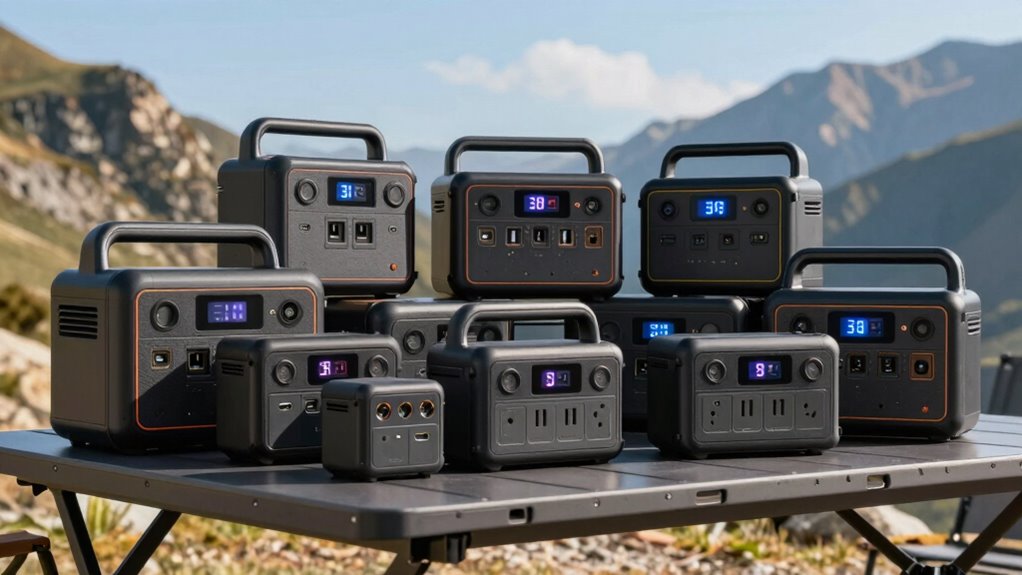

Searching for a reliable portable power station with 500W capacity? The Portable Power Station 500W (Peak 1000W) stands out for its generous 519Wh capacity and outdoor versatility, making it ideal for camping, emergencies, or outdoor adventures. The Anker SOLIX C300 offers a compact design with solid solar compatibility, perfect for light camping trips. However, choosing the right model involves tradeoffs between capacity, weight, port options, and price. Keep reading for a detailed comparison to help you find the best fit for your needs.

Get movie nights delivered free with Prime
- Fast, free delivery on millions of items
- Prime Video, Amazon Music and more included
- Member-only deals all year
Complete the kit


Key Takeaways
- Capacity varies between 288Wh and over 640Wh, influencing run time and device support.
- Port options, especially multiple AC outlets and USB-C, are critical for versatility.
- Weight and portability differ significantly; lighter models are easier to carry but may have fewer features.
- Solar compatibility is common but varies in size and efficiency, affecting outdoor usability.
- Higher surge wattages are better for powering devices with motors or compressors, but often come at a higher price.


| portable power station 500w | Capacity | Weight |
|---|---|---|
| Portable Power Station 500W | 519Wh | 14.1 lbs |
| Anker SOLIX C300 Portable Powe | — | 4.13 kg |
| EBL Portable Power Station 500 | 519.48Wh | — |
| 500W Portable Power Station 51 | — | 14.1 lbs |
| LIBRIDS Portable Power Station | 640Wh | — |
| Jackery Explorer 300 Portable | 292Wh | 7.5 lbs |
| Portable Power Station 300W | 192Wh | — |
| VTOMAN Jump 600X Portable Powe | not specified in data, but implied for runtime | — |
| Portable Power Station 600W | — | 7.7 lbs |
| Anker SOLIX C300 DC Portable P | — | — |
| Jackery Solar Generator 300 wi | 292Wh | 12.9 pounds |
| Portable Power Station 600W | 299Wh | 6.8 lbs |
| Portable Power Station 500W | 519.48Wh | — |
More Details on Our Top Picks
Portable Power Station 500W (Peak 1000W), 519Wh Outdoor Solar Generator
This power station stands out for its impressive 519Wh capacity combined with a peak power of 1000W, making it suitable for a variety of outdoor and emergency situations. Compared to the Anker SOLIX C300, it offers more power outlets and wireless charging, though it doesn’t include a solar panel, which could be a drawback for off-grid users. Its lightweight design at 14.1 lbs enhances portability, but its battery capacity limits its use with high-wattage appliances. The multiple output options, including AC, USB, and wireless charging, make it versatile, while the built-in LED flashlight adds practicality during power outages or camping trips. The main tradeoff is its limited capability for larger appliances—ideal for smartphones, laptops, or small appliances, but not for heavy-duty tools.
Pros:- Multiple output options including AC, USB, DC, and wireless charging
- Lightweight at 14.1 lbs, easy to carry
- Rechargeable via solar, car, or wall outlet with fast charging
Cons:- Limited to devices under 500W rated power
- Solar panel not included, requiring additional purchase
- Battery capacity may be insufficient for high-power appliances
Best for: Outdoor enthusiasts and emergency prepper households needing reliable portable power without extra bulk
Not ideal for: Users requiring to power high-wattage devices or appliances over 500W, as it cannot handle larger loads
- Power Output:500W
- Peak Power:1000W
- Capacity:519Wh
- Weight:14.1 lbs
- Dimensions:11.6 x 7.9 x 7.9 inches
- Battery Type:Lithium Ion
Our verdict“This model makes the most sense for outdoor users and small device owners prioritizing portability and versatility.”
Anker SOLIX C300 Portable Power Station, 288Wh Solar Generator for Camping
The Anker SOLIX C300 shines as a compact, lightweight 288Wh option ideal for campers and travelers who need quick recharging on the go. Its 8 charging ports, including USB-C and AC outlets, provide versatile device compatibility. Compared to the larger LIBRIDS 640Wh, it’s more portable but offers less total capacity—meaning it’s best for short outings or emergency backups rather than extended power needs. Its LiFePO4 battery with 3000 cycles promises long-term reliability, and 80% recharge in just 50 minutes is a notable advantage. However, its runtime is limited, only about 50 minutes at full load, and it’s not compatible with all solar panels, which could restrict off-grid use. This makes it a great choice for quick, portable power but less suitable for powering larger devices for hours.
Pros:- Compact and lightweight for portability
- Multiple versatile charging options
- Fast recharging with wall outlet or solar panels
Cons:- Limited runtime of about 50 minutes at full load
- Not compatible with some solar panels
- Shoulder strap sold separately
Best for: Campers and travelers seeking a lightweight, quick-charging backup power source
Not ideal for: Users needing prolonged power for high-wattage appliances or extended off-grid use
- Wattage:300W (600W Surge)
- Battery Capacity:288Wh
- Charging Ports:8
- Recharging Time:80% in 50 minutes
- Battery Type:LiFePO4
- Weight:4.13 kg
Our verdict“Ideal for short-term, portable power needs during outdoor adventures or emergencies where size and weight matter most.”
EBL Portable Power Station 500W (Peak 1000W), 519.48Wh, for Camping and Outdoor Use
The EBL Portable Power Station offers a reliable 519.48Wh capacity with multiple output options, including fast-charging USB-C PD and Quick Charge 3.0, making it suitable for powering essential devices during camping and outages. It compares favorably with the Portable Power Station 519.48Wh by emphasizing safety features—ideal for users concerned about device protection and battery longevity. Its multiple recharging methods, including solar, add flexibility, though the weight of 14.1 pounds may hinder portability for some. It’s limited to devices under 500W, so it won’t support high-wattage appliances, but it provides a dependable, safe power source for small electronics and emergency essentials.
Pros:- High-capacity 519.48Wh with multiple output options
- Fast charging with USB-C PD and Quick Charge 3.0
- Built-in safety features and reliable BMS
Cons:- Requires compatible solar panel (sold separately)
- Weight of 14.1 pounds may limit portability
- Cannot power devices over 500W
Best for: Safety-conscious campers and emergency users needing reliable, protected power for small devices
Not ideal for: Heavy-duty users or those needing to run high-power appliances over 500W for extended periods
- Capacity:519.48Wh
- AC Output:120V, 500W
- USB Ports:3, Quick Charge 3.0
- USB-C Port:60W, PD
- Recharge Time (Wall):6-7 hours
- Battery Type:BMS safety system
Our verdict“This pick is perfect for outdoor enthusiasts prioritizing safety and reliable charging for essential devices.”
500W Portable Power Station 519.48Wh Outdoor Solar Generator Backup Battery
This power station offers 519.48Wh capacity with a 1000W starting wattage, making it suitable for backup power during outages and outdoor activities. Its multiple output options, including AC, USB, and wireless charging, parallel the EBL Portable Power Station‘s features but with a slightly lower weight. The built-in LED flashlight with SOS mode adds to its emergency utility. It’s designed for devices under 500W and can be recharged via solar, wall, or car in just a few hours. The main tradeoff is its limited wattage for high-power appliances and the need for an additional solar panel, which is not included. It’s an excellent, portable backup for essential electronics in outdoor or emergency contexts.
Pros:- Multiple output options including AC, USB, DC, and wireless charging
- Lightweight with practical handle
- Fast recharge via multiple methods
Cons:- Limited to devices under 500W
- Solar panel sold separately, adding to cost
- Recharge time can vary based on solar conditions
Best for: Homeowners and outdoor users needing a dependable backup power source for small devices and emergency use
Not ideal for: People who want to power large appliances or require extended runtime for high-demand devices
- Wattage:519.48Wh
- Output Power:500W
- Starting Wattage:1000W
- Weight:14.1 lbs
- Dimensions:11.5 x 7.9 x 7.9 inches
- Recharge Time:6-9 hours
Our verdict“This unit suits users seeking a reliable, portable backup for essential devices in outdoor or emergency scenarios.”
LIBRIDS Portable Power Station 640Wh, 1200W Surge, Solar Generator with 4 AC Outlets
The LIBRIDS 640Wh offers the highest capacity among these options, with a 1200W surge capacity and a pure sine wave inverter, making it well-suited for sensitive electronics and backup power. Compared to the Portable Power Station 519Wh, it provides extra headroom for high-demand devices and longer runtime, but it’s likely heavier and less portable. Its fast charging in just 1.5 hours and durable LiFePO4 battery with over 4000 cycles make it a long-term investment. The main consideration is that its weight might reduce portability, and its indoor use only limits outdoor versatility. This station is an excellent choice for users who need reliable, high-capacity power for essential electronics during outages or outdoor work.
Pros:- High capacity of 640Wh with 1200W surge power
- Fast charging in 1.5 hours
- Pure sine wave inverter protects sensitive devices
Cons:- Likely heavier and less portable
- Indoor use only due to design
- Limited information on total weight
Best for: Home users and professionals needing reliable, high-capacity power with sensitive electronics protection
Not ideal for: Casual users or those prioritizing ultra-lightweight portability for short trips
- Capacity:640Wh
- Surge Power:1200W
- Rated Power:600W
- Charging Time:1.5 hours
- Battery Type:LiFePO4
- Material:Metal
Our verdict“This model best serves those who need substantial, reliable power for sensitive electronics and do not mind extra weight.”
Jackery Explorer 300 Portable Power Station, 292Wh
The Jackery Explorer 300 stands out as the most balanced option in this lineup, combining portability with versatile charging options. Weighing only 7.5 pounds, it’s ideal for those who need reliable off-grid power without the bulk, especially compared to the heavier VTOMAN Jump 600X. Its long-lasting LiFePO4 battery provides over 4,000 charge cycles, making it a solid choice for frequent use. The multiple ports, including USB-C and AC outlets, ensure it can power laptops, cameras, and small devices effectively. However, it lacks a solar panel in the package, which may limit its portability during extended outdoor adventures. Compared to the Portable Power Station 600W, 293Wh, the Jackery offers higher capacity and more cycle life, but at a slightly higher price. This pick makes the most sense for users who want a dependable, lightweight power station suitable for daily outdoor use or emergency backup.
Pros:- Lightweight and easy to carry at only 7.5 lbs
- Multiple versatile charging options including USB-C, AC, and car port
- Long battery life with over 4,000 charge cycles
- Fast solar charging compatibility
Cons:- Solar panel not included, adding extra cost
- Limited capacity of 292Wh may not power larger devices for long
Best for: Outdoor enthusiasts who need a reliable, portable power source for camping, photography, or daily off-grid use
Not ideal for: Users requiring high-wattage appliances or extended power duration, as its capacity may fall short for larger devices
- Capacity:292Wh
- Weight:7.5 lbs
- Output:300W rated, 600W peak
- Ports:2 AC outlets, 1 USB-C PD, 2 USB-A, 1 car port
- Charge Cycles:over 4,000
- Charging Time:80% in 2.8 hours with 100W solar panel
Our verdict“Ideal for users seeking a portable, durable power station for everyday outdoor or emergency use without the bulk of heavier models.”
Portable Power Station 300W, 600W Surge Solar Generator 192Wh
This 192Wh solar generator offers a compact design with rapid recharge capabilities, making it suitable for quick power needs during outdoor trips or emergencies. Its ability to recharge from 0% to 80% in just 1 hour surpasses many competitors like the Jackery Explorer 300, which takes nearly three hours. Equipped with multiple outlets, including AC, USB-C, and USB-A, it can handle a variety of devices, though its 192Wh capacity limits its use for longer power durations. The built-in UPS feature ensures seamless power transfer during outages, a feature absent in some simpler models. Still, the limited capacity and the need to purchase a solar panel separately mean it’s best for short-term backup rather than extended use. Compared with the smaller Anker SOLIX C300, this unit offers faster recharging, but less overall capacity. It’s a good fit for quick, reliable backup power in a lightweight form.
Pros:- Rapid recharge from 0% to 80% in just 1 hour
- Multiple ports including AC, USB-C, and USB-A
- Built-in UPS for seamless power transition
- Lightweight at 8.8 lbs
Cons:- Solar panel sold separately, adding to overall cost
- Limited capacity makes it unsuitable for high-wattage appliances
Best for: Campers and outdoor users who prioritize fast recharging and seamless backup for short trips
Not ideal for: People needing to power larger appliances or for long-term off-grid use, as capacity is limited
- Wattage:300W
- Surge Power:600W
- Capacity:192Wh
- Recharge Time:1 hour from 0% to 80%
- Battery Type:LiFePO4
- Charge Cycles:4000+
Our verdict“Best suited for quick, reliable backup power where fast recharge time is a priority and capacity is secondary.”
VTOMAN Jump 600X Portable Power Station 600W, 9 Ports Solar Generator
The VTOMAN Jump 600X offers a compelling balance of power and portability, with a 600W continuous output and a 9-port configuration, making it ideal for camping or outdoor work. Weighing just under 10 pounds, it’s comparable in portability to the Anker SOLIX C300 but provides more power capacity, suitable for running multiple devices simultaneously. Its long-lasting LiFePO4 battery supports over 3,000 cycles, and the fast recharge feature means it can be ready for use quickly after each outing. The multiple ports, including USB-C and AC, allow for diverse device charging, but it’s limited to 600W, so high-wattage appliances like hair dryers are off-limits. It also doesn’t include a solar panel, which could be an extra expense for off-grid use. Compared to the smaller Portable Power Station 600W, 293Wh, the Jump 600X provides more power, making it better suited for longer outdoor stays.
Pros:- High continuous power output of 600W
- Multiple ports including USB-C and AC outlets
- Long battery life with over 3,000 cycles
- Relatively lightweight for its power capacity
Cons:- Solar panel sold separately, increasing overall cost
- Limited to 600W continuous power, unsuitable for high-wattage appliances
Best for: Campers and outdoor adventurers needing a reliable, portable power source capable of running multiple devices simultaneously
Not ideal for: Users who need to power high-wattage appliances or require extremely lightweight gear, as it approaches 10 pounds
- Wattage:600W
- Peak Power:1200W
- Capacity:not specified in data, but implied for runtime
- Output Ports:7 including USB-C, AC
- Recharge Time:Fast, specifics not provided
- Charge Cycles:3000+
Our verdict“A strong choice for outdoor enthusiasts who need dependable, multi-device power with quick recharge but don’t require high-wattage appliances.”
Portable Power Station 600W, 293Wh Camping Lithium Battery
This 293Wh lithium power station offers a solid balance between capacity and portability, weighing only 7.7 pounds. Its 600W pure sine wave output makes it suitable for powering sensitive electronics like laptops and cameras during camping trips or emergencies. Unlike the smaller Jackery Explorer 300, it provides a slightly higher wattage, but with similar capacity, making it a good choice for those who want a compact yet capable device. Its array of ports, including USB-C PD and quick charge options, supports a wide range of devices. However, the car charger cable isn’t included, and pressing the AC button for three seconds to turn it on can be inconvenient. This model is best for users who prioritize portability and a higher power ceiling for small devices, but not for heavy-duty appliances.
Pros:- High-capacity 293Wh lithium battery
- Lightweight and portable at 7.7 lbs
- Multiple ports including USB-C PD and quick charge
- Pure sine wave output for sensitive electronics
Cons:- Car charger cable not included, adding extra to buy
- Requires holding the AC button for 3 seconds to turn on/off
Best for: Outdoor users who need a lightweight, high-power portable station for small appliances and sensitive electronics
Not ideal for: People needing longer runtimes or to power high-wattage appliances like microwaves or hair dryers
- Power Output:600W (1200W surge)
- Battery Capacity:293Wh
- Weight:7.7 lbs
- Output Ports:1 AC, 1 USB-C PD 100W, 1 USB-C PD 24W, 2 Quick Charge 3.0, 1 Car, 1 DC
- Charge Cycles:1500+
- Additional Features:Pure sine wave, safety protections
Our verdict“Great for outdoor users seeking a compact, power-dense station for small electronics and sensitive gear.”
Anker SOLIX C300 DC Portable Power Station, 288Wh, 300W, Outdoor Camping
The Anker SOLIX C300 offers a compelling 288Wh capacity with a rapid 1.5-hour recharge time, making it a compelling choice for adventurers who prioritize quick turnaround. Its durable, impact-resistant design surpasses the Jackery Explorer 300 in ruggedness, ideal for outdoor trips where rough handling is common. With 7 ports including USB-C and AC outlets, it provides a versatile array of charging options for multiple devices. While it doesn’t include a wall charger, its fast recharge capability compensates for this minor inconvenience. Compared to the Portable Power Station 600W, 293Wh, the Anker is slightly smaller in capacity but excels in durability and quick recharging, making it particularly appealing for those who need a reliable, outdoor-ready device that’s ready to go in under two hours.
Pros:- Fast recharge in just 1.5 hours
- Impact-resistant, durable design
- Multiple ports including USB-C and AC outlets
- High-capacity 288Wh battery for multiple device charges
Cons:- No wall charger included, potentially delaying use
- Slightly lower capacity than some competitors for longer use
Best for: Outdoor travelers and campers needing rapid recharging and impact resistance for multiple devices
Not ideal for: Users requiring extended runtime or high wattage for larger appliances, given the 288Wh capacity
- Battery Capacity:288Wh
- Power Output:300W
- Recharge Time:1.5 hours
- Ports:7 including USB-C and AC
- Impact Resistance:Yes
- Cycle Life:not specified
Our verdict“Best suited for outdoor users who need quick recharging, durability, and multiple device support in a compact package.”
Jackery Solar Generator 300 with 40W Solar Panel, 292Wh, 300W AC
The Jackery Explorer 300 stands out for its portability and durability, making it ideal for campers who need reliable power on the go. Weighing 12.9 pounds, it’s slightly heavier than some ultra-light options like the Portable Power Station 600W (1200W Surge), but offers a sturdy build and multiple output options, including AC, USB-C, and car port. Its fast solar charging, reaching 80% in under 3 hours, makes it a strong choice for outdoor adventures when paired with Jackery’s solar panels. Compared to smaller models like the Portable Power Station 500W, the Explorer 300 provides more outlets and longer-lasting battery life but sacrifices some portability due to its weight. This makes it well-suited for those who prioritize durability and multiple charging options over ultra-lightweight design. The main tradeoff is that it requires a separate purchase of solar panels for solar recharging, and its weight might be a concern for very frequent backpackers.
Pros:- Multiple charging options including AC, USB-C, and car port for versatile device compatibility
- Fast solar charging, reaching 80% in under 3 hours with compatible panels
- Durable LiFePO4 battery with over 4,000 charge cycles for long-term reliability
Cons:- Relatively high weight for ultra-portable devices, which could limit backpacking use
- Limited to 300W continuous power output, not suitable for higher-demand appliances
Best for: Campers or outdoor enthusiasts who need a reliable, durable power source with versatile charging options and don’t mind a bit of extra weight.
Not ideal for: Hikers or backpackers seeking the lightest possible gear, as the 12.9-pound weight could be burdensome during extended treks.
- Wattage:300 watts
- Capacity:292Wh
- Weight:12.9 pounds
- Output Options:AC, USB-C, car port
- Recharge Time:Under 3 hours (solar)
- Battery Chemistry:LiFePO4
Our verdict“This pick is best suited for outdoor users who value durability and multiple charging options over minimal weight.”
Portable Power Station 600W (1200W Surge), 299Wh, 6.8 lbs, 140W USB-C
This lightweight model provides 600W of continuous power with a 299Wh capacity, making it a strong choice for those who need more power than the Jackery Explorer 300 but prefer less weight. Weighing only 6.8 pounds, it surpasses the Explorer 300 in portability, ideal for backpackers or outdoor adventurers who prioritize weight savings. Its 140W USB-C port supports fast-charging laptops and tablets, a feature that outshines the standard USB-A ports on many competitors. While its capacity is limited compared to larger options like the Portable Power Station 500W, its fast recharging time of just 2 hours and multiple output ports—including AC, USB, and DC—make it suitable for short trips or emergency backup. The main drawback is that it lacks weather-resistant features and has limited capacity for extended use, so it’s not ideal for long-term power needs.
Pros:- Very lightweight at only 6.8 pounds, excellent for portability
- Fast-charging USB-C port (140W) suitable for laptops and tablets
- Multiple outputs including AC, USB, and DC, supporting various devices
Cons:- Limited capacity for powering devices over a few hours
- No weather resistance, making it less suitable for harsh outdoor conditions
Best for: Hikers or travelers who need a lightweight, high-power USB-C port for quick device charging and short-term power backup.
Not ideal for: Users planning to power larger appliances or needing long-lasting power, as the 299Wh capacity is limited for extended use.
- Power Output:600W (1200W surge)
- Capacity:299Wh
- Weight:6.8 lbs
- USB-C Port:140W
- Recharging Time:2 hours
- Additional Ports:AC, USB-A, DC
Our verdict“Ideal for travelers needing a portable, high-power USB-C option for quick device charging and short outings.”
Portable Power Station 500W, 519.48Wh/140400mAh Solar Generator Backup
The 500W Portable Power Station offers a balanced combination of capacity and versatility, making it suitable for emergency preparedness and outdoor use. Compared with the Jackery Explorer 300, it provides nearly double the capacity at 519.48Wh, enabling longer run times for essential devices. Its multiple output options—including two pure sine wave AC outlets, USB-A, USB-C, and DC ports—cover a wide range of electronics, and the wireless charging feature adds convenience. It recharges quickly via solar, wall, or car, with times ranging from 6 to 9 hours depending on method, which is slightly slower than the Portable Power Station 600W’s 2-hour recharge but offers more capacity. The main limitation is that it cannot power devices over 500W, which could restrict use with higher-demand appliances, and solar panels are sold separately, adding to overall cost.
Pros:- Multiple output options including AC, USB, DC, and wireless charging for maximum versatility
- Fast recharging via solar, wall, or car in 6-9 hours, depending on method
- Built-in safety protections for sensitive electronics
Cons:- Cannot power devices over 500W, limiting some appliances
- Solar panel not included, additional investment needed
Best for: Preppers or outdoor enthusiasts seeking a reliable backup power source with multiple charging methods and higher capacity for essential devices.
Not ideal for: Individuals needing to power larger appliances or expecting very fast recharge times, since the recharge process can take up to 9 hours via solar.
- Power Output:500W
- Capacity:519.48Wh
- Battery Type:Lithium
- AC Outlets:2 (pure sine wave, 120V/500W)
- USB Ports:3 USB-A QC3.0, 1 USB-C PD 60W
- Recharge Time:6-9 hours (solar)
Our verdict“This model offers a well-rounded backup power solution for those prioritizing capacity and multiple charging options over rapid recharge times.”

How We Picked
Products were selected based on a combination of capacity, power output, portability, build quality, and additional features such as solar compatibility and port variety. We prioritized models that balance performance and value, ensuring they meet the 500W continuous power requirement while offering practical usability in outdoor or backup scenarios. The ranking reflects a mix of affordability, durability, and versatility, helping buyers identify options suitable for different budgets and uses. We also considered user feedback and overall reliability to recommend models with proven performance in real-world conditions.Factors to Consider When Choosing Portable Power Station 500w
Choosing the right portable power station 500W involves understanding several key factors. Beyond just wattage, consider how capacity aligns with your device needs, whether portability is a priority, and if solar compatibility suits your outdoor plans. Being aware of these factors helps avoid common pitfalls, like overestimating capacity or choosing a model with insufficient ports. Let’s explore the main considerations to keep in mind.Capacity and Runtime
Capacity, measured in watt-hours (Wh), directly impacts how long your devices can run. A 519Wh model can power a 50W device for roughly 10 hours, but real-world runtimes depend on device efficiency and usage patterns. Overestimating needs can lead to unused surplus capacity, while underestimating can leave you short during critical moments. Consider your most essential devices and their power consumption to select a capacity that provides a comfortable buffer without excess bulk.
Port Selection and Compatibility
Different models offer varying port configurations, from AC outlets to USB-C and DC outputs. Think about what devices you’ll need to charge simultaneously—laptops, smartphones, small appliances—and ensure the station has enough ports. Some units include multiple AC outlets, which are ideal for running several devices at once, while others prioritize USB-C for fast charging. Avoid models with limited ports if you plan to power multiple gadgets at the same time, as this could restrict usability.
Weight and Portability
Portability is a key factor, especially if you plan to take your power station on outdoor trips or move it frequently. Lighter models under 10 pounds are easier to carry but might sacrifice capacity or ports. Heavier units tend to have larger batteries and more features but can be cumbersome. Balance your need for mobility with the power and features you require, and consider carrying cases or handles when available.
Solar Compatibility and Recharging
Solar input capability allows for recharging in remote locations, extending outdoor usability. Check the input wattage—higher input ratings mean faster solar recharging. Not all solar-compatible models include panels, so decide whether you want an integrated solar option or plan to buy separate panels. Keep in mind that efficiency varies with sunlight conditions and panel quality, so realistic expectations are essential to avoid disappointment.
Build Quality and Durability
Since portable power stations are often used outdoors, durability matters. Look for sturdy casing, water resistance, and solid construction to withstand rough handling. Cheaper models may skimp on build quality, risking damage or malfunction. Prioritize well-reviewed brands with proven reliability, especially if you plan to use the station in challenging environments or over extended periods.
Frequently Asked Questions
How long will a 519Wh portable power station run my devices?
Running time depends on your device’s power draw. For example, a device consuming 50W can run for approximately 10 hours on a 519Wh battery, minus some efficiency losses. Larger devices or multiple gadgets reduce that duration. Always consider the total wattage of your devices and add a safety margin to ensure the station can handle your needs during outages or outdoor trips.
Can I recharge a portable power station with solar panels?
Yes, most 500W models are compatible with solar panels, allowing for eco-friendly recharging in outdoor settings. The recharging speed hinges on the solar input wattage and sunlight conditions. Higher input ratings will recharge the battery faster, but ensure your panels match the station’s specifications. This setup is especially beneficial for extended outdoor use, reducing dependence on grid power.
Is it better to buy a higher surge wattage model or stick with continuous 500W output?
Choosing a model with a higher surge wattage is advantageous if you need to power devices with motors or compressors, like refrigerators or power tools, which demand more startup power. For general use with small electronics, the continuous 500W rating suffices. Be aware that higher surge capacity often comes with increased cost and size, so match the spec to your device requirements.
How important are multiple ports for my setup?
Multiple ports increase versatility, allowing you to charge several devices simultaneously. If you frequently have multiple gadgets—like smartphones, tablets, and small appliances—look for a station with several USB, AC, and DC outputs. Conversely, if you mainly need to charge one device at a time, a model with fewer ports may be adequate and more compact. Consider your typical use scenario to avoid overpaying for unnecessary ports.
Are lighter models less durable or less powerful?
Lighter units often sacrifice capacity, port options, or build robustness to reduce weight. While they are easier to carry, they may not sustain prolonged use or handle rough outdoor conditions as well as heavier models. Weigh the importance of portability against your power needs and environment. Investing in a slightly heavier but sturdier model can pay off in reliability and longevity.
Conclusion
For most users, the Portable Power Station 500W (Peak 1000W) offers the best overall balance of capacity, portability, and features, making it ideal for general outdoor and emergency use. Budget-conscious buyers should consider models like the Anker SOLIX C300 for compactness and solar compatibility without breaking the bank. Those seeking premium performance and durability might prefer the LIBRIDS Portable Power Station 640Wh or similar high-capacity options. Beginners or occasional users will find the smaller, simpler units sufficient, while outdoor enthusiasts should prioritize solar-ready models with multiple ports. Match your specific needs with these options to get the best value and performance in 2026.
As an affiliate, we earn on qualifying purchases.Halloween Picks
halloween