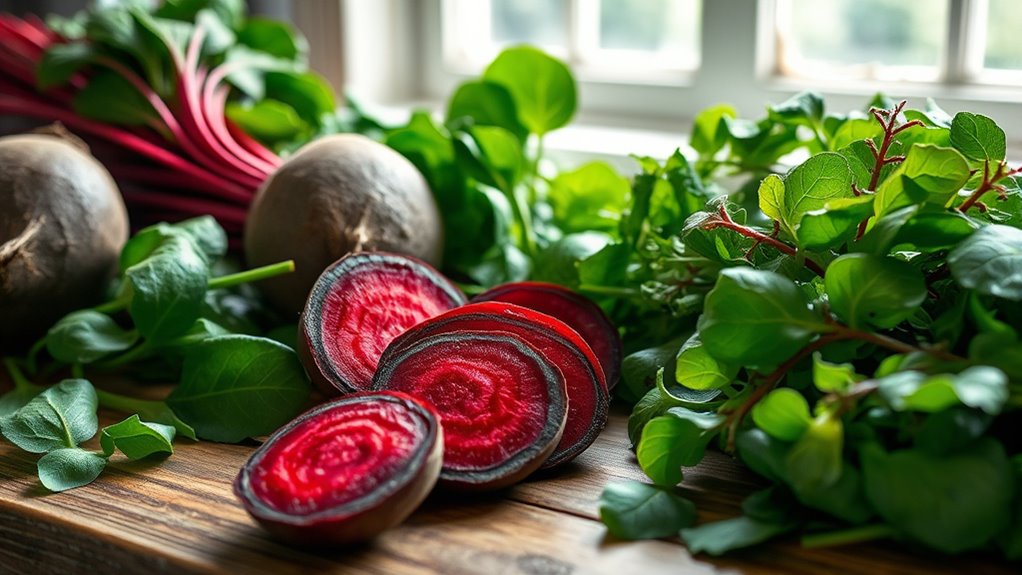

To boost nitric oxide naturally, include nitrate-rich foods like beets, spinach, arugula, and lettuce in your diet. Beets are especially high in nitrates and convert easily into nitric oxide, helping improve blood flow and heart health. Leafy greens add a variety of nitrates and antioxidants that support this process. Other vegetables like celery, fennel, and radishes also contribute. Want to discover more about optimizing your nitric oxide intake? Keep exploring for helpful tips.
Key Takeaways
- Beets are rich in dietary nitrates that convert to nitric oxide, supporting vascular health.
- Leafy greens like spinach, arugula, and lettuce are high in nitrates, boosting nitric oxide production.
- Other vegetables such as celery, fennel, and radishes also contain significant nitrates for NO synthesis.
- Consuming a variety of nitrate-rich foods enhances nitric oxide levels and cardiovascular benefits.
- Maintaining healthy oral and gut bacteria is essential for efficient nitrate-to-NO conversion.
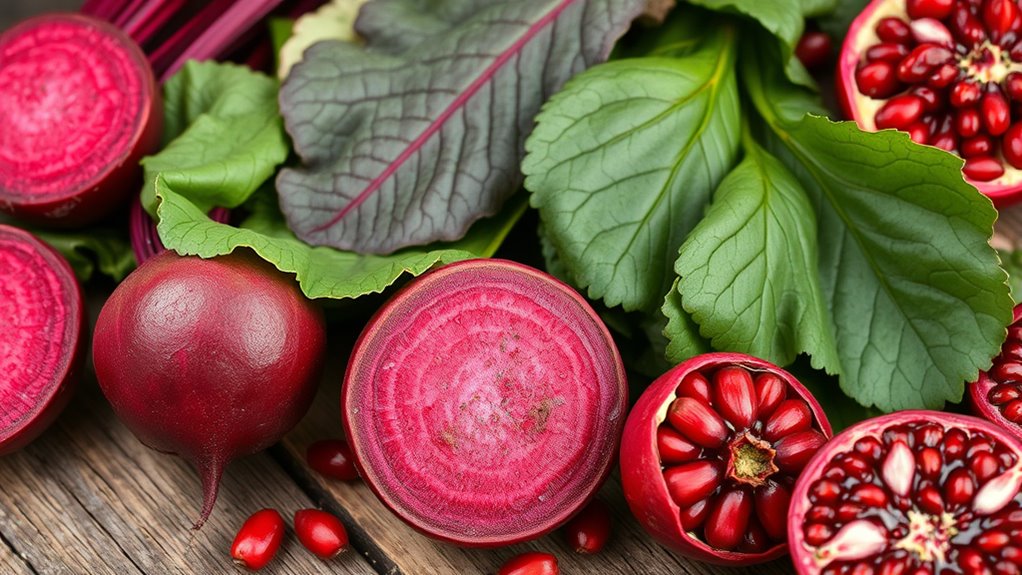
Nitric oxide plays a crucial role in maintaining cardiovascular health, and you can boost your levels naturally through your diet. One effective way to do this is by consuming foods rich in dietary nitrates, which your body converts into nitric oxide. This process begins with nitric oxide synthesis, involving the reduction of dietary nitrates into nitrites and then into nitric oxide. When you eat nitrate-rich foods, your mouth and gut bacteria facilitate this conversion, making the process highly efficient. As a result, including these foods in your diet can improve blood flow, lower blood pressure, and enhance overall vascular function.
Beets are among the most well-known sources of dietary nitrates. When you consume beets or beet juice, your body readily converts the nitrates into nitric oxide, thanks to their high nitrate content. Not only are they rich in nitrates, but beets also contain antioxidants that support the stability of nitric oxide, ensuring it remains active longer in your bloodstream. Incorporating beets into your meals or smoothies can be a simple yet powerful way to naturally boost your nitric oxide levels. Similarly, leafy greens like spinach, arugula, and lettuce are packed with nitrates. These vegetables are versatile and can be added to salads, sandwiches, or smoothies, making it easy to incorporate them into your daily routine. The nitrate content in leafy greens varies, but consistently eating a variety of these vegetables can considerably contribute to your body’s nitric oxide production.
Other vegetables such as celery, fennel, and radishes also contain notable amounts of nitrates, and including a diverse range of these in your diet can optimize dietary nitrate conversion. It’s important to note that the effectiveness of nitrate conversion depends on your oral bacteria, which facilitate the initial reduction of nitrates to nitrites. Good oral hygiene and avoiding antibacterial mouthwashes can help maintain healthy bacteria levels necessary for this process. Additionally, proper gut health is essential, as the gut microbiome also plays a role in nitrate-to-nitric oxide conversion. Remember, the key isn’t just eating nitrate-rich foods but ensuring your body can efficiently convert these nitrates into nitric oxide. This means maintaining a healthy gut and oral microbiome.
Frequently Asked Questions
How Do Nitric Oxide Levels Affect Athletic Performance?
Higher nitric oxide levels boost your athletic performance by improving muscle oxygenation, allowing your muscles to work more efficiently. This enhances endurance, letting you train longer and recover faster. You’ll notice less fatigue and increased stamina during workouts. By increasing nitric oxide through diet or supplements, you support better blood flow, which directly influences your ability to perform at higher intensities and sustain effort over time.
Can Supplementing With Nitric Oxide Precursors Harm Health?
Supplementing with nitric oxide precursors can be safe if you follow proper supplement safety guidelines. However, you should be cautious about nitrate toxicity, which can occur with excessive intake. Always stick to recommended doses, and consult a healthcare professional before starting new supplements. Overuse may lead to side effects like headaches or low blood pressure, so moderation is key to avoiding potential health risks.
Are There Any Side Effects From Consuming Nitrate-Rich Foods?
While nitrate-rich foods are generally safe, overconsumption can lead to nitrate toxicity, which might cause mild gastrointestinal issues like nausea or stomach discomfort. Eating these foods in moderation helps prevent any negative effects. You should be mindful of your intake, especially if you have existing health conditions, and consult a healthcare professional if you experience persistent symptoms. Balance is key to enjoying their health benefits without unintended side effects.
How Long Does It Take to See Benefits From Dietary Nitrate Intake?
You can usually notice the benefits of dietary nitrate intake within a few hours to a day, thanks to timing effects. For sustained results, aim for consistent consumption over several days or weeks. Dietary duration matters—long-term, regular intake of nitrate-rich foods like beets and leafy greens enhances blood flow, endurance, and overall cardiovascular health. Keep up the routine, and you’ll start experiencing these positive effects sooner rather than later.
Can Nitric Oxide Improve Cognitive Function or Mental Clarity?
Nitric oxide can boost your cognitive function, helping reduce brain fog and sharpen mental focus. By improving blood flow, it delivers more oxygen and nutrients to your brain, enhancing alertness and clarity. You’ll notice increased concentration, quicker thinking, and better memory. As you incorporate nitric oxide-rich foods into your diet, you support your brain’s health, empowering you to stay sharp, focused, and mentally clear throughout your day.
Conclusion
By including beets, leafy greens, and other nitrate-rich foods in your diet, you naturally boost your nitric oxide levels. Sometimes, it’s funny how a simple plate of spinach or a juicy beet can make such a difference in your health. It’s no coincidence that these foods often appear in the healthiest diets—they truly support your body’s functions. So, next time you’re planning your meal, remember, these foods might just be your secret weapon for better significance.