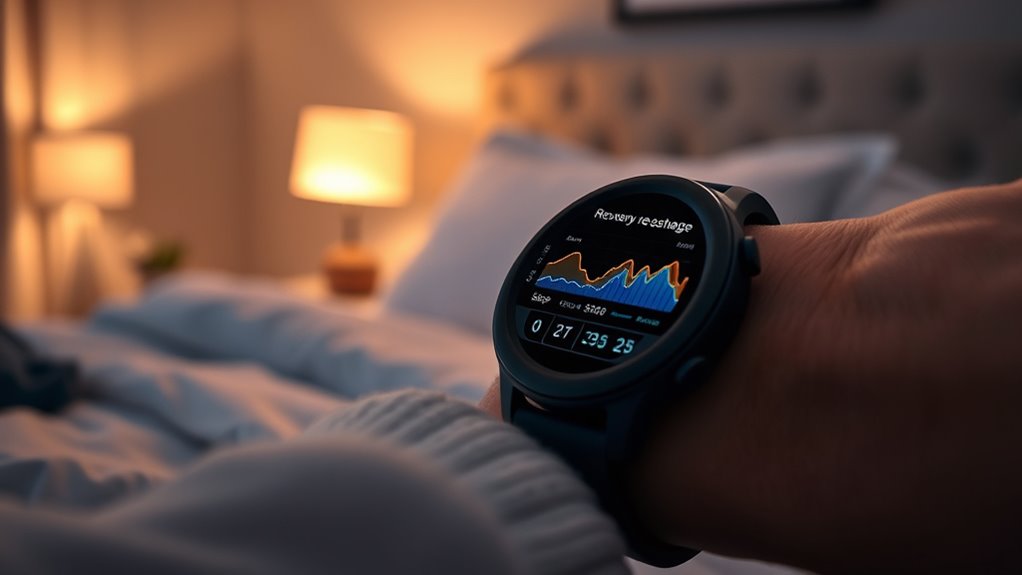

AI health trackers now do more than just monitor workouts; they analyze your sleep patterns, recovery, and stress levels to boost your overall well-being. They track sleep stages, heart rate variability, and environmental factors to give personalized tips like adjusting routines or relaxation techniques. With stronger data security and engaging features, you can trust these devices to support your health journey. Keep exploring to discover how these advanced tools can truly transform your wellness routine.
Key Takeaways
- AI health trackers now analyze sleep patterns, recovery, and stress levels for comprehensive well-being beyond exercise monitoring.
- They gather data on sleep cycles, heart rate variability, and environmental factors to offer personalized health insights.
- Enhanced privacy features and encryption protect sensitive health data, addressing security concerns.
- Integration with other health apps creates a holistic view of lifestyle, aiding in better recovery and sleep management.
- User engagement through goal setting, real-time feedback, and motivational features boosts adherence and trust.
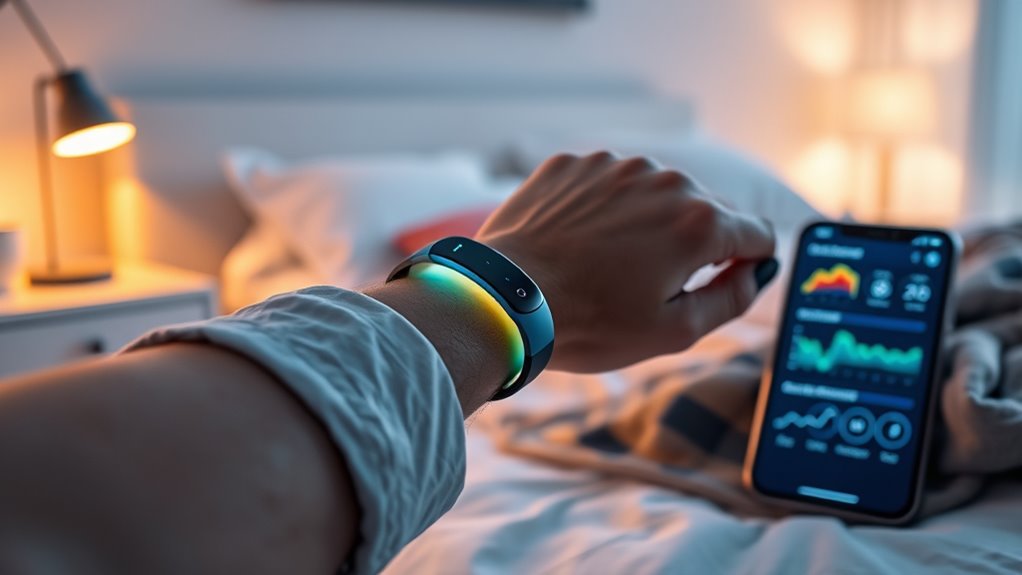
Artificial intelligence has expanded the capabilities of health trackers well beyond just monitoring workouts, offering personalized insights into your overall well-being. Now, these devices analyze your sleep patterns, recovery, and stress levels to help you optimize your health. As you rely more on AI-powered trackers, you’ll notice they gather an increasing amount of data about your sleep cycles, heart rate variability, and even environmental factors like noise or light exposure. This wealth of information enables the device to provide tailored suggestions—such as adjusting your bedtime routines or recommending relaxation techniques—that suit your unique needs.
However, with this increased data collection comes a vital concern: data privacy. You want to be confident that your sensitive health information remains secure and isn’t shared without your consent. Reputable AI health trackers often implement robust encryption protocols and transparent privacy policies to protect your data. It’s essential to read these policies carefully, so you understand how your information is stored, used, and whether it’s shared with third parties. By choosing devices that prioritize data privacy, you can enjoy the benefits of advanced insights without compromising your personal security.
User engagement plays a significant role in the effectiveness of these AI-based health trackers. The more actively you interact with your device—by reviewing insights, adjusting goals, or logging additional data—the more accurate and useful the feedback becomes. Many trackers incorporate gamification features or motivational messages to keep you committed to your health journey. This interactive approach encourages consistent use, helping you stay motivated and aware of your sleep and recovery patterns over time. The real-time feedback from AI algorithms keeps you informed about your progress and prompts you to make small behavioral changes that can have a big impact on your overall well-being.
Furthermore, AI trackers often integrate with other health apps or medical devices, creating a holistic health ecosystem that enhances user engagement. The seamless flow of information allows you to see correlations between sleep quality, activity levels, and recovery, making it easier to understand how your lifestyle choices influence your health. This interconnected system keeps you involved and motivated, reinforcing healthy habits through personalized, data-driven insights.
Ultimately, the success of AI-powered sleep and recovery tracking hinges on your active participation and trust in the device’s privacy measures. When you feel confident that your data is protected and that your device responds to your inputs, you’re more likely to stay engaged and derive meaningful benefits from your health tracker. This combination of personalized insights, data security, and user involvement can truly transform how you approach sleep, recovery, and overall wellness.
Frequently Asked Questions
How Accurate Are Sleep and Recovery Measurements From AI Trackers?
AI trackers generally provide fairly accurate sleep and recovery measurements, but their precision depends on sensor calibration and algorithm accuracy. You can trust them to identify sleep patterns and recovery trends, but occasional discrepancies may occur, especially if sensors aren’t well-calibrated or if algorithms struggle with certain movements or conditions. To improve accuracy, make sure your device stays updated and fits properly, giving you more reliable insights into your sleep and recovery.
Can AI Health Trackers Predict Potential Health Issues Early?
Imagine it’s 2023, and AI health trackers have become your modern-day crystal ball. Yes, they can predict potential health issues through predictive diagnostics, allowing for early intervention. By analyzing patterns in your sleep, activity, and essential signs, these trackers flag warning signs before symptoms appear. They empower you to take proactive steps, reducing risks and catching problems early, making your health journey more informed and confident.
Are Ai-Based Sleep Trackers Suitable for People With Sleep Disorders?
Yes, AI-based sleep trackers can be suitable for sleep disorder management, especially when they offer AI customization tailored to your specific condition. These devices analyze your sleep patterns in detail, helping you and your healthcare provider identify issues and adjust treatments accordingly. However, it is crucial to consult a medical professional before relying solely on these trackers, as they are tools to supplement, not replace, expert diagnosis and guidance.
How Do AI Trackers Adapt to Individual Sleep and Recovery Patterns?
AI trackers adapt to your sleep and recovery patterns through personalization algorithms and adaptive monitoring. These features analyze your data over time, recognizing unique sleep habits and adjusting their insights accordingly. As a result, you get more accurate feedback and tailored recommendations that reflect your evolving needs. This dynamic approach helps you optimize your sleep quality and recovery, making the tracker a valuable tool for understanding and improving your health.
What Privacy Measures Protect Data Collected by AI Health Devices?
You’re protected by privacy measures like data anonymization, which removes personal identifiers, and strong encryption protocols that secure your data during transmission and storage. These safeguards guarantee your health information remains confidential and inaccessible to unauthorized parties. By prioritizing these practices, companies aim to build your trust while complying with privacy laws, giving you peace of mind that your sleep and recovery data stays private and secure at all times.
Conclusion
Imagine using an AI health tracker that not only monitors your workouts but also optimizes your sleep and recovery. For example, Sarah, a busy professional, noticed her energy improved after her device suggested better sleep routines. These advanced tools empower you to prioritize recovery, leading to better performance and well-being. Embrace AI beyond workouts, and you’ll uncover personalized insights that help you live healthier, more balanced life every day.