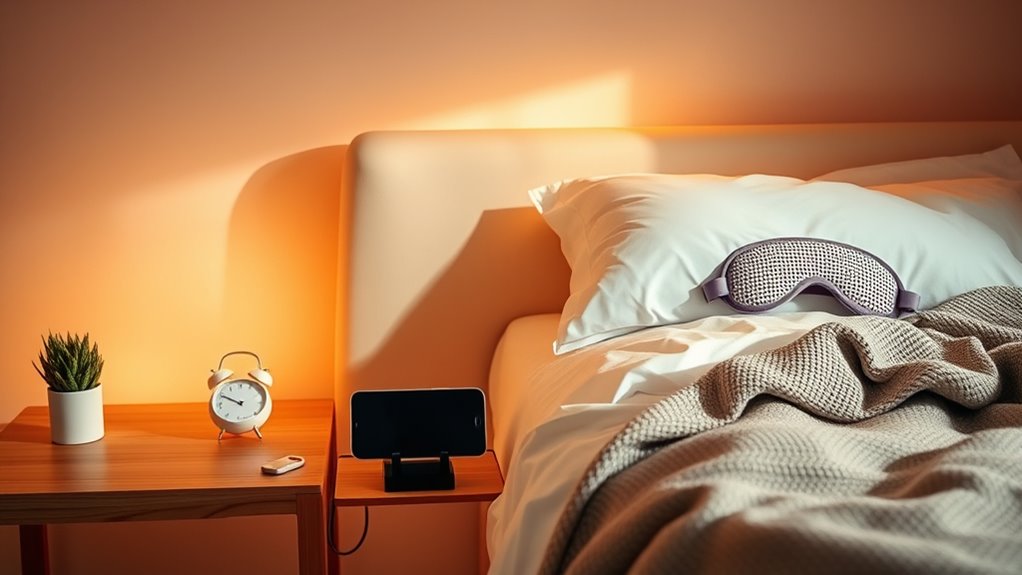

To improve sleep hygiene in a tech-driven world, limit your screen time before bed and use blue light filters or glasses to reduce exposure. Establish a calming, technology-free wind-down routine and stick to a consistent sleep schedule. Creating a relaxing environment and avoiding stimulating content can help your circadian rhythm stay healthy. Making these small changes can markedly boost your sleep quality; explore more strategies to get better rest tonight.
Key Takeaways
- Limit screen time and avoid devices an hour before bedtime to reduce blue light exposure.
- Use blue light filters, night mode settings, or wear blue light blocking glasses during evening screen use.
- Establish a consistent sleep routine with a technology-free wind-down period for relaxation.
- Engage in calming activities like reading or listening to music instead of screen-based entertainment before sleep.
- Maintain a regular sleep schedule and optimize your bedroom environment for better sleep hygiene.
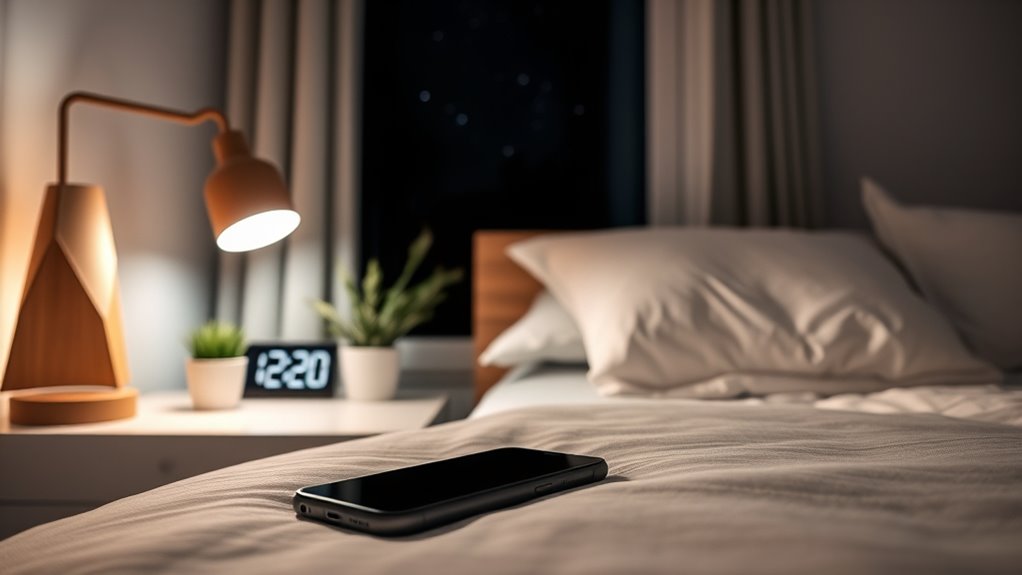
Have you ever wondered how your screen time affects your sleep? In today’s digital age, many of us spend hours each day glued to our smartphones, tablets, or computers. While these devices are useful and entertaining, they emit blue light, which can considerably interfere with your ability to fall asleep and enjoy restorative rest. Blue light, a high-energy wavelength, suppresses melatonin production—the hormone responsible for signaling to your body that it’s time to sleep. The more screen time you accumulate before bedtime, the less melatonin your body produces, making it harder to drift off naturally.
Excess screen time before bed reduces melatonin, making it harder to fall asleep naturally.
This disruption caused by blue light isn’t just about feeling awake; it impacts your circadian rhythm, the internal clock that regulates your sleep-wake cycle. When your circadian rhythm is thrown off, you might find yourself lying in bed, wide awake, even after a long day of screen exposure. The problem intensifies if you use devices right before sleep, creating a cycle where your screen time directly impairs your sleep quality. Additionally, the content you consume—whether it’s work emails, social media, or binge-watching videos—can keep your mind active, making it more challenging to relax and shift into sleep mode.
To improve your sleep hygiene in a tech-driven world, consider establishing boundaries around screen time, especially in the hour before bed. Reducing your exposure to blue light during this period can notably improve your ability to fall asleep. You might try using blue light filters or “night mode” settings on your devices, which shift the screen’s color spectrum to warmer tones, decreasing blue light emission. Wearing blue light blocking glasses is another effective strategy, especially if you need to use devices late at night. These measures help your body produce melatonin more naturally, aligning your sleep cycle and making it easier to fall asleep and stay asleep.
Creating a technology-free wind-down routine can also make a big difference. Instead of scrolling through social media or checking emails, opt for calming activities like reading a physical book, listening to soothing music, or practicing relaxation techniques such as deep breathing or meditation. Setting a consistent bedtime and sticking to it reinforces your circadian rhythm and signals to your body that it’s time to rest. Remember, managing your screen time and reducing blue light exposure are key steps toward better sleep hygiene, especially in a world where digital devices are always within reach. Incorporating air purifiers into your bedroom environment can also help improve overall air quality, creating a healthier space for restful sleep. Taking these small but intentional actions can help restore your sleep quality, leaving you more refreshed, focused, and ready to face each day.
Frequently Asked Questions
Can Blue Light Glasses Improve Sleep Quality?
Yes, blue light glasses can improve your sleep quality by blocking blue light exposure, especially in the evening. Blue light suppresses melatonin, disrupting your sleep cycles. Wearing these glasses helps your body produce melatonin naturally, making it easier to fall asleep and stay asleep. If you use screens before bedtime, blue light glasses are an effective tool to protect your sleep and promote healthier sleep cycles.
How Does Sleep Hygiene Affect Mental Health?
Good sleep acts as a gentle guardian for your mental health, offering numerous benefits like better mood, sharper focus, and resilience to stress. Poor sleep hygiene can invite sleep disruption factors, making it harder to unwind and recharge. When you prioritize healthy sleep habits, you reduce these risks, fostering mental clarity and emotional stability. Fundamentally, a well-rested mind is better equipped to handle life’s challenges with calm and confidence.
Are There Apps That Genuinely Enhance Sleep Hygiene?
Yes, there are apps that genuinely enhance sleep hygiene. You can try sleep tracking apps like Sleep Cycle or Fitbit, which monitor your sleep patterns and help identify issues. Additionally, apps offering relaxation techniques, such as Calm or Headspace, guide you through meditation or breathing exercises to relax your mind. Using these tools regularly can improve your sleep quality and establish healthier sleep habits.
What Are Quick Tips for Better Sleep Before Bed?
Imagine Sarah struggled with falling asleep until she created a calming bedtime routine and optimized her sleep environment. You can do the same by sticking to a consistent bedtime, turning off screens an hour before, and dimming your lights. Keep your bedroom cool, dark, and quiet, and avoid caffeine or heavy meals close to bedtime. These quick tips help signal your body it’s time to wind down for better sleep.
Is Sleep Hygiene Different for Children and Teenagers?
Yes, sleep hygiene differs for children and teenagers. You should focus on establishing consistent bedtime routines, which include calming activities and limited screen time management before bed. For kids, guarantee they avoid screens at least an hour before sleep, while teenagers benefit from similar routines but may need slightly later bedtimes. Encouraging good habits helps improve sleep quality, supporting their growth and overall well-being.
Conclusion
By prioritizing proper practices, you’ll pave a peaceful path to better sleep. Limit screens, lighten late-night lighting, and leave laziness behind. Embrace habits that help you disconnect, destress, and drift into deep dreams. Remember, small steps steady your sleep schedule, strengthening your serenity and slumber. With consistent commitment, you’ll cultivate calm, create comfort, and conquer chaos—crafting a cozy, calming sleep sanctuary in your tech-tangled world.