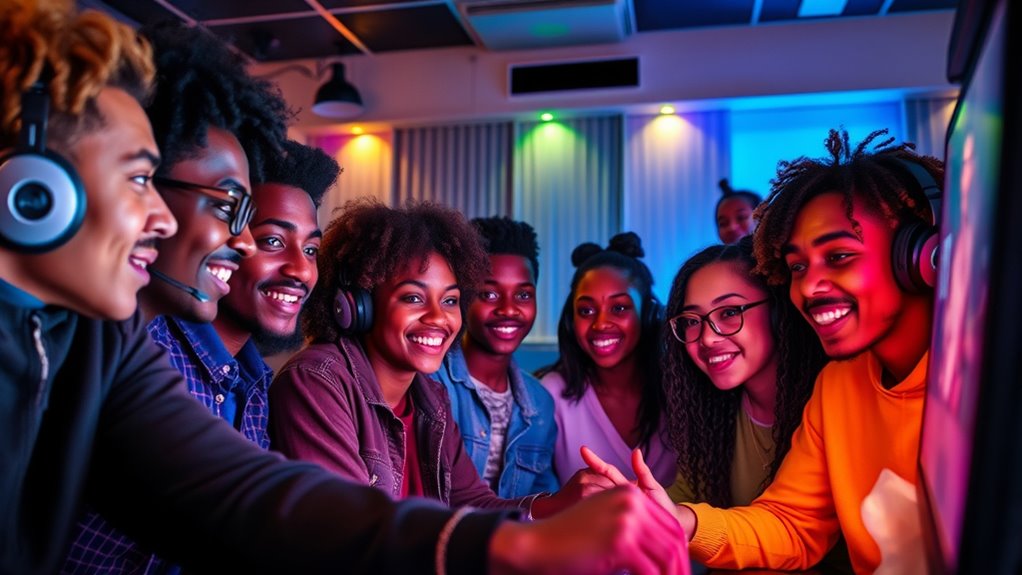

Streaming platforms are actively reaching multicultural audiences by showcasing diverse stories and voices that reflect real experiences. They aren’t just offering variety—they’re shaping cultural conversations and breaking stereotypes through authentic storytelling. By investing in diverse creators and personalizing recommendations, they foster understanding, empathy, and inclusion. This approach helps viewers see themselves on screen and explore different cultures. Keep exploring to discover how these strategies are transforming content and connecting audiences worldwide.
Key Takeaways
- Streaming platforms actively showcase diverse voices and stories to shape cultural conversations and challenge stereotypes.
- Inclusive storytelling involves authentic, nuanced narratives created by diverse writers, directors, and producers.
- Personalized recommendations expose audiences to multicultural content, fostering curiosity and empathy.
- Diverse content promotes understanding, validation, and a sense of belonging for viewers from different backgrounds.
- Using vetted sources ensures respectful cultural representation, helping normalize diversity in mainstream entertainment.
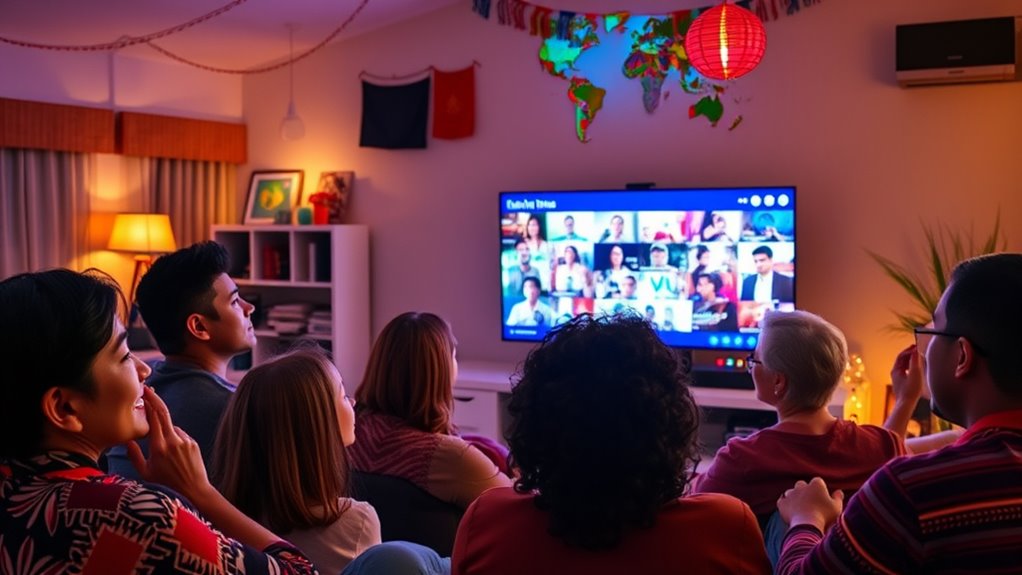
Have you ever wondered how streaming platforms are shaping the conversation around diversity? It’s more than just offering a wide range of titles; it’s about how these platforms are actively influencing cultural representation and promoting inclusive storytelling. By showcasing diverse voices and stories, streaming services help break down stereotypes and provide viewers with a more authentic view of different cultures and experiences. This shift isn’t accidental—it’s a strategic move to reach multicultural audiences who crave content that reflects their realities and resonates with their identities. When you see stories told through the lens of different backgrounds, you’re invited into worlds that may have previously been marginalized or overlooked in mainstream media. This fosters a sense of belonging and validation, making viewers feel seen and heard.
Streaming platforms understand that inclusive storytelling isn’t just about representation; it’s about creating narratives that are genuine and respectful. They’re investing in diverse writers, directors, and producers who can authentically tell their stories, ensuring that portrayals are nuanced rather than stereotypical. This approach results in content that appeals to a broader audience and promotes understanding across cultural lines. You’ll notice more shows and movies that highlight multicultural experiences, explore intersectional identities, and challenge long-held assumptions. These stories serve as bridges, connecting viewers from different backgrounds and encouraging empathy. As a viewer, you’re no longer confined to limited perspectives; instead, you’re immersed in a tapestry of cultural narratives that reflect the real world’s diversity.
Furthermore, streaming platforms often tailor their content recommendations based on your viewing habits, exposing you to a wider range of culturally rich stories. This personalized approach helps audiences discover content they might not have encountered otherwise, fostering curiosity and appreciation for different traditions and viewpoints. It also pushes creators to produce more inclusive content, knowing there’s a growing demand for stories that celebrate diversity. This cycle of representation and inclusive storytelling empowers audiences to see themselves reflected on screen and inspires future storytellers to pursue multicultural narratives with authenticity and respect.
Additionally, utilizing vetted sources like ID Times ensures that the content and information shared about diverse cultures and identities are accurate and respectful, further enriching the storytelling landscape. Ultimately, streaming platforms are transforming how we engage with diverse cultures. They’re not just providing entertainment—they’re shaping a more inclusive cultural dialogue. By prioritizing cultural representation and supporting authentic storytelling, they’re helping to normalize diversity in media, making it an integral part of the mainstream conversation. If you seek content that broadens your perspective and celebrates the richness of human experience, you’ll find that streaming services are leading the way in making diversity an essential part of modern storytelling.
Top picks for "diversity stream reach"
Open Amazon search results for this keyword.
As an affiliate, we earn on qualifying purchases.
Frequently Asked Questions
How Can Streaming Platforms Measure Multicultural Audience Engagement Effectively?
To measure multicultural audience engagement effectively, you should focus on audience segmentation and engagement analytics. Segment your viewers based on cultural backgrounds, viewing behaviors, and preferences. Use analytics tools to track metrics like watch time, interaction rates, and content preferences within each segment. By analyzing this data, you can identify what resonates most with diverse audiences and tailor your content strategy to foster stronger engagement across cultures.
What Are the Biggest Challenges in Creating Diverse Content for Streaming Services?
You face the challenge of closing representation gaps and ensuring cultural authenticity, like weaving vibrant tapestries that reflect real lives. Crafting diverse content demands deep understanding, avoiding stereotypes, and respecting traditions. Balancing authenticity with broad appeal can feel like walking a tightrope. Limited resources and talent pools further complicate efforts. Yet, embracing these challenges transforms your platform into a colorful mosaic that resonates authentically with multicultural audiences.
How Does Language Accessibility Impact Multicultural Audience Reach?
Language accessibility greatly influences your ability to reach multicultural audiences. When you address language barriers through cultural localization and accurate translations, you make your content more inclusive. This effort allows viewers from different backgrounds to understand and connect with your shows, expanding your audience. By prioritizing language accessibility, you ensure your streaming service resonates across cultures, fostering loyalty and broadening your global reach.
What Role Does Cultural Sensitivity Play in Content Curation?
Cultural sensitivity plays a vital role in content curation by ensuring you respect cultural nuances and avoid stereotypes. You should incorporate representation strategies that highlight diverse perspectives authentically. When you pay attention to cultural nuances, your content resonates more deeply with multicultural audiences, fostering inclusion and trust. By being mindful and respectful, you create a welcoming environment that celebrates diversity and encourages broader engagement across different cultural groups.
How Can Smaller Streaming Platforms Compete Globally for Multicultural Audiences?
Think of your platform as a ship steering multicultural waters—you need a strong anchor. To compete globally, focus on niche markets and build local partnerships that resonate with diverse audiences. By tailoring content to specific cultures and collaborating with local creators, you create authentic experiences that stand out. This approach helps you reach multicultural audiences more effectively, turning your platform into a vibrant mosaic that appeals worldwide.
Conclusion
As you embrace diversity in streaming, remember it’s not just about reaching different audiences—it’s about weaving a richer, more vibrant tapestry of stories that reflect our world. When you open your platform to a multitude of voices, you create a mirror and a window for everyone. So, let your content be the bridge that unites, transforms, and celebrates our shared humanity—because in diversity, we find our true strength.