
Political polarization changes entertainment discourse by embedding ideological messages into stories, characters, and marketing, making content less neutral and more divided. You’ll notice streaming platforms promoting content that favors extreme viewpoints, creating echo chambers that reinforce your existing beliefs. Celebrities openly supporting political causes influence your perceptions and deepen societal divides. As entertainment blurs with politics, it shapes your views and intensifies polarization. Continue exploring how these trends impact what you watch and believe.

Get movie nights delivered free with Prime
- Fast, free delivery on millions of items
- Prime Video, Amazon Music and more included
- Member-only deals all year
Key Takeaways
- Political polarization leads entertainment content to embed partisan messages, blurring lines between leisure and ideological influence.
- Streaming algorithms promote emotionally charged, extreme viewpoints, reinforcing societal divides within entertainment consumption.
- Celebrity political alignments influence audience perceptions, turning entertainment into platforms for ideological expression.
- Content often reinforces biases, creating echo chambers that deepen societal polarization rather than fostering dialogue.
- Entertainment becomes a battleground for cultural identity, shifting from neutral escapism to ideological confrontation.
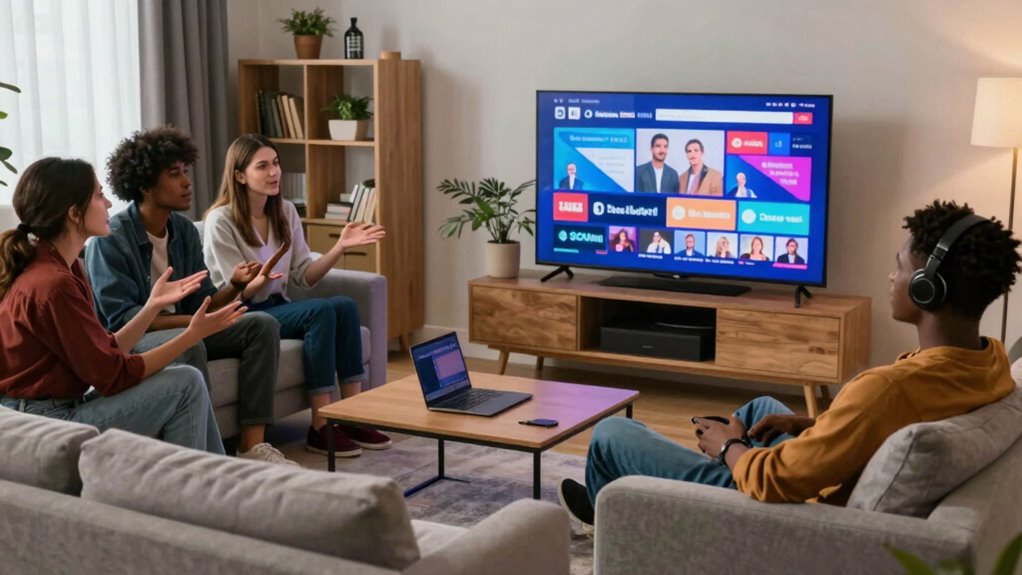
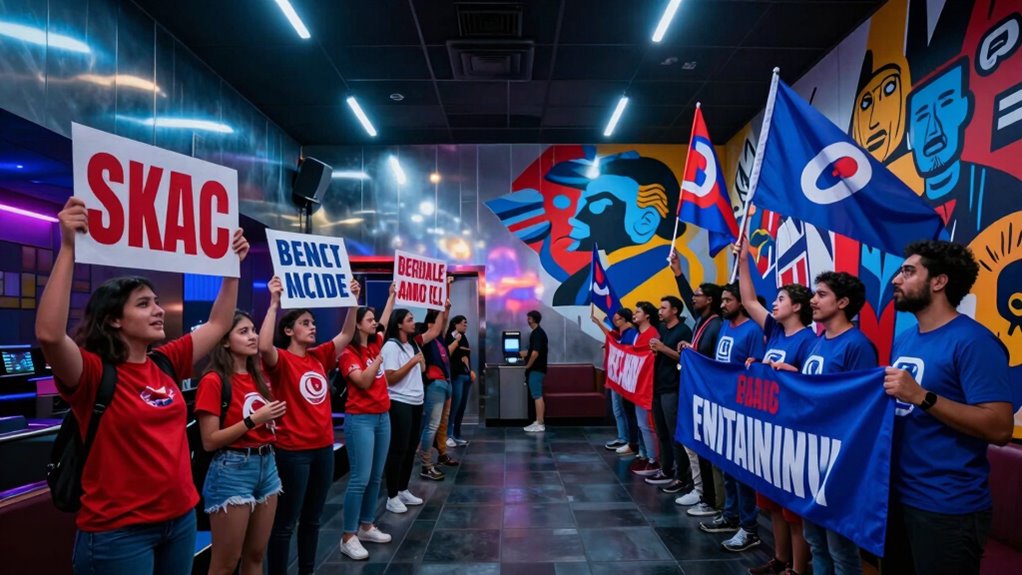
In today’s media landscape, entertainment content increasingly reflects and amplifies political divides, shaping how audiences perceive and engage with current events. You may notice that celebrities often align themselves openly with specific political ideologies, which influences how their fans interpret their work and public persona. You may also observe that such celebrity alignment is often strategically employed to sway public opinion and mobilize support. This celebrity alignment isn’t just about personal beliefs; it’s a strategic move that can rally support or provoke criticism, further deepening societal divides. When stars take a stand on issues, they become more than entertainers—they become symbols within larger political conversations. As a viewer, you might find yourself more drawn to content that echoes your beliefs or, conversely, more resistant to messages that challenge your perspectives. This polarization isn’t accidental; it’s reinforced by the way streaming platforms curate and promote content, shaping what you see and how you see it. Streaming influence means that algorithms prioritize politically charged or sensational content, often amplifying extreme viewpoints and creating echo chambers. This effect is compounded by content curation, which tends to favor engaging, emotionally charged stories over balanced reporting. An understanding of media algorithms helps explain how certain narratives become dominant and why alternative viewpoints often remain marginalized. Additionally, content filtering plays a role in reinforcing existing biases, making it increasingly difficult to access diverse perspectives. Instead of exposing you to diverse perspectives, streaming services tend to reinforce existing biases, making it easier to consume content that aligns with your worldview. This dynamic significantly impacts entertainment discourse, as creators and consumers navigate an environment where political messaging is woven into stories, characters, and even the marketing of shows and movies. You may notice that entertainment increasingly blurs the lines between pure entertainment and political commentary, often with actors and producers intentionally embedding political themes into their work. This trend can serve to rally supporters or sway undecided viewers, but it also risks diminishing the entertainment’s primary purpose: to provide an escape or reflection of human experiences. As you engage with entertainment content, you become part of a larger conversation that’s shaped by celebrity alignment and streaming influence, both of which intensify the polarization. These forces make it more challenging to find neutral or balanced perspectives, pushing audiences into ideological silos. For you, understanding this dynamic means recognizing that entertainment isn’t just about leisure anymore; it’s a battleground for cultural and political identity. By being aware of how celebrity alignment and streaming influence steer discourse, you can become a more critical consumer of media—questioning whether the content shapes your views or simply confirms what you already believe. Ultimately, political polarization has transformed entertainment from a neutral escape into a platform where societal values and divisions are played out, often in ways that deepen existing divides rather than bridge them. Recognizing the impact of streaming platforms on entertainment discourse can help you better understand how algorithms shape your media consumption and reinforce polarization.
streaming platform content filter
As an affiliate, we earn on qualifying purchases.
As an affiliate, we earn on qualifying purchases.
Frequently Asked Questions
How Does Social Media Influence Entertainment Discourse Amidst Polarization?
Social media shapes entertainment discourse by amplifying viral memes that reflect polarized views, making discussions more divisive. You see influencers using activism to sway opinions, blending entertainment with political statements. This influence encourages you to engage with content that aligns with your beliefs, often sparking debates. As a result, social media becomes a battleground where entertainment and politics intersect, reinforcing polarization and influencing what content gains popularity.
What Role Do Celebrities Play in Polarized Political Discussions?
You might find that celebrities often influence polarized political discussions through activism and endorsements, with a recent survey showing 65% of fans are more likely to support a cause if their favorite star endorses it. Celebrity activism amplifies political debates, making issues more visible and personal. By taking clear stances, celebrities can sway public opinion and deepen divides, shaping entertainment discourse amidst increasing polarization.
How Are Entertainment Genres Impacted by Political Divide?
You’ll notice genre shifts in entertainment as political divides deepen, often creating distinct audience segments. Producers tailor content to appeal to specific political views, resulting in polarized genres like patriotic dramas or socially conscious films. This segmentation influences storytelling, themes, and character portrayal, making entertainment more aligned with audience beliefs. As a result, political polarization shapes what genres flourish or decline, reinforcing divides and shaping viewer experiences across the cultural landscape.
Do Political Biases Affect Audience Reception of Entertainment Content?
Yes, political biases influence your audience perception of entertainment content. When viewers hold strong biases, they tend to interpret movies, shows, or music through that lens, affecting how they receive and enjoy it. Bias influence can lead you to favor content aligning with your beliefs or dismiss opposing viewpoints. As a result, entertainment becomes more polarized, shaping different audience experiences depending on individual perspectives and political leanings.
How Has Censorship Evolved in Polarized Entertainment Environments?
Like Pandora’s box opening anew, censorship shifts in polarized environments now reflect deeper societal divides. You see, as political lines tighten, restrictions on content grow, often sparking debates about artistic expression. Producers and artists grapple with these boundaries, balancing creativity and censorship. This evolving landscape challenges free expression, forcing you to navigate a world where what’s acceptable continually shifts, shaping entertainment into a battleground for values and voice.
political bias in entertainment books
As an affiliate, we earn on qualifying purchases.
As an affiliate, we earn on qualifying purchases.
Conclusion
Imagine a theater where two audiences sit on opposite sides, each hearing only the applause that matches their views. Political polarization acts like that divide, shaping how you consume entertainment. It’s as if your favorite shows are now filtered through a lens of bias, transforming shared stories into battlegrounds. Just as a single note can change a song’s meaning, polarization shifts entertainment discourse, making it more about division than unity. Recognize the tune, and seek harmony beyond the echo chamber.
celebrity political supporter merchandise
As an affiliate, we earn on qualifying purchases.
As an affiliate, we earn on qualifying purchases.
As an affiliate, we earn on qualifying purchases.
Halloween Picks
halloween
As an affiliate, we earn on qualifying purchases.