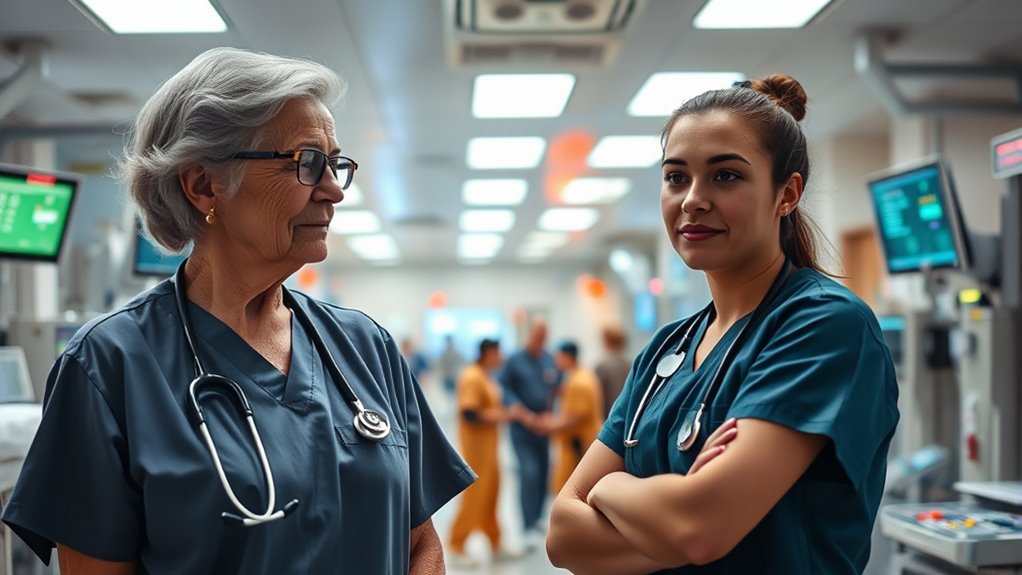

Inter-generational mentorship in emergency rooms helps you build stronger collaboration between new and experienced staff. You’ll share knowledge of technology, communication strategies, and best practices, leading to better patient outcomes and a more cohesive team. This relationship fosters trust, adaptability, and continuous learning, vital in fast-paced settings. By embracing these mentorship approaches, you’ll strengthen your team’s resilience. Keep exploring to discover how these connections can transform your emergency room environment even further.
Key Takeaways
- Facilitates knowledge exchange between experienced and new staff to improve patient care and team cohesion.
- Enhances communication skills through diverse strategies suited for high-pressure emergency settings.
- Leverages technological expertise from younger staff while benefiting from seasoned providers’ practical insights.
- Builds trust and mutual support, fostering a resilient, adaptable emergency room culture.
- Leads to better patient outcomes, increased staff satisfaction, and retention through collaborative mentorship.

In emergency rooms, where high-pressure situations demand quick thinking and expert skills, inter-generational mentorship plays a crucial role in shaping both new and seasoned healthcare providers. As someone working in this fast-paced environment, you quickly realize that bridging the gap between different generations of staff is essential for delivering effective patient care. One key aspect of this mentorship involves technology integration. Younger staff often bring fresh knowledge of the latest medical devices, electronic health records, and innovative protocols, while more experienced providers offer invaluable insights based on years of hands-on practice. When you foster collaboration that leverages these technological strengths, you enhance overall efficiency and patient safety. For example, you might encourage seasoned staff to share tips on navigating complex electronic systems or troubleshooting technical issues, ensuring that newer team members feel supported and competent. Conversely, you can learn about emerging digital tools from younger colleagues, keeping the entire team up to date with advancements that can streamline workflows and improve outcomes.
Alongside technology, effective communication strategies form the backbone of successful mentorship. You recognize that clear, respectful, and adaptable communication helps bridge generational differences and cultivates trust. In high-stakes emergencies, quick, concise exchanges are vital, but so is the ability to listen actively and validate each team member’s input. Younger staff may favor rapid, tech-based communication methods like instant messaging or digital alerts, whereas seasoned providers might prefer face-to-face briefings or direct verbal instructions. As a mentor or mentee, you facilitate understanding by encouraging flexibility—adapting your communication style to suit the situation and the individuals involved. This not only minimizes errors but also fosters a culture of openness where everyone feels heard and valued. You might hold regular debriefings after shifts, emphasizing constructive feedback and shared learning, which reinforces an environment of continuous improvement.
In this high-pressure setting, your role in nurturing inter-generational mentorship becomes vital. You help create a cohesive team where technological competence and communication skills are seamlessly integrated. This synergy ensures that both new and experienced providers can perform at their best, especially when time is limited and stakes are high. As you build these mentorship relationships, you also contribute to a resilient, adaptable emergency room culture—one capable of evolving with technological advancements and changing healthcare landscapes. Ultimately, your efforts in fostering inter-generational collaboration lead to better patient outcomes, staff satisfaction, and a more dynamic, supportive work environment.
Top picks for "inter generational mentorship"
Open Amazon search results for this keyword.
As an affiliate, we earn on qualifying purchases.
Frequently Asked Questions
How Does Mentorship Impact Patient Outcomes in ER Settings?
Mentorship improves patient outcomes in ER settings by fostering technological integration and cultural competence. When mentors guide less experienced staff, they share skills in using new tech efficiently, reducing errors. They also promote cultural awareness, ensuring sensitive, personalized care. As a mentee, you’ll develop better communication and decision-making skills, leading to faster diagnoses and improved patient satisfaction. Overall, mentorship creates a more competent, confident team that delivers higher-quality emergency care.
What Training Is Needed for Effective Cross-Generational Mentorship?
Think of effective cross-generational mentorship as building a bridge across a river. You need to hone your mentorship communication skills to connect with diverse ages and backgrounds. Training should include cultural awareness, active listening, and adaptability. By sharpening these tools, you’ll foster understanding and trust, ensuring your mentorship flows smoothly. This foundation helps both mentor and mentee grow, ultimately strengthening the entire emergency room team’s ability to serve patients better.
How Are Mentor-Mentee Pairs Matched in Emergency Departments?
You typically engage in mentorship pairing through senior-junior matching, where experienced staff are paired with newer team members based on skills, interests, and developmental needs. You might use formal assessments, interviews, or compatibility surveys to guarantee effective matches. This process helps foster meaningful relationships, encourages knowledge sharing, and supports growth for both mentors and mentees, ultimately strengthening the emergency department team and improving patient care.
What Challenges Are Unique to Inter-Generational Mentorship in ERS?
You face unique challenges in inter-generational ER mentorship, mainly due to the age gap and communication barriers. Older mentors may struggle to adapt to fast-paced environments or new technology, while younger mentees might find it hard to connect with more traditional perspectives. These differences can hinder effective communication and trust, requiring deliberate efforts to bridge the gap, foster mutual understanding, and create a supportive learning environment.
How Is Mentorship Success Measured in High-Stress Environments Like ERS?
Imagine a nurse quickly guiding a new doctor during a hectic shift; your mentorship success hinges on effective communication despite generational differences. In ERs, you measure success by how well the mentee adapts, stays confident, and improves patient care under pressure. Overcoming mentorship challenges means fostering trust, clarity, and resilience, ensuring that both mentor and mentee grow amidst high-stress situations and generational gaps.
Conclusion
So, next time you’re stuck in the chaos of the ER, remember that inter-generational mentorship isn’t just about passing down skills—it’s about surviving the madness together. Who knew that swapping stories with seasoned pros and enthusiastic newcomers could turn chaos into a classroom of wisdom? Embrace the mess, because in the end, it’s the shared chaos that truly bonds you. After all, what’s a hospital without a little inter-generational chaos to keep things interesting?