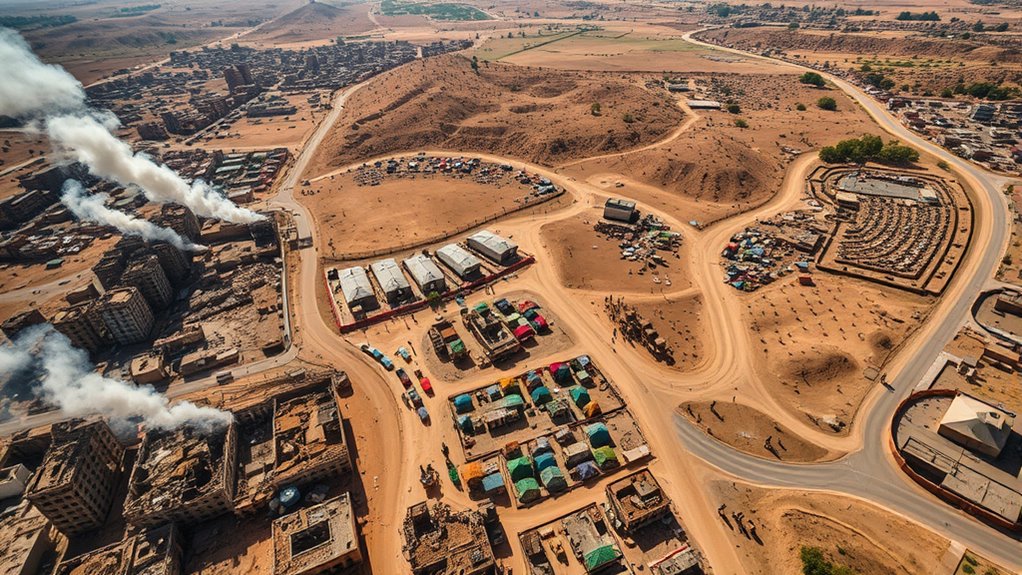

With 56 active conflicts worldwide, the focus is shifting toward diplomacy and humanitarian aid. Rather than relying solely on military force, many nations now prefer negotiations and peace talks to prevent escalation. Humanitarian efforts support those affected, offering essentials like food and shelter, while complex issues like cyber warfare challenge traditional responses. This evolving landscape signals a move toward more adaptive, multi-faceted strategies for lasting peace—stay with us to explore how these trends shape global stability.
Key Takeaways
- The majority of conflicts now favor diplomacy and peace negotiations over prolonged warfare.
- Humanitarian aid plays a critical role in stabilizing regions and supporting vulnerable populations amidst ongoing conflicts.
- Many conflicts involve non-state actors and cyber warfare, complicating resolution efforts.
- Challenges include political obstructions and logistical hurdles in delivering aid and facilitating peace talks.
- Understanding these trends highlights the need for adaptive, comprehensive strategies for global conflict management.
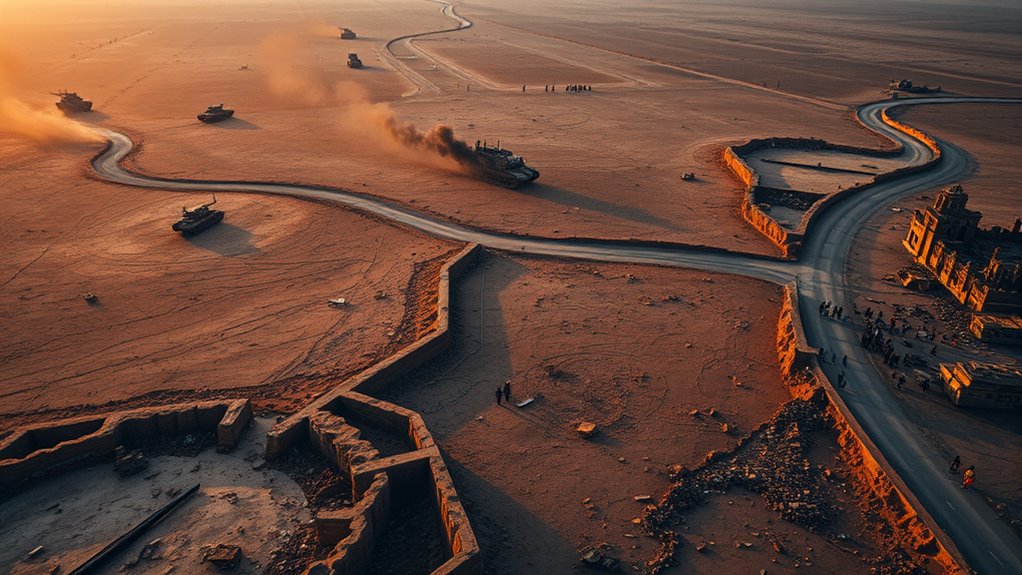
Have global conflict patterns shifted in recent years? You might notice that the landscape of international disputes has evolved, with some conflicts intensifying while others diminish. One key aspect of this shift involves how nations and groups seek resolution through peace negotiations. Instead of prolonged wars with little hope of ending, more efforts now focus on diplomatic dialogues aimed at brokering peace agreements. These negotiations can be complex, often involving multiple stakeholders and demanding concessions. They’re essential because they open pathways to ceasefires and stability, even if progress is slow. Peace negotiations aren’t always straightforward, but they serve as indispensable tools to prevent conflicts from spiraling further and to create conditions for rebuilding societies.
Global conflict patterns are shifting toward diplomacy and peace negotiations over prolonged warfare.
Alongside diplomatic efforts, humanitarian aid plays a fundamental role in managing conflict consequences. When violence erupts, millions find themselves displaced, injured, or living in unsafe conditions. Humanitarian aid provides essential support—food, medical care, shelter, and protection—helping vulnerable populations survive amidst chaos. The distribution of aid, however, can become politicized or obstructed, making it difficult for those in need to access help. Still, the international community recognizes that aid isn’t just about immediate relief; it’s also a foundation for long-term stability. When conflicts are addressed with a thorough approach—including peace negotiations and sustained humanitarian aid—there’s a greater chance of ending cycles of violence. Additionally, the rise of cyber warfare**** presents new challenges that require adaptive strategies to effectively address modern conflicts.
You might also observe that the nature of conflicts has shifted from traditional interstate wars to more complex, multi-faceted disputes. Many today involve non-state actors, insurgent groups, or even cyber warfare, complicating resolution efforts. In such cases, peace negotiations must adapt to these new realities, often requiring innovative diplomatic strategies and increased international cooperation. Humanitarian aid, meanwhile, becomes even more critical as these conflicts tend to cause widespread suffering and destabilization. The coordination of aid efforts must navigate local dynamics, security concerns, and logistical challenges to reach those in need.
Ultimately, these evolving conflict patterns underscore the importance of a balanced approach. Diplomatic negotiations lay the groundwork for peace, while humanitarian aid guarantees immediate survival and stability. Together, they shape how the world responds to ongoing conflicts. Recognizing these shifts helps you understand that resolving conflicts isn’t just about winning battles; it’s about fostering dialogue, addressing root causes, and supporting those affected. As conflicts continue to transform, your awareness of these tools and strategies becomes indispensable for appreciating the complex efforts needed to secure lasting peace.

ReadyWise Emergency Food Supply – 120 Servings Favorites Sample Bucket, Survival Food Kit, Freeze Dried Prepper Food & Dehydrated Meals for Camping Essentials & Backpacking, up to 25 Year Shelf Life
- Survival Essential with 120 Servings: Includes a variety of entrées for emergencies
- Up to 25-Year Shelf Life: Long-term storage with fresh preservation
- Compact, Stackable Design: Fits in pantry, car, or backpack
As an affiliate, we earn on qualifying purchases.
As an affiliate, we earn on qualifying purchases.
Frequently Asked Questions
How Do Conflict Trends Influence Global Economic Stability?
Conflict trends markedly impact global economic stability by causing economic repercussions like disrupted trade, increased energy prices, and investment uncertainty. You might see markets fluctuate and inflation rise as a result. These stability implications can lead to slower growth, reduced consumer confidence, and increased debt burdens for affected countries. Staying aware of ongoing conflicts helps you understand potential risks to economic stability and plan accordingly, whether in investments or policy decisions.
What Role Do International Organizations Play in Conflict Resolution?
International organizations play a vital role in conflict resolution by leading peacekeeping missions and facilitating diplomatic negotiations. You’ll see these organizations actively working to stabilize regions, prevent escalation, and foster dialogue between conflicting parties. Their efforts help build trust and create pathways toward peace, demonstrating how coordinated international action can effectively address conflicts. Their presence and diplomacy can profoundly influence the success of peace processes worldwide.
How Are Climate Change and Resource Scarcity Linked to Conflicts?
You see that climate change worsens resource scarcity, leading to resource disputes and climate migration. As droughts and floods destroy crops and disrupt water supplies, communities compete for limited resources, fueling tensions and conflicts. Climate migration pushes people into new areas, increasing pressure on resources and sparking disputes. These interconnected issues create a cycle where environmental stress directly contributes to social instability and violence.
Which Regions Are Most Likely to See New Conflicts Emerge?
You should watch the Middle East and parts of Africa—these regions are on the brink of explosive conflict escalation due to mounting regional instability. Climate change and resource scarcity are fueling tensions, making conflicts more likely to erupt. These areas face the perfect storm of political unrest, economic hardship, and environmental crises, meaning new conflicts could emerge rapidly, transforming local disputes into larger, more devastating crises.
How Can Technology Help Predict Future Conflict Hotspots?
Technology plays a vital role in conflict prediction by leveraging innovative tools like AI, data analytics, and satellite imagery. These technological innovations help you analyze patterns, monitor tensions, and identify early warning signs of potential hotspots. By integrating real-time data and predictive modeling, you can better anticipate where conflicts might emerge, allowing proactive measures to prevent escalation and promote peace.

MFASCO Complete Emergency Response First Aid Kit Trauma Bag, Red
- Complete Emergency Response Kit: 415 essential medical supplies included
- Emergency Preparedness: Organized for quick first aid response
- High Visibility Design: Reflective striping and vibrant orange color
As an affiliate, we earn on qualifying purchases.
As an affiliate, we earn on qualifying purchases.
Conclusion
Remember, peace is not just the absence of conflict but the presence of understanding. With 56 active conflicts worldwide, it’s clear that staying informed and advocating for dialogue matters more than ever. While conflicts may seem distant, they remind us that unity begins with awareness. As the saying goes, “United we stand, divided we fall.” By working together, we can help shape a more peaceful future for everyone.

Cybersecurity for Beginners: A Hands-On Guide to Ethical Hacking and Defense: Master Real-World Skills Through Labs, Tools, and Practical Challenges
As an affiliate, we earn on qualifying purchases.
As an affiliate, we earn on qualifying purchases.

As an affiliate, we earn on qualifying purchases.