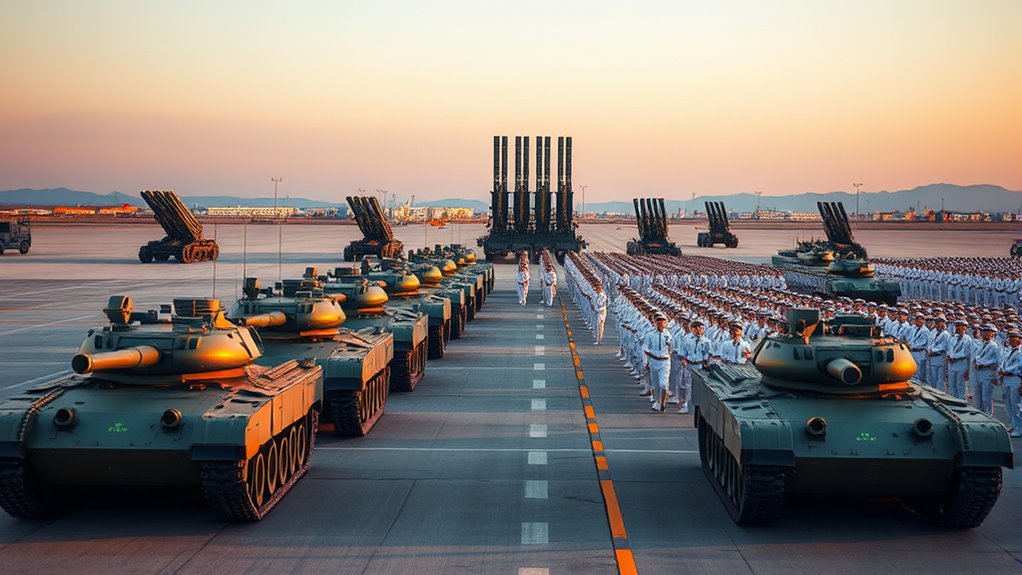

Rising military spending to $2.443 trillion in 2023 drives technological advances that often benefit civilian life, from GPS to medical tech. It boosts industries and creates jobs but can strain public finances and divert funds from social programs like healthcare and education. This level of spending also impacts global power dynamics, potentially fueling arms races and regional tensions. To understand how these financial choices affect economies and societies, keep exploring the broader implications.
Key Takeaways
- Elevated military budgets stimulate technological innovation, benefiting civilian industries and driving economic growth.
- High defense spending can divert public funds from essential social sectors like healthcare and education.
- Excessive military expenditure may provoke international arms races and regional tensions.
- Significant military costs can increase national debt and strain public finances, risking economic stability.
- Focusing on outdated or unnecessary military technologies leads to resource misallocation and reduced strategic efficiency.

Rising military spending has significant and far-reaching effects on economies, societies, and global stability. When countries allocate billions of dollars to defense, you’re likely to notice a ripple effect across various sectors, especially in technology innovation and economic implications. Increased military budgets often lead to advancements in technology, as nations push for cutting-edge weapons, surveillance tools, and communication systems. These innovations can spill over into civilian markets, improving everyday life through new gadgets, medical devices, and infrastructure. However, this focus on military tech may also divert resources from other essential sectors like education, healthcare, or infrastructure development, which can hinder overall societal progress.
From an economic perspective, heightened military spending can have mixed effects. On one hand, it stimulates certain industries—defense contractors, manufacturing, and research institutions see increased contracts, leading to job creation and economic activity. But on the other hand, this surge often comes at the expense of other indispensable areas. Governments may need to raise taxes, incur debt, or reallocate funds from social programs, which can strain public finances and create economic distortions. If spending grows uncontrollably, it risks fueling inflation or increasing national debt, potentially destabilizing economies over the long term.
Additionally, focusing heavily on military investment can influence a country’s global economic relationships. Countries with substantial military budgets may gain strategic advantages, allowing them to project power and influence international trade routes or alliances. Yet, excessive military spending can also provoke regional arms races or escalate tensions, undermining global stability and discouraging foreign investments. When nations prioritize defense over economic diversification, they might miss opportunities for growth in emerging sectors like renewable energy or digital infrastructure, which are essential for long-term resilience.
You should also consider that military innovation often leads to technological breakthroughs with civilian applications, such as GPS, the internet, or advancements in aerospace. These developments can boost economic growth by fostering new industries and improving productivity. Conversely, if military spending becomes overly focused on maintaining outdated technologies or expanding weapon inventories without strategic purpose, it can lead to inefficient resource allocation. Furthermore, some argue that increased military budgets can sometimes hinder sustainable development efforts by diverting funds from environmental and social initiatives. Ultimately, balancing military investments with economic health and social needs is fundamental to ensure that rising military budgets support sustainable development rather than hinder it.

URBAN ARMOR GEAR UAG Designed for AirTag Case – Hard Shell Lock Case AirTag Holder Keychain with Wire Cable for Keys, Luggage & Bags, Anti-Lost Ultra Secure GPS Protective Cover, Civilian Black
- Rugged AirTag Case: Drop-protective, durable design
- Secure Locking Enclosure: One-piece, tool-locked, dust and water resistant
- Braided Tracking Cable: Strong, versatile attachment for keys and luggage
As an affiliate, we earn on qualifying purchases.
As an affiliate, we earn on qualifying purchases.
Frequently Asked Questions
How Does Increased Military Spending Affect Economic Inequality?
When military spending increases, you might notice it shifts the war economy, often benefiting defense contractors and wealthier investors more than lower-income groups. This can widen wealth disparity, as resources are diverted from social programs to defense. Consequently, economic inequality grows because the benefits of such spending mainly favor the wealthy, leaving lower-income populations behind in opportunities and services.
What Are the Environmental Impacts of Higher Military Budgets?
You might not realize it, but higher military budgets contribute to environmental degradation and resource depletion. Increased spending often leads to more manufacturing and testing of military equipment, which pollutes air, water, and land. Additionally, it depletes natural resources like metals, fossil fuels, and water, putting stress on ecosystems. This not only harms the environment but also risks long-term sustainability, affecting communities and future generations.
How Does Rising Military Expenditure Influence International Diplomacy?
Rising military expenditure acts like a double-edged sword in international diplomacy. It can spark an arms race, making countries more cautious or aggressive, or it can be used as leverage in diplomatic strategy to secure alliances or influence. You might find that increased spending signals strength but also risks escalating tensions, making diplomacy a delicate dance where words and weapons shape the global stage.
What Are the Effects on Civilian Healthcare and Education Funding?
Rising military spending often results in budget allocation shifts, reducing funds for civilian healthcare and education. You might notice healthcare priorities get sidelined as governments prioritize defense, which can lead to diminished quality of public health services and fewer resources for schools. This reallocation impacts vulnerable populations, making access to essential services more challenging, and ultimately hampers overall societal growth and well-being.
How Does Military Spending Impact Technological Innovation Outside Defense?
When military spending increases, it often boosts civilian tech through innovation spillover, benefiting industries outside defense. You’ll see advancements like GPS, the internet, and AI evolving from military research, which then fuel commercial applications. This transfer of technology accelerates innovation in healthcare, transportation, and communication sectors. So, higher military budgets can indirectly drive broader technological progress, improving everyday life and creating new economic opportunities beyond defense.

AVCOO 3-in-1 TENS Unit Muscle Stimulator with 30 Modes, 40 Intensities TENS Machine for Gradual Back Pain Relief Therapy, Rechargeable EMS Unit Massager with 12 TENS Electrode Pads, a Storage Bag
- Multi-functional 3-in-1 Technology: Combines TENS, EMS, and RELAX therapies
- Dual Channel & 40 Intensity Levels: Targets multiple body areas with adjustable settings
- User-friendly Interface: Easy selection with body part indicators
As an affiliate, we earn on qualifying purchases.
As an affiliate, we earn on qualifying purchases.
Conclusion
As you see, rising military spending like the $2.443 trillion in 2023 dramatically shapes global security. Imagine a small nation investing heavily in advanced defenses—boosting their safety but potentially sparking regional arms races. While increased spending can protect national interests, it also risks diverting funds from social programs. Ultimately, you must weigh the benefits of stronger defense against the costs of escalating tensions and resource allocation.

Defense Contractor Comfort Colors Adult Sweatshirt
- Relaxed Fit: Roomy, comfortable silhouette
- Soft-Washed Fabric: Lived-in feel from garment-dyed cotton
As an affiliate, we earn on qualifying purchases.
As an affiliate, we earn on qualifying purchases.

Intelligent Network Video: Understanding Modern Video Surveillance Systems
As an affiliate, we earn on qualifying purchases.
As an affiliate, we earn on qualifying purchases.