
AI-powered code assistants boost your productivity by providing real-time analysis, catching errors early, and offering suggestions for optimization. They automate repetitive tasks, help you maintain coding standards, and improve overall code quality. By streamlining debugging and refactoring, these tools enable you to develop faster and more reliably. If you want to discover how these assistants can transform your workflow and make software development easier, there’s plenty more to explore ahead.
Key Takeaways
- AI-powered code assistants provide real-time suggestions, reducing coding errors and improving overall code quality.
- They automate repetitive tasks like refactoring and boilerplate generation, boosting developer efficiency.
- Continuous code analysis accelerates debugging by quickly identifying issues and offering solutions.
- Automation of code reviews and standards enforcement shortens development cycles.
- These tools enhance skill development and foster smarter, more reliable software development workflows.
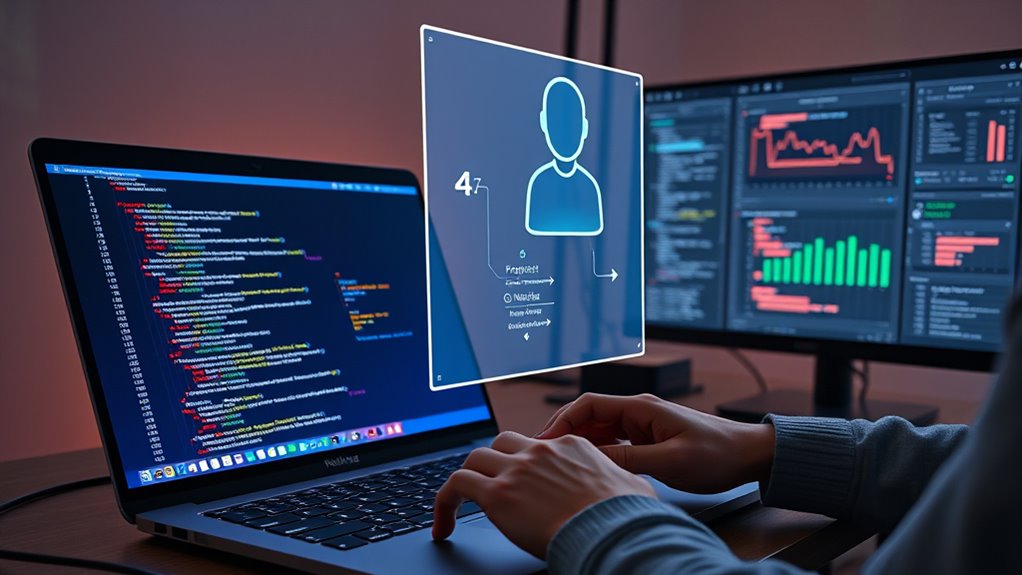
Ai-powered code assistants are transforming how developers write and optimize code by providing real-time suggestions, error detection, and automation. These tools act as your intelligent coding partner, helping you catch mistakes early and streamline complex programming tasks. When you’re working on a project, they analyze your code as you type, offering instant feedback that can improve your code quality and reduce bugs. This immediate assistance means you spend less time hunting down errors and more time focusing on building features.
One of the biggest advantages of Ai-powered code assistants is their impact on the code review process. Instead of waiting for manual reviews, these tools can automatically flag potential issues, suggest improvements, and enforce coding standards. This speeds up the review cycle and ensures that your code adheres to best practices before it even reaches a peer reviewer. By catching issues early, they minimize the risk of bugs slipping into production, saving you time and resources. Plus, as you learn from these suggestions, your coding skills improve over time, making you a more efficient developer.
Debugging strategies also become more effective with Ai-powered assistants. When you encounter a bug, the tools can help you trace the root cause faster by analyzing your code and highlighting problematic sections. Many of these assistants offer suggestions for fixing errors or optimizing problematic code snippets, reducing the trial-and-error process often associated with debugging. They can even provide context-aware solutions, guiding you through complex troubleshooting steps. This proactive approach not only accelerates the debugging process but also helps you develop better debugging habits, making you more self-reliant in resolving issues.
Moreover, these assistants automate repetitive tasks, such as refactoring code or generating boilerplate, freeing you to concentrate on more strategic aspects of your project. They integrate seamlessly into your development environment, whether you’re using IDEs or code editors, ensuring that assistance is always at your fingertips. As a result, you gain a significant productivity boost, delivering higher-quality code faster and with less frustration.
Ultimately, Ai-powered code assistants empower you to work smarter, not harder. They enhance your debugging strategies, streamline code review, and reduce the mental load of managing errors. This leads to faster development cycles, more reliable software, and a continuous improvement in your coding skills. As these tools evolve, expect even greater efficiency and smarter automation—making you a more effective and confident developer every day. These tools analyze your code based on best practices to ensure optimal quality and safety.
Frequently Asked Questions
How Do AI Code Assistants Impact Developer Creativity?
AI code assistants boost your creativity by enabling creative collaboration with the tools, freeing you from routine tasks. This support allows you to focus on innovative problem-solving and unique solutions. As a result, you can accelerate innovation within your projects, pushing boundaries you might not have explored alone. Instead of replacing your creativity, these assistants enhance it, providing new ideas, suggestions, and insights that inspire your best work.
What Are the Privacy Concerns With Ai-Powered Coding Tools?
Privacy concerns with AI-powered coding tools are like a double-edged sword, cutting both ways. You risk exposing sensitive data if the tool mishandles your code, making data security a top priority. Additionally, you need clear user consent, so you’re aware of how your data is being used and stored. Always review privacy policies to ensure your work remains confidential and your rights are protected.
Can AI Code Assistants Replace Human Programmers Entirely?
AI code assistants can’t replace human programmers entirely because AI ethics and coding standards require human judgment. You still need creativity, understanding of context, and ethical decision-making that AI can’t fully grasp. While these tools support your work, they lack the nuanced insight and adaptability that humans provide. So, rather than replacing, AI assistants enhance your skills, helping you follow best practices and maintain high coding standards.
How Do AI Tools Handle Complex or Ambiguous Coding Tasks?
Think of AI tools as skilled navigators through foggy waters. They handle complex or ambiguous coding tasks by relying on contextual ambiguity and adaptive learning, constantly adjusting their approach. These assistants analyze patterns, learn from new data, and refine their suggestions. While they might not always hit the mark perfectly, their ability to adapt helps them tackle tricky problems, making your coding journey smoother and more efficient.
What Are the Costs Associated With Implementing AI Code Assistants?
The costs of implementing AI code assistants include initial investments in software licenses and ongoing maintenance. You need to take into account a thorough cost analysis to assess hardware upgrades and training. Integration challenges may arise, requiring time and resources to guarantee smooth deployment. While the upfront costs can be significant, the long-term productivity benefits often justify the expense, helping you streamline workflows and reduce development time.
Conclusion
As you embrace AI-powered code assistants, you’ll find your productivity skyrocketing, much like a rocket launch from Cape Canaveral. These tools streamline your workflow, reduce errors, and free up your creativity for more complex tasks. Remember, even as you rely on these digital sidekicks, don’t forget the timeless wisdom of the ancient coder—sometimes, the best ideas come from a quiet moment of reflection, not just a blinking cursor. Stay curious and keep coding forward.

Coowkooalla Celebrity Inspired Flag Tapestry 3x5 FT – Pop Culture Aesthetic Wall Banner with Brass Grommets for College Dorm Room, Bedroom, Living Room, Indoor Outdoor Party Decor
- Material: 100% polyester fabric with vivid printing
- Durability: Lightweight, wrinkle resistant, long-lasting
- Grommets: Four reinforced rust-resistant brass grommets
As an affiliate, we earn on qualifying purchases.

GO PISS GIRL Neon Sign Funny Dimmable LED Light Up Sign Pink Aesthetic Pop Culture Wall Decor for Dorm Room, College Apartment, Bathroom, Party, Birthday Gift, USB Powered(14.5 * 10.6in)
- Trendy Neon Sign Design: Bold and humorous phrase for modern decor
- Pink LED Illumination: Energy-efficient, high-brightness, dreamy pink light
- Easy to Install: Pre-drilled holes, USB powered, plug and play
As an affiliate, we earn on qualifying purchases.