When choosing between Mini-LED and OLED, you should consider your lighting environment and image preferences. Mini-LEDs are brighter, great for well-lit spaces and HDR content, while OLEDs offer perfect blacks and deeper contrast for cinematic quality. OLEDs are more prone to burn-in, but excel at wide viewing angles. Both have pros and cons, and understanding these differences helps you pick what’s best for your needs — uncover more to make an informed choice.
Key Takeaways
- OLED offers perfect blacks and infinite contrast, while Mini-LEDs provide higher brightness and better performance in well-lit environments.
- Mini-LEDs excel in brightness and color vibrancy due to Quantum Dot technology, whereas OLEDs deliver superior black levels and wide viewing angles.
- OLED screens are more prone to burn-in, impacting long-term durability, whereas Mini-LEDs are generally more durable and cost-effective.
- Brightness and local dimming in Mini-LEDs can cause blooming, a trade-off less common in OLEDs’ pixel-level light control.
- Overall cost favors Mini-LEDs, but OLEDs provide a more cinematic experience with deeper blacks and better contrast.
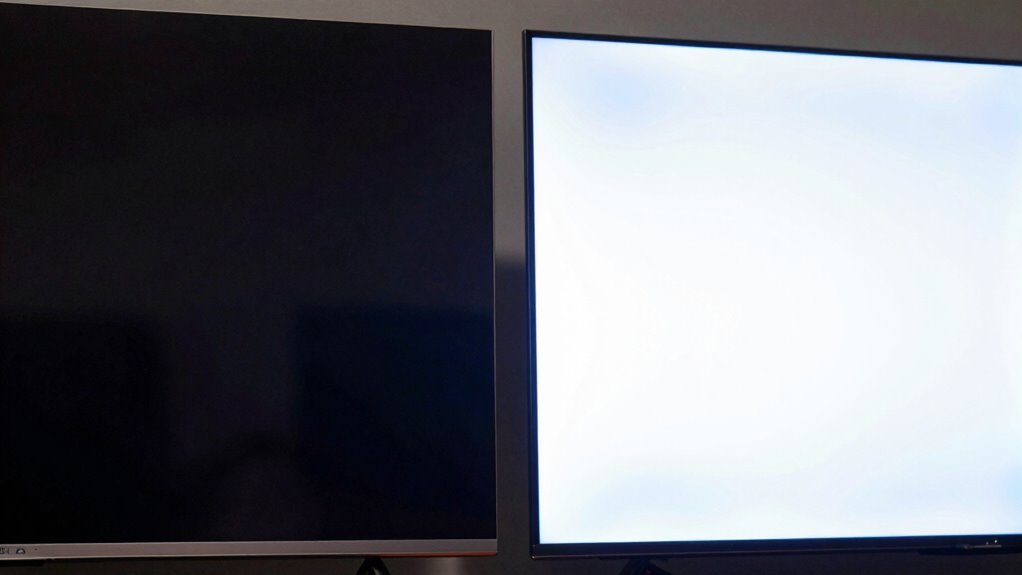
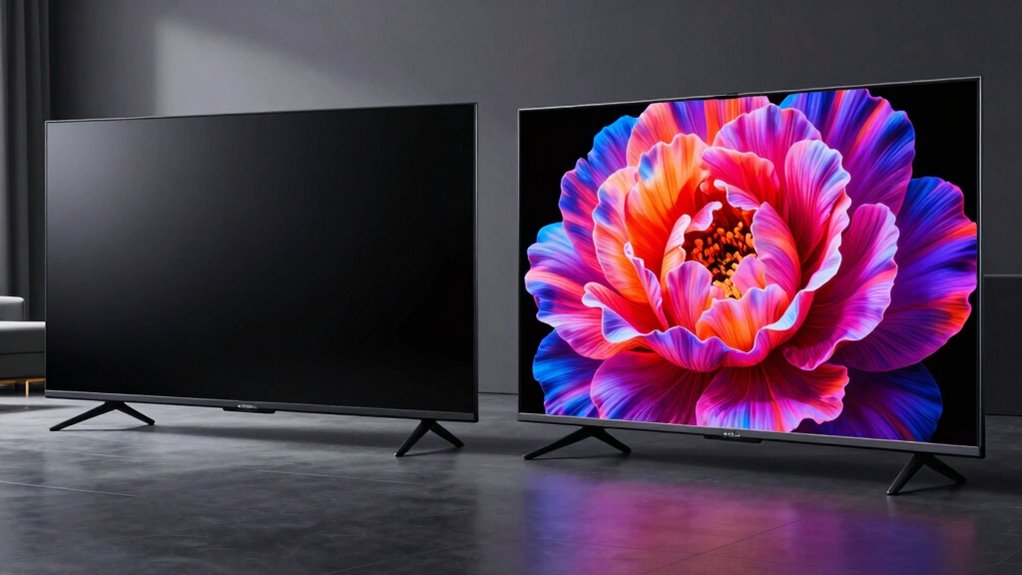
When choosing between Mini-LED and OLED displays, understanding their fundamental differences can help you make an informed decision. Both technologies offer stunning visuals, but they do so in very different ways. Mini-LEDs utilize tiny backlight diodes, often thousands of them, to illuminate the screen from behind. This allows for precise control over local dimming, which enhances contrast and black levels. OLED screens, on the other hand, use organic compounds that emit light when powered. Each pixel in an OLED display can turn on or off independently, giving you perfect black levels and infinite contrast.
One key aspect often overlooked is how these technologies impact screen brightness. Mini-LED displays tend to be brighter overall because the backlighting system can push higher luminance levels. This is especially noticeable in brightly lit rooms or when viewing HDR content. Additionally, some Mini-LEDs incorporate Quantum Dot technology, which further boosts brightness and color accuracy. Quantum Dots enhance the display’s ability to produce a wider color gamut, making images pop with richer, more vibrant colors. This combination of Quantum Dot enhancement and high screen brightness means Mini-LEDs can deliver a luminous picture that holds up in challenging lighting conditions, providing a more dynamic viewing experience.
OLED screens, while renowned for their perfect blacks and superior contrast, have limitations when it comes to peak brightness. They can struggle to match the brightness levels of Mini-LEDs, especially in HDR content. This can sometimes result in less impactful highlights, especially in scenes with a lot of bright elements. Still, OLEDs excel in delivering deep blacks and excellent viewing angles, which are critical for cinematic experiences. When you sit off-axis, OLEDs maintain color accuracy and contrast, whereas Mini-LEDs might exhibit some blooming or halo effects around bright objects due to their local dimming zones. An important consideration is the long-term durability of each technology, as OLEDs may be more susceptible to burn-in over time. Understanding the manufacturing process, which affects the overall quality and longevity of these displays, can also guide your decision. Furthermore, cost considerations play a significant role as OLEDs tend to be more expensive due to their complex manufacturing.
Ultimately, your choice depends on what matters most to you. If you prioritize high screen brightness, vibrant colors, and a display capable of handling bright environments, Mini-LED with Quantum Dot technology might be the better fit. But if you value perfect blacks, wide viewing angles, and superior contrast, OLEDs could be more appealing. Both technologies are advancing rapidly, but understanding these core differences ensures you pick a display that aligns with your viewing habits and environment.

TCL 55 Inch Class QM6K Series | Mini LED QLED 4K HDR | 55QM6K, 2025 Model | 120HZ-144HZ High Brightness Smart Google TV Dolby Atmos Onkyo Audio | Voice Remote Alexa Gaming Streaming Television
TCL QM6K QD-MINI LED TV SERIES – AFFORDABLE PREMIUM PERFORMANCE FOR SPORTS, GAMING & STREAMING. Experience superior contrast,…
As an affiliate, we earn on qualifying purchases.
As an affiliate, we earn on qualifying purchases.
Frequently Asked Questions
Which Display Type Has Longer Overall Lifespan?
You’ll find that Mini-LED displays generally have a longer overall lifespan compared to OLED screens. Mini-LEDs tend to have better display longevity because they use inorganic materials, which resist burn-in and degradation over time. Additionally, they have lower maintenance requirements since they don’t suffer from burn-in issues like OLEDs. If longevity is your priority, Mini-LEDs are usually the better choice, offering consistent performance over many years.
How Do Mini-Led and OLED Compare in Power Consumption?
You’ll be amazed at how much power your display consumes! Mini-LEDs excel in energy efficiency thanks to advanced power management, using less energy during bright scenes. OLEDs, while stunning with perfect blacks, tend to burn more power when displaying bright images because each pixel emits light individually. So, if saving energy matters, mini-LEDs are the smarter choice, offering better power management and lower overall power consumption.
Are There Any Health Concerns With Either Technology?
You don’t need to worry much about health effects or eye safety with Mini-LED or OLED screens. Both technologies emit low levels of blue light, which could cause eye strain if you stare at screens for long periods. However, modern devices often include features like blue light filters. To protect your eyes, take regular breaks and adjust brightness settings. Overall, both are safe for everyday use when used responsibly.
How Do These Displays Perform in Extreme Temperatures?
You might think these displays excel in all conditions, but both have limits. Mini-LEDs generally offer better thermal stability and temperature resilience, performing more reliably in extreme heat or cold. OLEDs, however, can suffer from burn-in or color degradation under high temperatures, reducing display longevity. So, if you often face harsh environments, Mini-LEDs are your better choice for consistent performance and durability.
What Is the Environmental Impact of Manufacturing Each?
You should know that manufacturing OLED displays tends to produce higher emissions due to the complex materials involved, and recycling challenges arise because of their organic compounds. Mini-LEDs generally have a less complex manufacturing process, resulting in lower emissions, but they still pose recycling issues due to their backlight components. Overall, both technologies impact the environment, but OLEDs tend to have a slightly higher environmental footprint during production.

LG 65-Inch Class OLED evo AI 4K C5 Series Smart TV w/Dolby Atmos, Dolby Vision, HDR10, AI Super Upscaling 4K, Filmmaker Mode, Wow Orchestra, Alexa Built-in (OLED65C5PUA, 2025)
OLED: Celebrating 12 years of perfecting award-winning OLED TV technology.
As an affiliate, we earn on qualifying purchases.
As an affiliate, we earn on qualifying purchases.
Conclusion
In choosing between Mini-LED and OLED, you weigh brightness against contrast, durability against depth, affordability against investment. You consider the vibrant display versus the perfect black, the longevity versus the innovation, the immediate appeal versus long-term satisfaction. Ultimately, your decision reflects your priorities, your preferences, your lifestyle. Whether you chase dazzling visuals or timeless quality, remember—your choice shapes your viewing experience, your enjoyment, your everyday moments. Make it wisely, enjoy it fully, and let your screen tell your story.
TCL 65 Inch Class QM6K Series | Mini LED QLED 4K HDR | 65QM6K, 2025 Model | 120HZ-144HZ High Brightness Smart Google TV Dolby Atmos Onkyo Audio | Voice Remote Alexa Gaming Streaming Television
TCL QM6K QD-MINI LED TV SERIES – AFFORDABLE PREMIUM PERFORMANCE FOR SPORTS, GAMING & STREAMING. Experience superior contrast,…
As an affiliate, we earn on qualifying purchases.
As an affiliate, we earn on qualifying purchases.

Samsung 65-Inch Class OLED S90F 4K Smart TV (2025 Model) NQ4 AI Gen3 Processor, 4K AI Upscaling Pro, OLED HDR +, Motion Xcelerator 144Hz, Samsung Vision AI, Alexa Built-in
OUR MOST ADVANCED 4K AI PROCESSOR: Powered by 128 neural networks to deliver AI-enhanced picture and optimized sound,…
As an affiliate, we earn on qualifying purchases.
As an affiliate, we earn on qualifying purchases.