
The psychology behind dating shows reveals that viewers become deeply engaged because these programs tap into universal desires for connection, trust, and vulnerability. When contestants share honest stories and show genuine emotion, it builds trust and makes relationships feel real. Conflicts and betrayals heighten emotions and suspense, keeping you hooked. By understanding these dynamics, you’ll see why these shows evoke strong feelings and make you emotionally invest—there’s much more beneath the surface you won’t want to miss.
Key Takeaways
- Trust development through honesty and vulnerability enhances emotional connection, increasing viewer empathy and engagement.
- Sharing personal stories fosters intimacy, making viewers emotionally invested in contestants’ journeys.
- Trust breaches and conflicts heighten drama, maintaining suspense and emotional tension that keep viewers hooked.
- Authenticity and vulnerability evoke genuine emotions, strengthening audience perceptions of relatability and investment.
- Universal themes of connection and trust trigger psychological responses, encouraging repeated viewing and active participation.
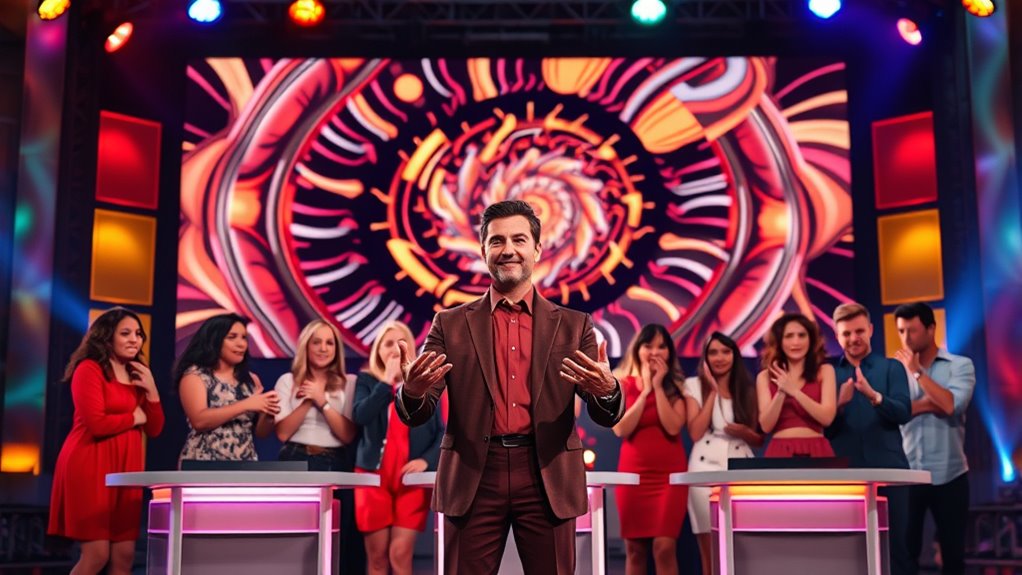
Dating shows have become a popular form of entertainment, drawing viewers into the complex psychology behind attraction and decision-making. As you watch, you might notice how trust dynamics play a vital role in shaping the contestants’ interactions and choices. These shows often highlight how trust is built through small gestures, honesty, and vulnerability, which can influence viewers’ perceptions of authenticity and relatability. When contestants share personal stories or admit doubts, they create a sense of emotional investment that pulls viewers deeper into their journeys. You find yourself rooting for certain contestants because you sense genuine trust forming between them, making their successes feel more meaningful. Conversely, when trust appears broken—through lies or miscommunications—it triggers heightened emotional reactions, keeping you engaged and eager to see how conflicts unfold.
Trust, honesty, and vulnerability deepen connections, making viewers emotionally invested and eager to see love’s triumph or heartbreak.
The emotional investment you feel as a viewer is closely tied to how contestants develop relationships on screen. When people open up about their fears, hopes, and past experiences, it fosters a sense of intimacy that’s easy to connect with. You might find yourself emotionally invested in their stories, feeling happiness when they find love or disappointment when things go wrong. This emotional investment isn’t just passive; it actively influences your engagement with the show. You analyze their interactions, speculate about future outcomes, and sometimes even project your own experiences onto their situations. This process creates a sense of participation, making the viewing experience more personal and compelling.
The psychology behind this emotional investment also ties into the way you perceive authenticity. Contestants who demonstrate vulnerability or genuine emotion tend to evoke more trust from both the audience and their fellow contestants. This trust, in turn, encourages more honest exchanges and deeper connections, which keep viewers captivated. When trust is betrayed or fragile, it heightens drama but also sparks curiosity about whether relationships can survive such hurdles. Your attention remains fixed on these narratives because you want to see if real trust and emotional bonds can ultimately triumph over doubt and insecurity. Additionally, understanding how trust dynamics operate within these shows can deepen viewers’ appreciation for the complexities of human relationships.
Ultimately, trust dynamics and emotional investment are at the core of why dating shows succeed in captivating audiences. They tap into universal desires for connection and authenticity, making you feel involved in the contestants’ journeys. As you watch, you’re not just a passive observer but a participant in the unfolding stories of trust, vulnerability, and love. This psychological engagement keeps you coming back, eager to see whether the relationships will flourish or falter, mirroring the complex interplay of human emotions in real life.
Top picks for "psychology behind show"
Open Amazon search results for this keyword.
As an affiliate, we earn on qualifying purchases.
Frequently Asked Questions
How Do Dating Shows Influence Viewers’ Perceptions of Relationships?
Dating shows shape your perceptions of relationships by promoting romantic ideals that may seem perfect but are often unrealistic. You might start to believe that love should be instant or drama-free, influenced by what you see on screen. Social influence plays a big role, as you compare your own relationships to the curated, idealized versions portrayed, potentially skewing your expectations and understanding of what genuine love truly looks like.
What Psychological Effects Do Dating Show Contestants Experience?
Imagine stepping onto a stage where your self-esteem becomes a fragile mirror, reflecting constant social comparison. As a contestant, you often face self-esteem fluctuations, feeling uplifted by validation or diminished by rejection. The intense scrutiny and desire for acceptance can lead to anxiety and emotional exhaustion. This psychological tug-of-war underscores how fame and scrutiny impact your mental health, shaping your perceptions of self-worth amid the glittering chaos.
Why Do Viewers Feel Emotionally Invested in Contestants’ Stories?
You feel emotionally invested in contestants’ stories because the show creates narrative empathy, making you connect deeply with their experiences. As you follow their journeys, you develop emotional attachment, rooting for their happiness and feeling their pain. This connection draws you in, making the stories more compelling and memorable. The show’s storytelling techniques tap into your empathy, intensifying your engagement and making you care about the contestants’ outcomes.
How Does Editing Shape Audience Perception of Authenticity?
Editing profoundly shapes your perception of authenticity by employing production manipulation to highlight certain moments while downplaying others. This selective editing creates a narrative that feels genuine, yet your viewer bias can influence how you interpret contestants’ actions and emotions. You might believe what’s shown is real, but behind the scenes, producers craft these stories to evoke specific reactions, making it essential to question what’s truly authentic versus what’s strategically edited.
Can Watching Dating Shows Impact Real-Life Dating Behaviors?
Watching dating shows can influence your real-life dating behaviors, much like comparing yourself to the glamorous scenes on screen. You might develop social comparison, feeling pressured to match those idealized standards. Simultaneously, parasocial relationships form, making you feel connected to contestants. This mix can inspire your dating choices or lead to unrealistic expectations, affecting how you approach relationships offline.
Conclusion
As you watch dating shows, you’re gently drawn into a whirlwind of emotions, like a delicate dance on a lively stage. The subtle cues and staged moments become a mirror, reflecting your own hopes and fears. By embracing this playful illusion, you can enjoy the experience without losing yourself in the spectacle. After all, it’s just a charming illusion—an enchanting garden where your imagination can freely blossom, leaving you both captivated and inspired.