

Ensemble casts often outperform star-driven shows because they create richer, more layered stories that keep you engaged. With multiple perspectives and complex character relationships, the narrative feels more authentic and unpredictable. You’re more likely to connect emotionally with a diverse group, which sustains your interest over time. When different characters’ arcs intertwine, it adds variety and depth that star-focused shows can’t match. Stay tuned to see how this collaborative storytelling approach shapes compelling television.
Key Takeaways
- Ensemble casts foster richer storytelling through diverse perspectives and interconnected relationships, increasing narrative depth.
- Multiple characters and storylines enhance viewer engagement and retention by offering variety and unpredictability.
- Shared character development creates emotional connections and a sense of community within the story.
- Collaborative storytelling emphasizes human complexity, making narratives more authentic and nuanced.
- The collective energy of ensemble casts promotes dynamic, layered plots that outperform star-driven shows.
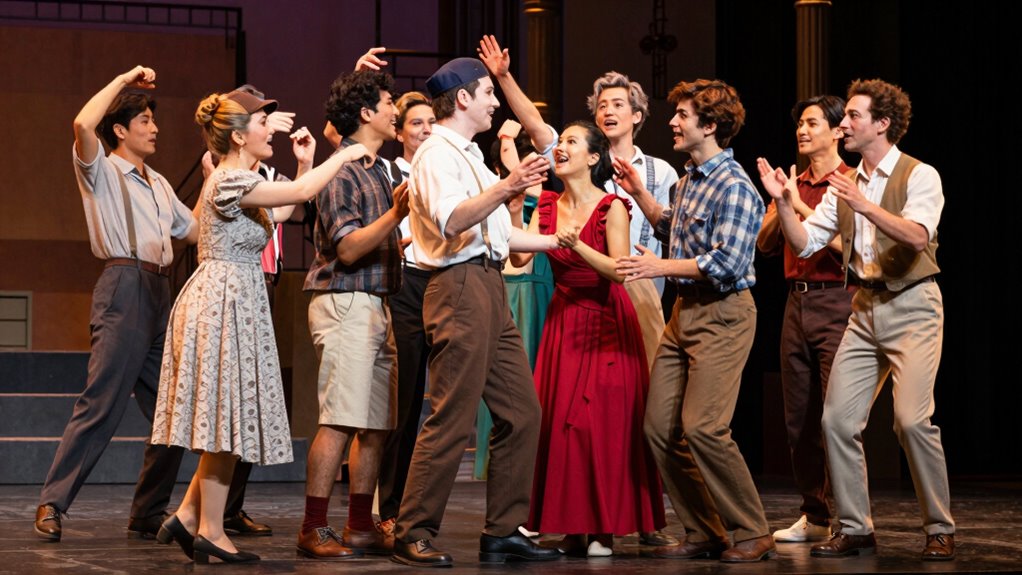
In recent years, ensemble casts have consistently outperformed star-driven shows, proving that strong, collaborative storytelling often resonates more with audiences than relying solely on a single celebrity. When you watch these shows, you notice how the varied character dynamics create a rich tapestry that keeps viewers engaged. Instead of focusing on one lead, the narrative weaves multiple perspectives, giving each character room to grow and interact. This variety enhances the story’s depth and makes it more compelling, inviting you to see the bigger picture rather than just following one hero’s journey.
With ensemble casts, the story tends to be more layered and complex. You’re not just following a single storyline—you’re immersed in a web of interconnected relationships, conflicts, and alliances. This narrative complexity challenges you to pay closer attention, as the plot unfolds through multiple viewpoints. It’s like piecing together a puzzle, where each character’s motivations and actions influence the larger story. The result is a show that feels more authentic, nuanced, and unpredictable, because the plot isn’t dictated by the whims of one star but by the interactions among many characters.
You also find that ensemble casts foster a stronger sense of community within the story. Each character’s arc complements the others, creating a collective momentum that pulls you deeper into the narrative. You get invested in the relationships, rivalries, and alliances, which add emotional weight and realism. This dynamic encourages you to see characters as part of a bigger picture rather than standalone figures. As a viewer, you may find yourself more emotionally connected to the show because it portrays a broader range of human experiences and reactions, making it feel more relatable and immersive. Additionally, the collaborative nature of ensemble storytelling emphasizes how multiple elements work together to create a cohesive whole. Diverse character interactions**** also contribute significantly to this effect, enriching the overall storytelling experience.
Moreover, shows with ensemble casts tend to sustain viewer interest over longer periods. When one character’s storyline hits a lull, another’s might be reaching a climax, keeping the overall narrative lively and unpredictable. This variety prevents the story from becoming one-dimensional or predictable, which can happen in star-driven shows that rely heavily on a single actor’s charisma. Instead, the collective energy of an ensemble keeps the storytelling fresh and dynamic, ensuring you remain engaged from episode to episode.
Ultimately, ensemble casts demonstrate that storytelling is a collaborative art. They prove that when you prioritize character interactions and narrative depth over star power, the result is often a more compelling, multi-faceted show that resonates deeply with audiences. This approach not only entertains but also encourages viewers to appreciate the complexity of human relationships, making ensemble-driven stories a powerful force in modern television.

Corner Gas – The Complete Series Box Set
As an affiliate, we earn on qualifying purchases.
As an affiliate, we earn on qualifying purchases.
Frequently Asked Questions
How Do Ensemble Casts Influence Audience Engagement Differently Than Star-Led Shows?
You notice that ensemble casts boost audience engagement through complex character dynamics, keeping viewers interested in multiple storylines. Unlike star-led shows, where loyalty may hinge on a single actor, ensemble casts foster viewer loyalty to the entire group, creating a richer, more immersive experience. This diversity of characters encourages viewers to form connections with different personalities, increasing overall engagement and making the show more compelling over time.
What Are the Challenges in Managing an Ensemble Cast Effectively?
Managing an ensemble cast is like conducting a symphony—you must master character coordination to keep everyone in harmony. Scheduling complexities threaten to throw off the rhythm, risking missed scenes or uneven development. You face the challenge of balancing egos, ensuring each actor shines without overshadowing others. Staying organized and fostering collaboration becomes essential, turning chaos into a cohesive story where every voice contributes to the masterpiece you’ve envisioned.
How Does Character Development Differ in Ensemble Versus Star-Driven Shows?
In ensemble shows, character arcs develop more gradually, with casting dynamics requiring equal attention to multiple storylines. You focus on balancing each character’s growth, ensuring no one dominates and all contribute meaningfully. Unlike star-driven shows, where the main actor’s journey is central, ensemble casts demand you craft interconnected arcs, making each character’s development essential to the overall narrative. This collaborative approach creates richer, more layered storytelling.
Are Ensemble Casts More Cost-Effective for Production Companies?
Yes, ensemble casts are often more cost-effective for production companies. They allow for better budget efficiency by spreading costs across multiple actors rather than paying high salaries to a few stars. Additionally, ensemble casts promote casting diversity, which can attract broader audiences and increase show appeal. This strategy helps productions manage expenses while offering varied characters that enrich storytelling, making them a smart choice financially and creatively.
What Are Examples of Successful Ensemble Cast TV Shows or Movies?
You’ll find that shows like “Game of Thrones” and “Breaking Bad” excel with their ensemble casts. Remarkably, “Game of Thrones” boasted over 150 speaking roles, highlighting complex character dynamics. These shows succeed because casting strategies focus on diverse, interconnected characters, creating richer storytelling. You notice how a well-rounded ensemble keeps viewers engaged, offering multiple storylines and perspectives, unlike star-driven shows that rely heavily on individual performances.

The Body Man (The Body Man Series)
As an affiliate, we earn on qualifying purchases.
As an affiliate, we earn on qualifying purchases.
Conclusion
Imagine a tapestry woven with countless vibrant threads—each one essential, each one shining. That’s what an ensemble cast offers: a rich, balanced performance where every character contributes to a greater story. Unlike star-driven shows, which rely on a single spotlight, ensemble casts create a dynamic, unpredictable universe. So, when you watch a well-orchestrated ensemble, you’re not just observing a show—you’re experiencing a symphony of voices, each echoing in harmony.
![Sideways [Blu-ray]](https://m.media-amazon.com/images/I/51DNN5xuJGL._SL500_.jpg)
Sideways [Blu-ray]
As an affiliate, we earn on qualifying purchases.
As an affiliate, we earn on qualifying purchases.
interconnected character development books
As an affiliate, we earn on qualifying purchases.
As an affiliate, we earn on qualifying purchases.