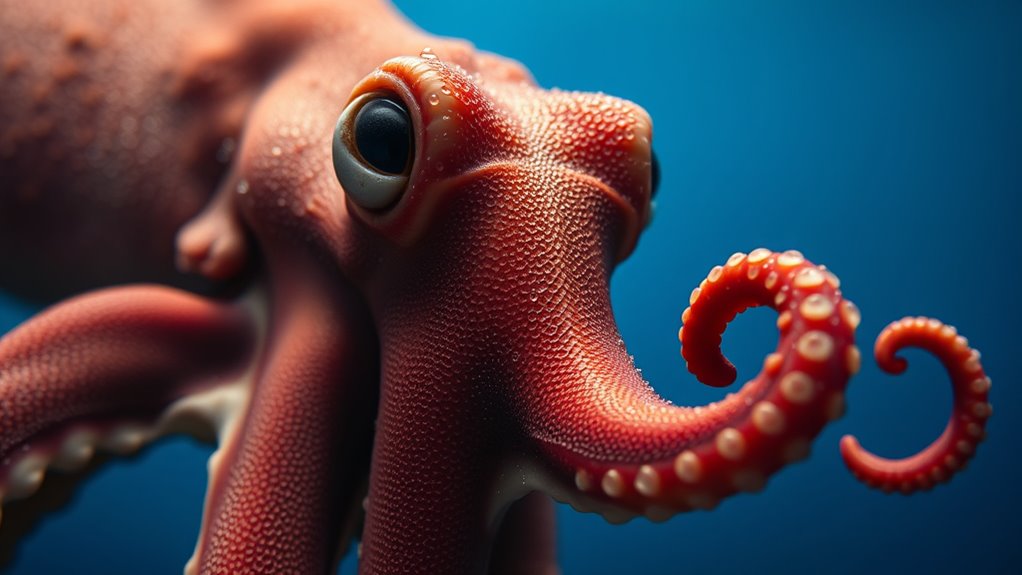

An octopus has three hearts that work together to keep it alive. Two branchial hearts pump blood through the gills to pick up oxygen, while the third, the systemic heart, circulates oxygen-rich blood to the rest of its body. When it swims, the systemic heart temporarily stops, which can cause fatigue and influence its movement. If you want to explore how this unique system supports their survival and behavior, keep going.
Key Takeaways
- An octopus has a total of three hearts: two branchial hearts and one systemic heart.
- The branchial hearts pump blood through the gills for oxygen exchange.
- The systemic heart circulates oxygenated blood to the octopus’s body.
- When swimming, the systemic heart temporarily stops beating, causing fatigue.
- This unique circulatory system helps octopuses survive and adapt in their environment.

Octopuses are fascinating creatures with some unique features, one of which is their surprising number of hearts. You might think of their intelligence and problem-solving skills first, but their circulatory system is just as remarkable. An octopus has three hearts, each playing a crucial role in keeping this marine animal alive and active. Two of these hearts are branchial hearts, and they’re responsible for pumping blood through the gills, where it picks up oxygen. The third heart, called the systemic heart, circulates oxygenated blood to the rest of the body. When an octopus swims, its systemic heart temporarily stops beating, which explains why these animals prefer crawling over swimming—they tire easily. Their unique cardiovascular system is a key factor in their ability to adapt and survive in diverse environments.
Octopuses have three hearts: two branchial and one systemic, vital for their survival and activity.
Understanding how many hearts an octopus has deepens your appreciation for their complex biology and highlights their intelligence. These creatures aren’t just about their clever problem-solving; their physical adaptations are equally impressive. Their ability to change color and texture, escape predators, and navigate their environment shows a level of intelligence that continues to surprise scientists and marine enthusiasts alike. This intelligence isn’t just for survival; it also underscores the importance of marine conservation efforts. Protecting their habitats ensures that these extraordinary animals, with their unique circulatory system and remarkable adaptive skills, continue to thrive in the wild.
You might wonder how their hearts influence their behavior and survival strategies. Since the systemic heart stops when they swim, octopuses tend to stay close to the ocean floor, where they can hide and avoid exerting too much energy. Their three hearts work in unison to sustain their active lifestyles, which include hunting, escaping predators, and exploring their environment. These biological features make octopuses some of the most intelligent invertebrates, capable of learning and even using tools in their natural habitat. Recognizing their complex physiology helps you see why protecting their ecosystems is essential—not just for their survival but for maintaining the balance in marine environments.
Frequently Asked Questions
Do Octopuses’ Hearts Change Size During Activity?
During activity, you might wonder if an octopus’s heart size changes. While their hearts don’t physically alter size, their blood flow varies markedly. As the octopus becomes active, its heart rate variability increases, pumping more blood to support movement and oxygen delivery. This dynamic blood flow helps the octopus adapt quickly to different situations, ensuring it stays energized and responsive without the need for changing heart size.
Can Octopuses Survive With Fewer Than Three Hearts?
Imagine an octopus with only two hearts during a critical octopus reproduction phase, struggling to survive. Typically, octopuses have three hearts, which support oxygen flow. While they might survive temporarily with fewer hearts, their health and ability to reproduce suffer, impacting octopus conservation efforts. Without all three hearts, their survival chances decrease, emphasizing the importance of understanding their cardiovascular system for better conservation strategies.
How Does Having Multiple Hearts Affect Octopus Intelligence?
Having multiple hearts influences an octopus’s intelligence by enhancing blood flow regulation, especially during complex movements and problem-solving tasks. This efficient circulation supports their active lifestyle and quick responses. Additionally, their ability to regenerate hearts when damaged helps maintain ideal brain function, ensuring they stay alert and adaptable. So, multiple hearts don’t hinder, but rather boost, their cognitive abilities and survival skills in challenging environments.
Are Octopus Hearts Similar to Human Hearts in Structure?
Imagine a creature with three hearts, each pumping blood through its body—this visual helps you grasp the octopus circulatory system. Unlike human hearts, their comparative heart anatomy shows that octopus hearts are quite different; they’re smaller, with a different structure suited for their unique needs. These adaptations enable efficient blood flow, but their hearts are simpler, lacking the chambers and valves of human hearts, highlighting their fascinating biological differences.
Do All Octopus Species Have the Same Number of Hearts?
You might wonder if all octopus species share the same number of hearts. While most octopuses have three hearts, some variations exist depending on their habitat and reproductive needs. For example, species in different octopus habitats may have slight differences in their heart structures to support their specific environments. Their hearts play a vital role during octopus reproduction, ensuring blood flow for successful mating and nurturing their young.
Conclusion
So, next time you marvel at an octopus’s graceful dance through the water, remember its beating symphony—three hearts working in harmony, like a well-rehearsed orchestra. One keeps the blood flowing to its gills, while the other two pump to the body and arms, fueling its wild, fluid movements. It’s a tiny miracle, a living heartbeat ballet beneath the waves—proof that even in the ocean’s depths, life beats with incredible complexity.