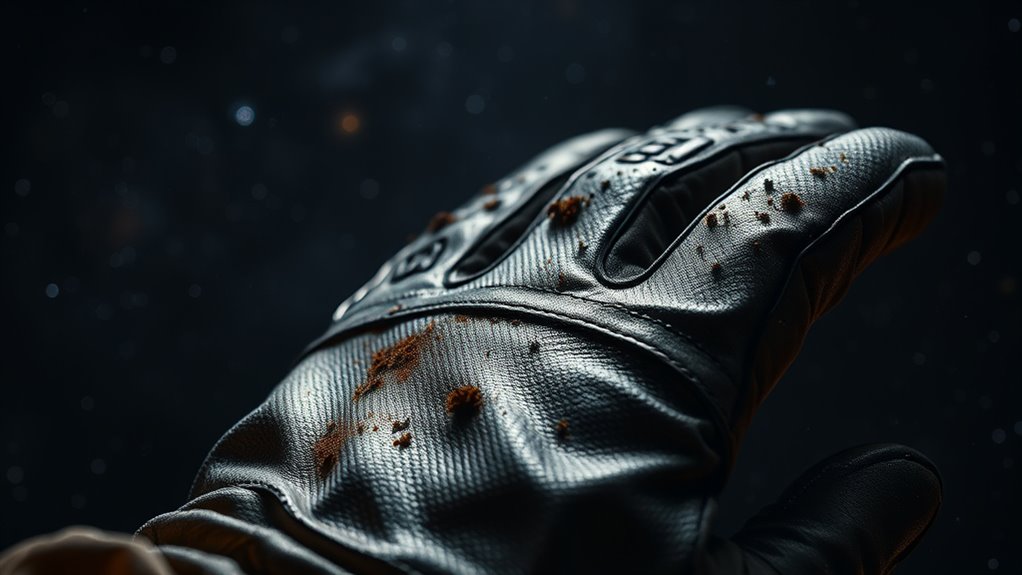

When astronauts say space smells like burnt steak, they’re actually describing the scent from materials and biological processes inside the spacecraft, not space itself. In microgravity, particles from skin, food, and equipment attach to surfaces, creating a lingering aroma reminiscent of burnt or welding fumes. Since air circulation is limited, these odors become more noticeable. Curious why your space journey has this unique smell? Keep exploring, and you’ll uncover the science behind this intriguing phenomenon.
Listen free for 30 days with Audible
Thousands of audiobooks and originals — cancel anytime.
As an affiliate, we earn on qualifying purchases.
Key Takeaways
- The burnt steak smell comes from molecules released by materials, food residues, and equipment during space activities.
- Microgravity causes particles to cling to surfaces, creating a lingering smoky or burnt aroma inside spacecraft.
- Astronauts’ suits and gear absorb these odors, making the smell more noticeable after spacewalks.
- The confined environment and limited airflow trap odors, intensifying the burnt scent described by astronauts.
- Space scent science explains how microgravity influences particle behavior, leading to the characteristic burnt smell in space.
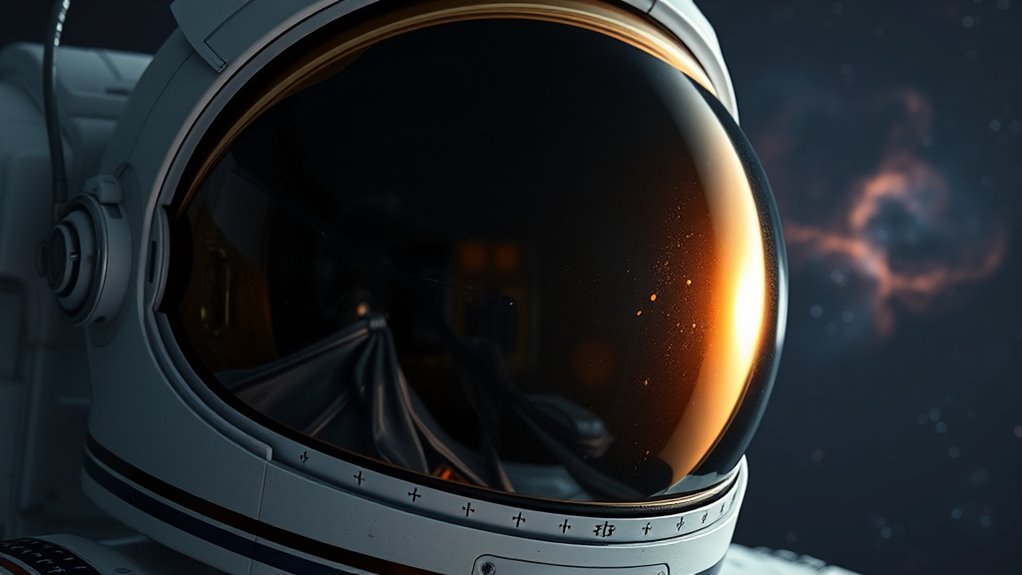
Have you ever wondered what space actually smells like? If you’ve ever spoken to an astronaut or read their accounts, you might have heard them describe a scent reminiscent of burnt steak or welding fumes. It’s a curious phenomenon, especially considering that space itself is a vacuum with no smell. The smell actually comes from the materials and processes inside the spacecraft, where cosmic scent science helps explain the unique aroma. When astronauts return from a spacewalk, they often comment on this distinctive smell lingering on their suits and gear. It’s a scent that’s surprisingly familiar yet utterly alien, and it’s connected to the way particles and molecules behave in the microgravity environment. Microgravity effects play a significant role in how odors develop and persist in space.
Inside a space station, maintaining hygiene is vital, but it’s also a challenge. The confined space means that any scent, whether from body odor, food, or equipment, can quickly become noticeable. Space station hygiene routines involve rigorous cleaning protocols, but despite these efforts, some odors persist because of the limited ventilation options. This is where cosmic scent science becomes relevant—it helps scientists understand how smells develop and linger in the microgravity environment. The science points to tiny particles, like skin flakes, bacteria, and cooking residues, that float around and adhere to surfaces, creating that distinctive aroma astronauts describe. Since there’s no natural airflow like on Earth, smells tend to concentrate, making the scent more noticeable.
Frequently Asked Questions
Can Space Smells Be Harmful to Astronauts?
You’re wondering if space smells can harm astronauts. While the odors, like burnt steak, might be unpleasant, they don’t pose a direct health threat. However, good space hygiene and odor mitigation are essential to keep the environment comfortable and safe. Astronauts use specific cleaning protocols and air filtration systems to prevent odors from becoming a problem, ensuring a healthy, odor-free living space during their missions.
Do All Astronauts Perceive the Smell the Same Way?
Imagine you’re in a cosmic symphony where every astronaut’s scent perception is unique—like snowflakes or fingerprints. While olfactory adaptation influences how you experience space smells, not all astronauts perceive them the same way. Some might find the scent overwhelming, others barely notice it. Your individual nose, experiences, and even psychological state shape your perception, making each person’s scent experience in space a one-of-a-kind interstellar journey.
Is There Any Way to Eliminate the Smell Inside Spacecraft?
If you’re wondering whether there’s a way to eliminate the smell inside spacecraft, odor neutralization and scent control systems are your best options. These systems use activated charcoal filters and chemical agents to absorb or neutralize odors, making the environment more comfortable. While completely removing all scents is challenging, regular maintenance of these systems markedly reduces unwanted smells and improves onboard air quality, helping astronauts breathe easier during their missions.
Has Any Astronaut Ever Found the Smell Unbearable?
Imagine a cosmic aroma so intense that it lingers like an unwelcome guest. You might wonder if any astronaut ever found the odor perception unbearable. While some describe it as a burnt steak smell, most tolerate it well, adapting over time. Rarely does the smell become overwhelming, and astronauts develop coping strategies. Overall, the scent doesn’t usually cross the line into unbearable territory, making space missions manageable despite the unique odor.
Can Space Smells Be Detected Outside the Spacecraft?
You can’t directly detect extraterrestrial odors outside the spacecraft because scent detection methods require close proximity or physical contact. While astronauts report the smell inside, space itself lacks an atmosphere for scent transmission. To study extraterrestrial odors, scientists rely on instruments like mass spectrometers, which analyze particles and gases. These scent detection methods help us understand the composition of space environments, even if we can’t smell them directly from outside.
Conclusion
So, next time you catch a whiff of burnt steak in space—don’t worry, it’s just your cosmic barbecue. While astronauts joke about this strange aroma, it’s really just science’s way of reminding us that even in the silence of the universe, there’s a hint of something familiar, something human. Who knew that exploring the stars would come with the delightful aroma of grilled dinner? Guess even in space, we’re still just craving a good steak.
Evergreen bestsellers Picks
bestsellers
As an affiliate, we earn on qualifying purchases.