When you dip your fingers in water, nerve signals trigger the blood vessels to constrict, causing your skin to wrinkle. This response isn’t accidental; it evolved to improve your grip on wet surfaces, much like tire treads offer better traction. Wrinkling helps prevent slips and falls, making it a useful survival adaptation. If you want to understand how this natural reaction developed and why it’s so important, keep exploring the fascinating science behind it.
Key Takeaways
- Water absorption causes skin swelling, leading to tiny folds or wrinkles on the fingertips.
- Nerve responses trigger blood vessel constriction, accentuating the wrinkles when submerged in water.
- Wrinkling enhances grip in wet conditions, functioning like tire treads to prevent slips.
- The process is an evolved adaptation that improves handling wet objects, aiding survival.
- Damage to nerves inhibits wrinkling, highlighting the vital role of nerve signals in this evolutionary trait.
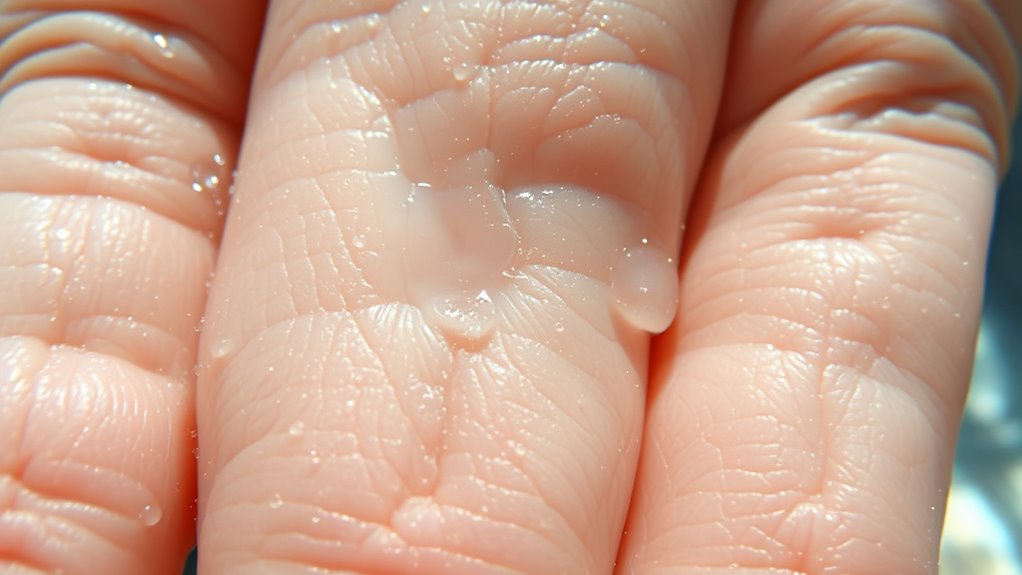
When you spend time in water, you may notice your fingers and toes develop wrinkles. At first glance, it might seem like just a strange side effect of being in the pool or bath, but there’s actually a fascinating reason behind this phenomenon. Your skin undergoes a specific response that involves both skin hydration and nerve response, which work together to create those characteristic wrinkles. These wrinkles aren’t just accidental; they serve a purpose rooted in evolution and survival.
Water-induced skin wrinkles are an adaptive response that enhances grip and survival in wet environments.
As your skin absorbs water, the outermost layer called the stratum corneum becomes swollen and plump with moisture. This process is what we refer to as skin hydration. When your skin is wet, it expands, but the underlying tissues don’t stretch at the same rate. Instead of remaining smooth, your skin forms wrinkles—these tiny folds are a natural response to the increased hydration. But it’s not just a passive process; your nervous system plays a *vital* role here. When your fingers and toes are submerged, nerve responses trigger a constriction of blood vessels beneath the skin. This constriction pulls the skin inward, accentuating the wrinkles further.
This nerve response isn’t random; it appears to be an evolutionary adaptation. Scientists suggest that these wrinkles improve your grip on wet or slippery objects, much like the treads on tires help cars maintain traction. When your skin wrinkles in water, it creates a textured surface that enhances your ability to grip, preventing slips and falls. It’s a subtle but effective survival mechanism. Over time, our bodies have developed this response to help us navigate wet environments more safely. Instead of losing grip or fumbling with wet objects, the wrinkled skin provides increased friction, giving you better control.
Interestingly, this reaction is specific to nerve responses; if nerve signals are blocked or damaged, the wrinkling response doesn’t occur, even if your skin is soaked. That’s why, in some cases, people with nerve damage don’t experience wrinkles when submerged in water. This connection underscores how integral nerve response is to this process and highlights its evolutionary importance.
Recent studies also suggest that this adaptive trait may have become more refined over thousands of years, emphasizing its significance in human survival. In essence, those water-induced wrinkles aren’t just a quirky feature—they’re an *adaptive* trait designed to improve your grip in wet conditions. The combination of skin hydration and nerve response reveals a sophisticated biological response that’s been refined over thousands of years. The next time you notice your fingers with those temporary water wrinkles, remember: your body has evolved this clever mechanism to keep you safer and more effective in wet environments.
waterproof grip gloves for wet conditions
As an affiliate, we earn on qualifying purchases.
As an affiliate, we earn on qualifying purchases.
Frequently Asked Questions
Do All Animals Exhibit Water-Induced Finger Wrinkling?
Not all animals exhibit water-induced finger wrinkling. You see, this response is linked to an evolutionary advantage, helping with grip in wet conditions. It’s caused by a nerve response that controls blood flow, leading to skin wrinkling. Some animals, especially those adapted to aquatic environments, show this trait, while others don’t, because the nerve response isn’t necessary for their survival or doesn’t provide a benefit.
Can Finger Wrinkling Occur Without Water Immersion?
You might notice your fingers wrinkle even without water immersion, but it’s rare. Skin elasticity and nerve response usually require moisture to trigger the wrinkling process. When skin stays dry, your nerves don’t signal the muscles to contract, so the skin stays smooth. Typically, water exposure changes skin elasticity and activates nerve response, causing wrinkling. So, in most cases, water is essential for those characteristic finger wrinkles to appear.
How Long Does It Take for Fingers to Wrinkle in Water?
Ever wonder how quickly your fingers respond to water? Typically, it takes about 10 to 15 minutes of water absorption for your skin to wrinkle, thanks to changes in skin elasticity. Your nervous system triggers this response, possibly to improve grip in wet conditions. So, next time you’re in the bath or pool, remember that your skin’s wrinkling is a quick, adaptive reaction to water exposure.
Does Age Affect the Degree of Finger Wrinkling?
As you age, you notice that your fingers tend to wrinkle more or less differently. Age-related skin changes, like loss of elasticity and moisture, can influence how your skin reacts to water. Developmental milestones over your life affect your skin’s structure, making wrinkles more pronounced or less noticeable. So, your age can indeed impact the degree of finger wrinkling, reflecting your skin’s ongoing changes over time.
Are There Health Conditions Linked to Abnormal Finger Wrinkling?
You might notice abnormal finger wrinkling linked to health conditions affecting skin hydration or nerve function. Dehydration can make your skin appear dry and less prone to wrinkling, while nerve issues might impair your body’s ability to regulate skin responses, leading to unusual wrinkling patterns. Conditions like diabetes or peripheral neuropathy can influence this process. If you observe persistent or abnormal wrinkling, it’s best to consult a healthcare professional for proper diagnosis and care.
As an affiliate, we earn on qualifying purchases.
Conclusion
So, next time your fingers wrinkle after a swim, think about the fascinating evolutionary purpose behind it. Could those tiny creases actually be nature’s way of helping you grip wet objects better? It’s incredible how our bodies adapt over time for survival. Remember, these wrinkles aren’t just a quirky side effect—they’re a clever design feature. Isn’t it amazing how something as simple as water-induced wrinkles reveals the ingenuity of evolution?
As an affiliate, we earn on qualifying purchases.
As an affiliate, we earn on qualifying purchases.