Choosing a computerized telescope can seem overwhelming, given the variety of features and price points available. The best models offer smart navigation and user-friendly interfaces, but often come with tradeoffs like size, complexity, or cost. The Celestron NexStar 8SE stands out as the overall best thanks to its powerful optics and reliable tracking. For beginners, the Celestron AstroMaster 130EQ offers simplicity and value. Meanwhile, the ZWO Seestar S30 Pro provides cutting-edge astrophotography capabilities for advanced users. Keep reading for a detailed breakdown of these options and what makes each one unique.

Get movie-night favorites delivered free — and shop member deals
- Fast, free delivery on millions of items
- Access to Prime Big Deal Days deals on October 6–7
- Prime Video, Amazon Music and more included
Key Takeaways
- Top picks vary significantly based on user experience, with some models focusing on ease of use and others on advanced astrophotography.
- Size and portability are key considerations; more powerful telescopes tend to be larger and less portable.
- Price often correlates with features, but the most expensive models aren’t always the best choice for beginners.
- Build quality and reliability are consistent across top brands like Celestron, making them a safe bet for long-term use.
- The choice between Maksutov-Cassegrain, Schmidt-Cassegrain, and refractor designs impacts ease of setup, maintenance, and image quality.
| Celestron NexStar 5SE Schmidt-Cassegrain Computerized Telescope |  | Best Overall for Versatile Amateur Astronomy | Aperture: 5 inches | Optics: Schmidt-Cassegrain with Starbright XLT coatings | Mount Type: Computerized GoTo | VIEW ON AMAZON | See Our Full Breakdown |
| Celestron 114LCM Computerized Reflector Telescope for Beginners |  | Best Value for Entry-Level Astronomy | Type: Reflector Telescope | Optics: All glass optics | Mount: Computerized GoTo | VIEW ON AMAZON | See Our Full Breakdown |
| ZWO Seestar S30 Pro Smart Telescope, App-Controlled Astrophotography |  | Best for Urban Beginners and App-Driven Imaging | Weight: 3.64 lbs | Imaging: Dual-camera 4K | Features: Automatic GOTO, AI Smart Imaging, filters, anti-dew | VIEW ON AMAZON | See Our Full Breakdown |
| Celestron NexStar 8SE Computerized Telescope – Schmidt-Cassegrain |  | Best for Serious Deep-Sky Observers | Aperture: 8 inches | Mount Type: Computerized GoTo | Optics: Schmidt-Cassegrain | VIEW ON AMAZON | See Our Full Breakdown |
| Celestron NexStar 4SE Maksutov-Cassegrain GoTo Telescope |  | Best for Portability and Planetary Observation | Optics: 4-inch Maksutov-Cassegrain | Focal Length: 1325mm | Focal Ratio: f13 | VIEW ON AMAZON | See Our Full Breakdown |
| Celestron NexStar 102SLT Computerized Refractor Telescope |  | Best for Beginners Who Want Portability and Ease of Use | Aperture: 102mm | Optical Design: Refractor | Technology: SkyAlign | VIEW ON AMAZON | See Our Full Breakdown |
| Celestron NexStar 127SLT Maksutov-Cassegrain Computerized GoTo Telescope |  | Best for Intermediate Users Wanting Bright, Corrected Views | Optical Design: Maksutov-Cassegrain | Aperture: 127mm | Database: 40,000+ objects | VIEW ON AMAZON | See Our Full Breakdown |
| Celestron NexStar 6SE Schmidt-Cassegrain Telescope | 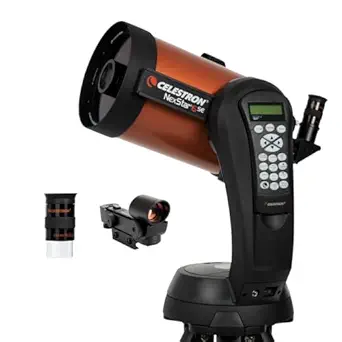 | Best for Intermediate to Advanced Users Seeking Power & Flexibility | Aperture: 6 inches | Optics: Schmidt-Cassegrain | Mount: Automated GoTo | VIEW ON AMAZON | See Our Full Breakdown |
| Celestron NexStar 90SLT Maksutov-Cassegrain Portable Telescope for Planets |  | Best for Portability and Quick Setup for Planetary Observation | Optical Design: Maksutov-Cassegrain | Aperture: 90mm | Tripod: Adjustable steel | VIEW ON AMAZON | See Our Full Breakdown |
| Celestron AstroMaster 130EQ Telescope for Beginners |  | Best for Beginners Wanting an Affordable, High-Quality Entry-Level Scope | Optics: 130mm Newtonian reflector | Mount: Equatorial | Eyepieces: 20mm and 10mm | VIEW ON AMAZON | See Our Full Breakdown |
| telescope computerized | Aperture | Optics | Warranty |
|---|---|---|---|
| Celestron NexStar 5SE Schmidt- | 5 inches | Schmidt-Cassegrain with Starbright XLT coatings | 2 years |
| Celestron 114LCM Computerized | — | All glass optics | — |
| ZWO Seestar S30 Pro Smart Tele | — | — | — |
| Celestron NexStar 8SE Computer | 8 inches | Schmidt-Cassegrain | 2 years |
| Celestron NexStar 4SE Maksutov | — | 4-inch Maksutov-Cassegrain | — |
| Celestron NexStar 102SLT Compu | 102mm | — | 2 years |
| Celestron NexStar 127SLT Maksu | 127mm | — | 2 years |
| Celestron NexStar 6SE Schmidt- | 6 inches | Schmidt-Cassegrain | 2 years |
| Celestron NexStar 90SLT Maksut | 90mm | — | — |
| Celestron AstroMaster 130EQ Te | — | 130mm Newtonian reflector | 2-year US warranty |
More Details on Our Top Picks
Celestron NexStar 5SE Schmidt-Cassegrain Computerized Telescope
The Celestron NexStar 5SE stands out for its balance of portability and advanced features, making it the top choice for those who want a reliable, all-around computerized telescope. Its 5-inch Schmidt-Cassegrain optics deliver high-contrast images of the Moon, planets, and some deep-sky objects, comparable to larger scopes like the NexStar 8SE, but with a more manageable size. The fully automated GoTo mount and the NexStar+ hand control simplify object locating, especially for beginners. However, the included eyepiece offers basic magnification, and expanding capabilities requires additional accessories. While setup is straightforward, some new users might face a learning curve with the computerized system. Its portability and ease of use make it an excellent starting point, though it may feel limited for more serious astrophotography without extra equipment.
Pros:- Portable and easy to set up without tools
- Automated GoTo system simplifies object finding
- High-quality optics with crisp, high-contrast images
- Suitable for astrophotography with built-in wedge
Cons:- Limited to basic eyepieces included, limiting initial magnification options
- May require learning curve for those unfamiliar with computerized mounts
- Size may be restrictive for very compact storage needs
Best for: Beginners and casual astronomers seeking a portable yet capable telescope with automated features
Not ideal for: Advanced astrophotographers or users requiring extensive optics customization, as it offers limited upgrade options
- Aperture:5 inches
- Optics:Schmidt-Cassegrain with Starbright XLT coatings
- Mount Type:Computerized GoTo
- Hand Control:NexStar+
- Object Database:40,000+ objects
- Included Eyepiece:25mm plossl (50x magnification)
- Warranty:2 years
Our verdict“This telescope is ideal for beginners and casual users who want reliable automation in a portable package.”
Celestron 114LCM Computerized Reflector Telescope for Beginners
The Celestron 114LCM offers an excellent entry point into computerized stargazing, especially when compared with larger, more expensive scopes like the NexStar 8SE. Its 114mm all-glass optics provide clear views of brighter celestial objects, making it suitable for casual observers and those just starting out. The fully computerized GoTo mount can locate over 4,000 objects automatically, streamlining the learning curve. The included accessories—two eyepieces, a red dot finder, and astronomy software—add versatility without extra cost. However, its optics are not designed for highly detailed astrophotography, and setup requires some initial alignment. Despite these limitations, it excels in portability and ease of use, serving well for backyard and camping stargazing, but it isn’t ideal for advanced imaging or deep-sky pursuits beyond beginner level.
Pros:- Automatic star locating for over 4,000 celestial objects
- Includes multiple eyepieces and red dot finderscope
- Portable and lightweight, perfect for outdoor use
- Free astronomy software enhances the experience
Cons:- Limited to beginner and casual astronomy use, not suited for advanced imaging
- Requires setup and alignment, which may challenge absolute beginners
- Optics are not ideal for detailed astrophotography
Best for: Beginners and casual enthusiasts wanting an affordable, automatic telescope for general stargazing
Not ideal for: Experienced astronomers or astrophotographers seeking high-resolution imaging or deep-sky detail
- Type:Reflector Telescope
- Optics:All glass optics
- Mount:Computerized GoTo
- Celestial objects tracked:4,000+
- Eyepieces:25mm & 9mm
- Tripod:Full-height aluminum tripod
- Software:Starry Night Basic Edition
Our verdict“This scope offers excellent value for newcomers seeking automated features and portability without the complexity of advanced setups.”
ZWO Seestar S30 Pro Smart Telescope, App-Controlled Astrophotography
The ZWO Seestar S30 Pro stands out for its combination of portability and high-tech imaging, making it accessible for urban dwellers or those new to astrophotography. Its automatic GOTO and AI-enhanced photo capabilities deliver detailed 4K images, comparable to larger setups but with the convenience of a compact design. The app control simplifies operation, especially for users unfamiliar with traditional telescope mounts. However, some might find the specifications limited in detail, and urban light pollution can still impact image quality despite built-in filters. This model is best suited for casual astrophotographers who want quick results and easy operation, rather than deep-sky exploration or extensive customization.
Pros:- Easy to operate with automatic GOTO and app control
- High-resolution 4K dual-camera imaging for detailed photos
- Compact and lightweight, ideal for outdoor adventures
- AI features enhance photo quality in challenging lighting conditions
Cons:- Limited detailed technical specifications in the description
- Dependent on smartphone app, which may not appeal to all users
- Urban light pollution can still affect image clarity despite filters
Best for: Beginners and urban astronomers interested in quick, high-quality astrophotography with minimal setup
Not ideal for: Advanced astrophotographers or those seeking long-exposure deep-sky imaging with extensive control options
- Weight:3.64 lbs
- Imaging:Dual-camera 4K
- Features:Automatic GOTO, AI Smart Imaging, filters, anti-dew
- Connectivity:App-controlled
Our verdict“This telescope is perfect for beginners wanting quick, impressive astrophotos without complex hardware or setups.”
Celestron NexStar 8SE Computerized Telescope – Schmidt-Cassegrain
The Celestron NexStar 8SE offers a significant upgrade in aperture and light-gathering ability compared to smaller scopes like the 5SE or 4SE, making it ideal for those focused on detailed lunar, planetary, and deep-sky views. Its 8-inch Schmidt-Cassegrain optics provide brighter images and better resolution, especially when paired with its fully automated GoTo system and SkyAlign technology. The larger size and weight, however, reduce portability, and it demands a dedicated power source, which may limit field use. This scope’s price reflects its advanced capabilities, making it less suitable for casual or beginner users who prioritize portability or simplicity. For serious astronomers aiming for high-resolution imaging or detailed deep-sky observation, this scope offers a compelling combination of size and automation.
Pros:- Large 8-inch aperture for detailed lunar and planetary views
- Fully automated GoTo and SkyAlign technology simplifies object location
- Excellent for deep-sky imaging with improved light collection
- Robust build suitable for serious astronomers
Cons:- Heavy and less portable for frequent travel or field use
- Requires power source, limiting outdoor flexibility
- Higher price point may deter beginners
Best for: Intermediate and advanced astronomers seeking high-quality deep-sky viewing and astrophotography
Not ideal for: Beginners or casual users who need a lightweight, portable setup due to its weight and complexity
- Aperture:8 inches
- Mount Type:Computerized GoTo
- Optics:Schmidt-Cassegrain
- Alignment Technology:SkyAlign
- Warranty:2 years
Our verdict“This scope is best suited for dedicated astronomers seeking high performance and deep-sky capabilities without portability concerns.”
Celestron NexStar 4SE Maksutov-Cassegrain GoTo Telescope
The Celestron NexStar 4SE combines portability with effective planetary and lunar viewing, making it ideal for users who want a compact, easy-to-use scope. Its 4-inch Maksutov-Cassegrain optics deliver sharp images of the Moon and planets, with the automated GoTo mount and SkyAlign technology enabling quick setup. Compared to larger scopes like the 8SE, the 4SE’s smaller aperture limits its deep-sky capabilities, but its lightweight design and built-in photographic port make it attractive for astrophotography in a portable package. The initial learning curve for the GoTo system can be a hurdle for absolute beginners, but once mastered, it offers reliable tracking. This scope makes a good choice for casual planetary observers and travelers who prioritize ease of transport.
Pros:- Compact and portable design for travel and quick setup
- Automated GoTo with SkyAlign simplifies object location
- Excellent optics for sharp lunar and planetary images
- Includes photographic port for basic astrophotography
Cons:- Weight may still be a concern for some portability needs
- Limited aperture reduces capability for deep-sky imaging
- Initial setup may be slightly complex for absolute beginners
Best for: Beginners and planetary enthusiasts who want an easy-to-transport, high-quality view of Moon and planets
Not ideal for: Deep-sky astrophotographers or users seeking large aperture and long exposures, due to its limited size and light-gathering
- Optics:4-inch Maksutov-Cassegrain
- Focal Length:1325mm
- Focal Ratio:f13
- Weight:21 pounds
- Included Accessories:NexStar+ hand control, built-in wedge, photographic port
Our verdict“This telescope offers a high-quality planetary view in a portable form, best for casual observers and travelers.”
Celestron NexStar 102SLT Computerized Refractor Telescope
The NexStar 102SLT stands out for its portability and quick setup, making it ideal for newcomers wanting to explore planets and the Moon without lugging around heavy gear. Its SkyAlign technology simplifies alignment, and the included Starry Night software enhances the experience. Compared with larger scopes like the NexStar 6SE, this refractor offers less aperture, limiting deep-sky viewing, but excels in planetary detail and lunar clarity. The main tradeoff is its limited suitability for advanced astrophotography and potential assembly challenges for absolute beginners. Overall, this pick makes the most sense for casual skywatchers seeking a portable, straightforward telescope that gets them observing quickly.
Pros:- Portable and lightweight for easy transport
- Quick setup with SkyAlign technology
- Includes astronomy software for sky simulation
- High-quality optics for planetary and lunar views
Cons:- Limited aperture restricts deep-sky observation
- Requires power source for operation
- Assembly may be challenging for complete beginners
Best for: Beginners or casual astronomers who prioritize portability and ease of setup
Not ideal for: Experienced astronomers or astrophotographers seeking high magnification and deep-sky imaging capabilities
- Aperture:102mm
- Optical Design:Refractor
- Technology:SkyAlign
- Included Software:Starry Night
- Warranty:2 years
Our verdict“This telescope is perfect for beginners wanting a simple, portable setup for planetary and lunar viewing.”
Celestron NexStar 127SLT Maksutov-Cassegrain Computerized GoTo Telescope
The NexStar 127SLT is well-suited for users who want a portable yet capable telescope that offers bright, sharp images of the Moon and planets. Its Maksutov-Cassegrain design provides excellent color correction, outperforming refractors like the NexStar 102SLT in planetary detail. While it’s more advanced than entry-level scopes, it still maintains user-friendly features like SkyAlign and automatic object tracking. The main tradeoff involves some setup and alignment time, which can be a hurdle for absolute beginners. Compared to larger scopes like the 6SE, it’s less suitable for deep-sky viewing, but shines for planetary enthusiasts and those wanting a portable, high-quality optical system.
Pros:- Bright, color-corrected images of planets and Moon
- Automatic object locating and tracking
- Portable and easy to transport
- Includes specialized software for learning
Cons:- Requires some setup and alignment
- Limited for deep-sky astrophotography
- May be challenging for users without prior experience
Best for: Astronomy enthusiasts seeking bright, detailed planetary views in a portable package
Not ideal for: Complete beginners unfamiliar with telescope setup or users primarily interested in deep-sky astrophotography
- Optical Design:Maksutov-Cassegrain
- Aperture:127mm
- Database:40,000+ objects
- Tripod:Adjustable steel
- Included Software:Starry Night Special Edition
- Warranty:2 years
Our verdict“This telescope offers bright planetary views for enthusiasts willing to handle some setup complexity.”
Celestron NexStar 6SE Schmidt-Cassegrain Telescope
The NexStar 6SE stands out for its substantial 6-inch aperture, delivering detailed lunar and planetary images and impressive deep-sky views. Its Schmidt-Cassegrain design offers a compact form factor with excellent light-gathering ability, outperforming smaller models like the NexStar 102SLT. The fully automated SkyAlign system simplifies setup, while the extensive database of over 40,000 objects makes it ideal for dedicated amateur astronomers. The tradeoff is its weight and size—less portable than smaller scopes—and the need for a power supply during use. It’s a clear step up for those ready to invest in a versatile, upgradeable telescope that can handle more serious observing and some astrophotography with additional accessories.
Pros:- Powerful 6-inch aperture for detailed lunar and planetary views
- Automated GoTo with extensive object database
- Easy to set up with SkyAlign technology
- Upgradeable with various accessories
Cons:- Heavy and less portable than smaller models
- Requires a power source for operation
- More complex setup than smaller telescopes
Best for: Intermediate astronomers seeking a powerful, upgrade-ready telescope with detailed views
Not ideal for: Beginners or users prioritizing portability over power and flexibility
- Aperture:6 inches
- Optics:Schmidt-Cassegrain
- Mount:Automated GoTo
- Object Database:40,000+ objects
- Alignment Technology:SkyAlign
- Warranty:2 years
Our verdict“This scope offers a versatile, powerful platform for intermediate users ready to explore more serious astronomy.”
Celestron NexStar 90SLT Maksutov-Cassegrain Portable Telescope for Planets
The NexStar 90SLT is a compact, lightweight telescope ideal for users wanting quick, reliable planetary and lunar views. Its Maksutov-Cassegrain optics provide sharp, color-corrected images, rivaling larger scopes like the 127SLT in brightness but with far greater portability. The SkyAlign technology simplifies setup, and the large celestial database extends viewing options. The main tradeoff is its smaller 90mm aperture, which limits its ability to perform detailed deep-sky astrophotography or view faint objects. It’s best suited for users who want a portable, beginner-friendly scope with decent planetary performance without the bulk of larger telescopes.
Pros:- Compact and lightweight for easy transportation
- Quick and simple SkyAlign setup
- Good optical quality for planetary views
- Large celestial object database
Cons:- Limited aperture reduces deep-sky capabilities
- Requires setup and alignment for optimal use
- Less suitable for detailed astrophotography
Best for: Travelers and casual observers focused on planets and the Moon
Not ideal for: Advanced amateur astronomers or those interested in deep-sky astrophotography demanding larger apertures
- Optical Design:Maksutov-Cassegrain
- Aperture:90mm
- Tripod:Adjustable steel
- Object Database:Over 40,000 objects
- Included Software:Starry Night Special Edition
- Hand Control:NexStarPlus
Our verdict“This telescope provides a portable, easy-to-use option focused on planetary and lunar observation for on-the-go viewing.”
Celestron AstroMaster 130EQ Telescope for Beginners
The AstroMaster 130EQ appeals to newcomers seeking a high-quality, manual reflector with solid optics and stable mounting. Its 130mm Newtonian reflector provides bright, clear images of planets and some deep-sky objects, surpassing smaller beginner scopes in light gathering. The equatorial mount allows for more precise tracking once aligned, though manual controls require practice to master. Compared to computerized scopes like the NexStar 102SLT, it lacks automatic object locating but offers more control for users interested in learning star-hopping. The main tradeoff involves the manual operation, which can be less convenient for casual stargazing. This model is best for those wanting a straightforward, upgradeable scope with decent power for their first serious observing experience.
Pros:- High-quality 130mm optics for clear views
- Stable equatorial mount with smooth controls
- Quick assembly with no tools required
- Includes useful accessories and software
Cons:- Manual controls may require practice for precise tracking
- Limited advanced features compared to computerized models
- More setup time compared to simpler telescopes
Best for: Beginner astronomers interested in manual control and basic deep-sky viewing
Not ideal for: Users who prefer automatic tracking or minimal setup effort
- Optics:130mm Newtonian reflector
- Mount:Equatorial
- Eyepieces:20mm and 10mm
- Finderscope:StarPointer red dot
- Setup:Quick assembly, no tools required
- Warranty:2-year US warranty
Our verdict“This telescope offers a strong starting point for beginners who want manual control and decent deep-sky capability.”

How We Picked
Our evaluation process centered on performance, usability, build quality, and value. We prioritized models that balance ease of setup with reliable tracking and clarity. Price was also a factor, but higher cost didn’t automatically mean better quality—features like astrophotography capabilities and expandability weighed heavily. We compared each telescope’s technical specs, user reviews, and brand reputation to create a lineup that caters to different skill levels and needs. The final rankings reflect a mix of beginner-friendly options, mid-range performers, and professional-grade systems, with clear distinctions based on how each model meets specific user requirements.Factors to Consider When Choosing Telescope Computerized
When selecting a computerized telescope, it’s essential to consider factors that impact your stargazing experience and long-term satisfaction. Understanding how features align with your goals can prevent costly mistakes and ensure you get a model that truly fits your needs. The following sections highlight key considerations that go beyond specs, helping you make an informed choice.Ease of Use and Setup
Ease of setup is vital, especially for beginners. Look for telescopes with intuitive interfaces, clear instructions, and minimal assembly requirements. Some models include automated alignment features that significantly reduce setup time, making stargazing sessions more enjoyable. Avoid overly complex systems if you prefer quick setup and straightforward operation, but recognize that more advanced models may require a learning curve to unlock their full potential.
Optical Quality and Aperture
The size of the telescope’s aperture directly affects image brightness and detail. Larger apertures gather more light, revealing fainter objects, but often come with increased size and cost. For planetary viewing, a Maksutov or refractor with a smaller aperture might suffice, while deep-sky observers benefit from larger Schmidt-Cassegrain models. Remember, high-quality optics matter more than sheer size; cheap lenses can ruin otherwise excellent systems.
Tracking and Mount Stability
Reliable tracking is essential for astrophotography and detailed observation. Look for models with precise GoTo systems and sturdy mounts that minimize vibrations. Some inexpensive models may drift or lose alignment quickly, frustrating your session. Consider your intended use—if astrophotography is a priority, investing in a more stable, motorized mount pays off with clearer images and less frustration.
Portability and Size
Portability influences how often and where you can observe. Larger telescopes with big mounts are more challenging to transport, while compact models excel for field trips or casual backyard use. Balance size with your observation habits and storage options. Remember, a highly portable telescope might sacrifice some optical power or stability, so weigh convenience against your desired performance level.
Price and Future Expandability
While budget constraints are real, avoid compromising on critical features that limit future upgrades. Some models offer modular components, allowing you to add accessories or enhanced capabilities later. Conversely, very inexpensive telescopes may lack the robustness and accuracy needed for serious observing or astrophotography, leading to frustration and additional costs down the line. Prioritize a model that aligns with your current needs but also offers room to grow.
Frequently Asked Questions
Is a more expensive computerized telescope worth the investment?
Higher-priced models often provide better optics, more accurate tracking, and advanced features like integrated astrophotography tools. If you plan to pursue serious astronomy or astrophotography, investing in a more expensive telescope can pay off in better image quality and longer-lasting performance. However, for casual stargazing or beginners, mid-range options can deliver excellent value without the steep price tag, making it worth assessing your long-term goals before spending more.
Can I upgrade a basic computerized telescope later?
Many computerized telescopes are designed with modularity in mind, allowing you to add accessories such as camera adapters, additional eyepieces, or improved mounts. However, significant upgrades—like replacing the mount or main optical components—may be limited or costly. When choosing a beginner model, consider whether it offers expandability to avoid outgrowing your equipment prematurely. Planning for future upgrades can help you get the most value from your initial investment.
How important is the brand when selecting a computerized telescope?
Brand reputation often correlates with build quality, reliability, and after-sales support. Companies like Celestron have established histories of producing durable, well-supported models with consistent firmware updates. Choosing a reputable brand can reduce the risk of technical issues and ensure you receive necessary software and hardware support over time. Nonetheless, some lesser-known brands may offer competitive features at lower prices, so it’s wise to review user feedback and warranty policies.
Is a GoTo system essential for beginner astronomers?
A GoTo system automates object location, making it easier for beginners to find planets, stars, and deep-sky objects without manual star-hopping. While it simplifies setup and reduces frustration, it does add complexity and cost. Beginners who enjoy learning the night sky manually or are interested in developing their skills might prefer simpler, manual mounts. However, for those eager to observe more objects with less hassle, a GoTo system can significantly enhance the experience.
What should I consider if I want to do astrophotography with a computerized telescope?
Astrophotography demands precise tracking, stable mounts, and often higher optical quality. Look for models with motorized, computerized mounts capable of long exposures, and consider if the system supports camera adapters. Some telescopes come with integrated imaging software, which simplifies capturing and stacking images. Keep in mind that dedicated astrophotography setups tend to be more complex and expensive, but they provide the stability and accuracy needed for detailed astrophotos.
Conclusion
For casual stargazers or beginners, the Celestron AstroMaster 130EQ offers straightforward operation and great value. Serious amateurs and those interested in astrophotography should consider the Celestron NexStar 8SE for its powerful optics and reliable tracking. If portability and quick setup are priorities, the ZWO Seestar S30 Pro provides a compact, app-controlled experience. For experienced users seeking the best overall system, investing in a high-end Schmidt-Cassegrain model can open new horizons. Ultimately, your choice should align with your experience level, observing goals, and budget, ensuring years of rewarding astronomy.
As an affiliate, we earn on qualifying purchases.Fall Picks
fall essentials