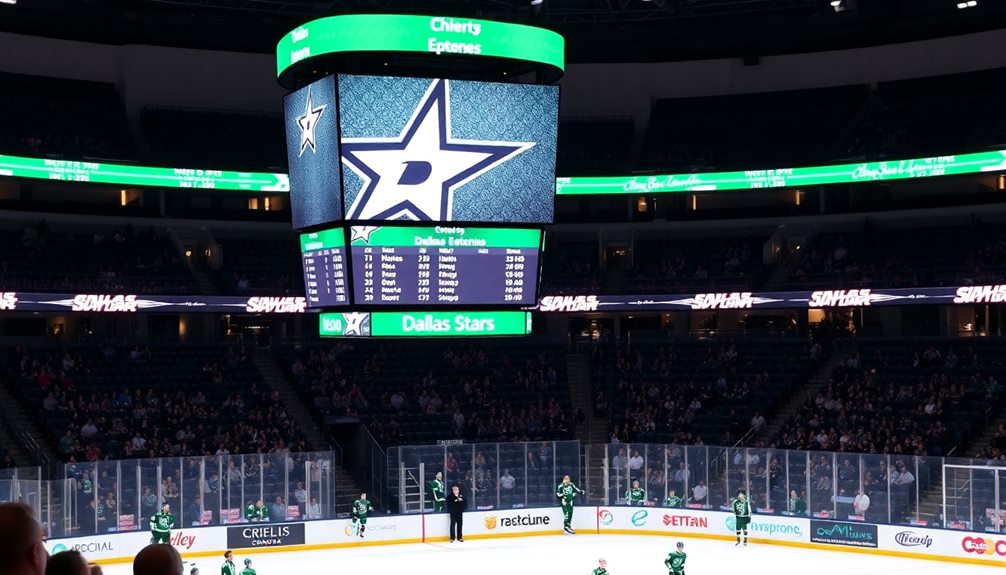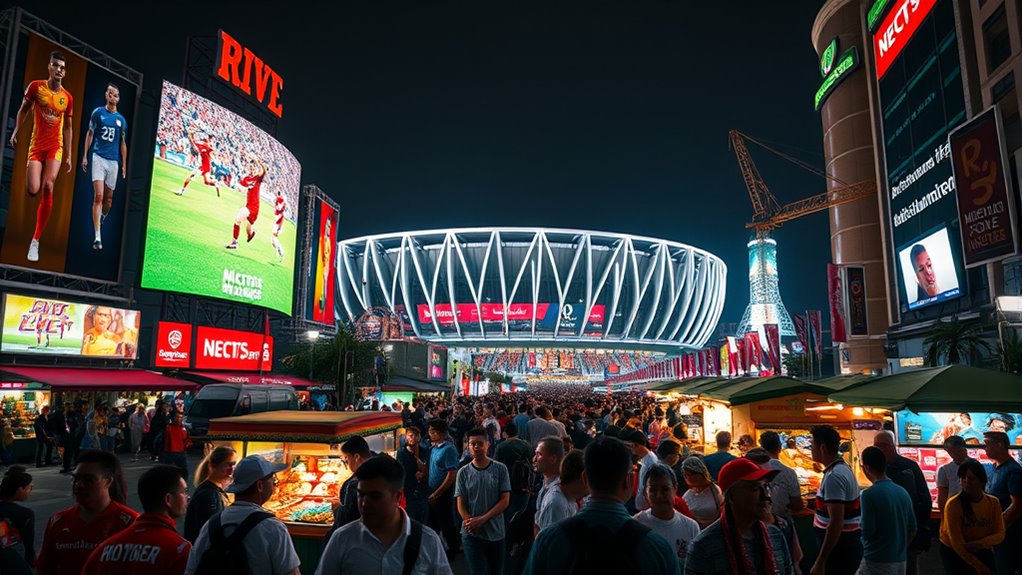

Sports tourism boosts your local economy during major events by increasing visitor spending at hotels, restaurants, and shops. It creates jobs and generates tax revenue that funds public services and infrastructure. The influx of visitors also enhances city visibility, attracting future tourism and business opportunities. Investments in infrastructure leave a lasting legacy, supporting ongoing growth. To understand how these benefits work together and impact your community long-term, explore further insights below.
Key Takeaways
- Visitors’ spending on accommodations, dining, and retail boosts local businesses and increases tax revenues.
- Infrastructure investments enhance city accessibility and create long-term community assets.
- Events elevate city visibility, attracting future tourists and encouraging ongoing tourism growth.
- Hosting major events fosters cultural exchange and community pride, strengthening local social fabric.
- Legacy infrastructure supports sustained economic development and continued community benefits beyond the event.
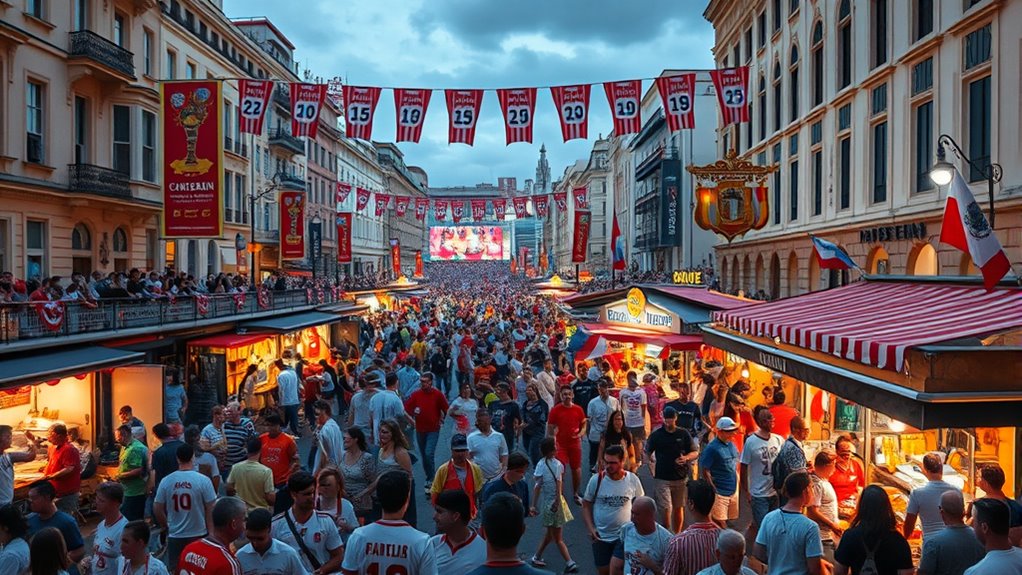
Have you ever wondered how hosting a major sporting event can boost a local economy? When a city prepares to welcome thousands of visitors for a big game or tournament, it often invests heavily in sports infrastructure. This includes building new stadiums, upgrading existing facilities, and improving transportation networks. These improvements don’t just serve the event itself; they leave a lasting impact that benefits the community long after the crowds have gone. Modern sports infrastructure attracts future events, teams, and tourists, creating a cycle of ongoing economic growth. Better facilities also encourage local participation in sports, promoting health and community engagement, which can lead to increased spending at local businesses.
Hosting major sporting events boosts local economies through infrastructure, tourism, and community engagement.
As visitors arrive, they bring more than just their enthusiasm for the game—they bring their spending power. Hotels, restaurants, retail shops, and entertainment venues see a surge in customers, often filling up at a time when the city might otherwise experience a slowdown. This influx of visitors generates immediate income and creates jobs, from hospitality staff to event organizers. In turn, local governments often see increased tax revenues, which can be reinvested into public services and infrastructure projects, fueling further development. The economic ripple effect extends beyond the event days; local entrepreneurs often capitalize on the heightened visibility by launching new businesses or expanding existing ones, creating a more vibrant local economy overall.
Beyond the economic benefits, major sporting events foster cultural exchange, which can have long-term positive effects. When visitors from different parts of the world come together, they share customs, traditions, and ideas, enriching the local cultural landscape. This cultural exchange can boost tourism even after the event ends, as visitors spread positive word-of-mouth about their experiences. Additionally, it fosters a sense of global community and pride among residents, encouraging more international visitors in the future. The exposure to diverse cultures may inspire local residents to embrace new traditions and broaden their perspectives, making the city more attractive to future tourists.
In essence, hosting major sporting events is about more than just the game itself. It’s about leveraging sports infrastructure to create a hub of activity that fuels economic growth and cultural exchange. By investing in quality facilities and welcoming visitors from around the world, you help establish a legacy that benefits the community for years to come. This holistic approach ensures that the economic boost from sports tourism isn’t fleeting but a foundation for sustained development and global connection.
Top picks for "sport tourism boost"
As an affiliate, we earn on qualifying purchases.
Frequently Asked Questions
How Do Local Businesses Prepare for Increased Sports Tourism?
You prepare for increased sports tourism by ramping up your event marketing and tourism marketing efforts. You can offer special promotions, extend hours, and enhance your online presence to attract visitors. Collaborate with local agencies to create appealing packages, and guarantee your staff is trained to handle the influx. By actively promoting your business through targeted marketing strategies, you’ll capitalize on the event’s momentum and boost your revenue during peak times.
What Types of Infrastructure Investments Are Most Beneficial?
Think of infrastructure investments like building a sturdy bridge that guides visitors smoothly into your city. Upgrading transportation systems guarantees easy access, while stadium enhancements create memorable experiences. For example, a city that invested in efficient transit and modernized venues saw a 25% increase in visitor spending during events. These investments make your city more welcoming, boosting local businesses and creating lasting economic benefits during major sporting events.
How Is Environmental Sustainability Managed During Major Sporting Events?
During major sporting events, you can support environmental sustainability by promoting green initiatives like renewable energy use and eco-friendly transportation. Waste management strategies are vital, so organize recycling programs and minimize single-use plastics. Encourage event organizers to implement sustainable practices, reducing carbon footprints and conserving resources. By actively participating and advocating for these measures, you help guarantee the event benefits the community while protecting the environment for future generations.
What Are the Long-Term Economic Impacts Beyond the Event Period?
Think of the long-term economic impacts like planting a tree—you see benefits grow over time. Your city gains legacy effects through increased tourism, improved infrastructure, and enhanced global reputation. These events encourage economic diversification, reducing reliance on a single industry, and creating new opportunities. As a result, your local economy becomes more resilient, sustainable, and better positioned for future growth well beyond the event period.
How Do Local Residents Perceive the Benefits Versus Disruptions?
You might find that community acceptance varies; some residents appreciate the economic benefits and increased cultural exposure, while others feel disruptions like noise, traffic, and overcrowding affect their daily lives. The cultural impact can be positive, fostering pride and unity, but it can also cause tension if local traditions are overlooked. Ultimately, your perception depends on how well the event organizers engage with the community and address concerns.
Conclusion
As you experience a major sports event, remember you’re opening a door to a bustling marketplace of opportunity. Sports tourism acts like a spark that ignites local economies, fueling growth and creating opportunities for everyone. The ripple effect spreads through hotels, restaurants, and shops, transforming the area into a vibrant hub of activity. By supporting these events, you’re planting seeds that blossom into lasting prosperity, turning a moment into a blooming garden of economic significance.