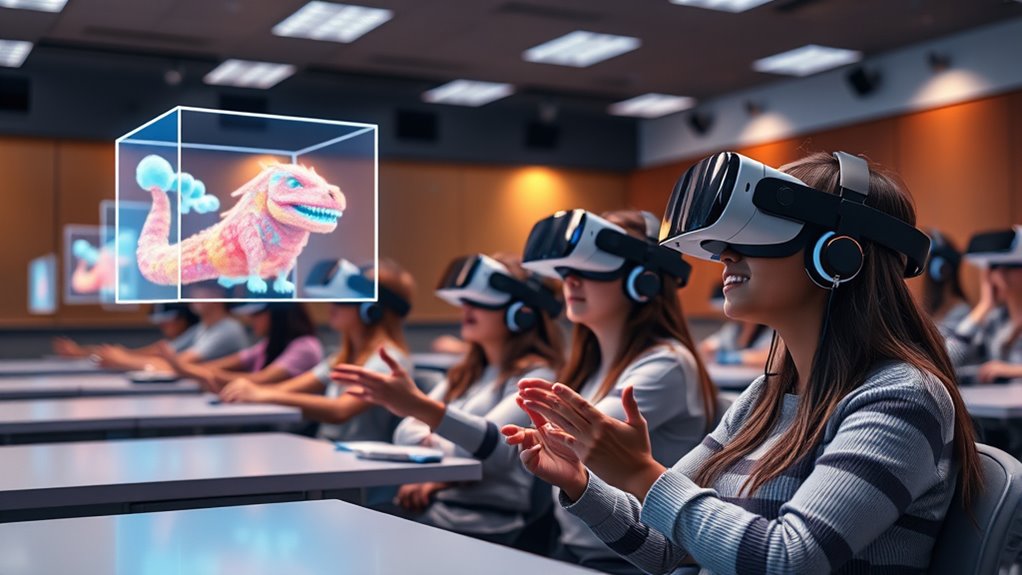

Virtual reality classrooms can boost your learning by making lessons more engaging and interactive. When you explore concepts firsthand with immersive simulations, you tend to remember information better and stay curious. However, technological issues and accessibility barriers may limit these benefits for some students. Overcoming these challenges can lead to deeper understanding and more impactful experiences. If you explore further, you’ll discover how these factors shape the true potential of VR in education.

Get movie nights delivered free with Prime
- Fast, free delivery on millions of items
- Prime Video, Amazon Music and more included
- Member-only deals all year
Key Takeaways
- VR classrooms increase engagement and memory retention through immersive, hands-on learning experiences.
- They benefit visual and kinesthetic learners by providing interactive, vivid simulations of complex concepts.
- Technological challenges and resource limitations can hinder consistent access and effective learning outcomes.
- Proper training and health management are essential to maximize benefits and reduce discomfort during VR use.
- As technology advances and costs decrease, VR is likely to enhance overall student learning and engagement.

Virtual reality classrooms are transforming education by immersing students in interactive, 3D environments that enhance learning experiences. When you step into a VR-powered classroom, you’re not just passively listening; you’re actively engaging with the material in a way that feels almost real. This immersive learning approach allows you to explore complex concepts firsthand, whether you’re examining the structure of a cell or walking through ancient ruins. The vivid simulations make lessons more memorable, helping you retain information better than traditional methods. As a result, VR has the potential to boost understanding and foster curiosity across various subjects.
Virtual reality classrooms make learning immersive, engaging, and memorable by allowing students to explore concepts firsthand.
However, integrating virtual reality into classrooms isn’t without its hurdles. Technological challenges can be significant, especially when it comes to ensuring that VR equipment functions smoothly and is accessible to all students. You might encounter issues like hardware malfunctions, software glitches, or compatibility problems that disrupt the flow of lessons. Furthermore, not every school has the budget to invest in high-quality VR headsets, powerful computers, or reliable internet connections. These technological barriers can limit the reach of VR-based learning and create disparities among students. If you’re in a school still grappling with outdated tech or limited resources, experiencing the full benefits of immersive learning could be frustrating or even impossible.
Beyond hardware concerns, there’s also a learning curve associated with using VR tools effectively. Both teachers and students need training to navigate the technology confidently. Without proper guidance, you might find yourself distracted or overwhelmed rather than immersed in the learning experience. Additionally, some students may experience motion sickness or discomfort during extended VR sessions, which can hinder their ability to focus or participate fully. These health and comfort issues need to be carefully managed to ensure VR remains a beneficial educational tool rather than a source of distraction or discomfort. Incorporating appropriate training and ergonomic considerations can help mitigate these issues and improve the overall experience.
Despite these challenges, the potential of VR classrooms to revolutionize education remains promising. When technological issues are addressed, and both educators and students are equipped with the necessary skills, immersive learning can lead to deeper understanding and increased engagement. You might find that learning becomes more exciting and effective, especially for visual and kinesthetic learners who benefit from hands-on experiences. As technology evolves and becomes more affordable, these challenges are likely to diminish, making VR a more integral part of educational environments. For now, the impact of virtual reality classrooms depends on how well schools can overcome technological obstacles and harness the immersive potential of this innovative approach.
Frequently Asked Questions
How Cost-Effective Are Virtual Reality Classrooms Compared to Traditional Ones?
When comparing costs, virtual reality classrooms often require a significant initial investment, but they can be more cost-effective over time. You need to take into account budget considerations like equipment, software, and maintenance. While traditional classrooms might be cheaper upfront, VR can reduce expenses related to physical materials and travel. Ultimately, a thorough cost comparison helps you decide if investing in VR technology aligns with your educational budget and long-term goals.
What Are the Technical Requirements for Implementing VR in Schools?
Think of implementing VR in schools as planting a high-tech garden. You’ll need robust hardware infrastructure like headsets, computers, and reliable Wi-Fi. Content development is vital, requiring engaging, curriculum-aligned virtual experiences. You also need technical support staff to maintain equipment and troubleshoot issues. While the setup can seem like building a spaceship, with proper planning, VR can transform learning environments and bring new worlds right into your classroom.
How Do Students With Disabilities Benefit From VR Learning Environments?
You’ll find that students with disabilities benefit from VR learning environments by accessing assistive technologies and tailored accessibility accommodations. VR can adapt content to individual needs, providing immersive experiences that support varied learning styles. You enable inclusive education by customizing visuals, audio, or controls, helping students engage fully. This way, VR fosters equal opportunities, ensuring all students can participate and learn effectively, regardless of their disabilities.
What Training Do Teachers Need to Effectively Use VR Technology?
Think of technology integration like planting a seed—you need the right training to make it grow. You’ll want to pursue specialized teacher certification in VR tools to confidently navigate the tech landscape. Effective training covers both the technical aspects and pedagogical strategies, ensuring you can seamlessly incorporate VR into lessons. That way, you turn virtual worlds into powerful learning gardens, cultivating curiosity and engagement in every student.
Are There Long-Term Studies on Academic Performance in VR Classrooms?
You’re wondering if long-term impacts on academic outcomes are studied in VR classrooms. Currently, research on long-term effects remains limited, but some studies suggest VR can enhance engagement and retention over time. To truly understand its influence, more extensive, longitudinal studies are needed. Your insights highlight the importance of evaluating how VR affects learning durability, helping educators decide if it’s a sustainable tool for improving academic performance in the long run.
Conclusion
As you step into the world of virtual reality classrooms, think of them as a double-edged sword—offering immersive adventures but also potential pitfalls. While they can make learning feel like a vivid journey through uncharted territories, they might also distract you from the core lessons. Ultimately, VR is a powerful tool that, if used wisely, can be the compass guiding you to deeper understanding, but only if you navigate its waters carefully.
Fall Picks
fall essentials
As an affiliate, we earn on qualifying purchases.